
If you’ve ever stepped into a yacht cabin and thought, “Well, this is cozy… in a sardine-can kind of way”, you’re not alone. Yacht bedrooms are notoriously tight, and making them feel both comfortable and organized? That’s basically an art form. I’ve spent a good chunk of time obsessing over small-space design, and yacht cabins might just be the ultimate puzzle. Every square inch counts.
The good news is that smart design can completely transform even the tiniest cabin into something that feels intentional, relaxing, and surprisingly roomy. Whether you’re a weekend sailor or a full-time liveaboard, these 24 yacht bedroom ideas will help you squeeze every bit of comfort and storage out of your space, without sacrificing style.
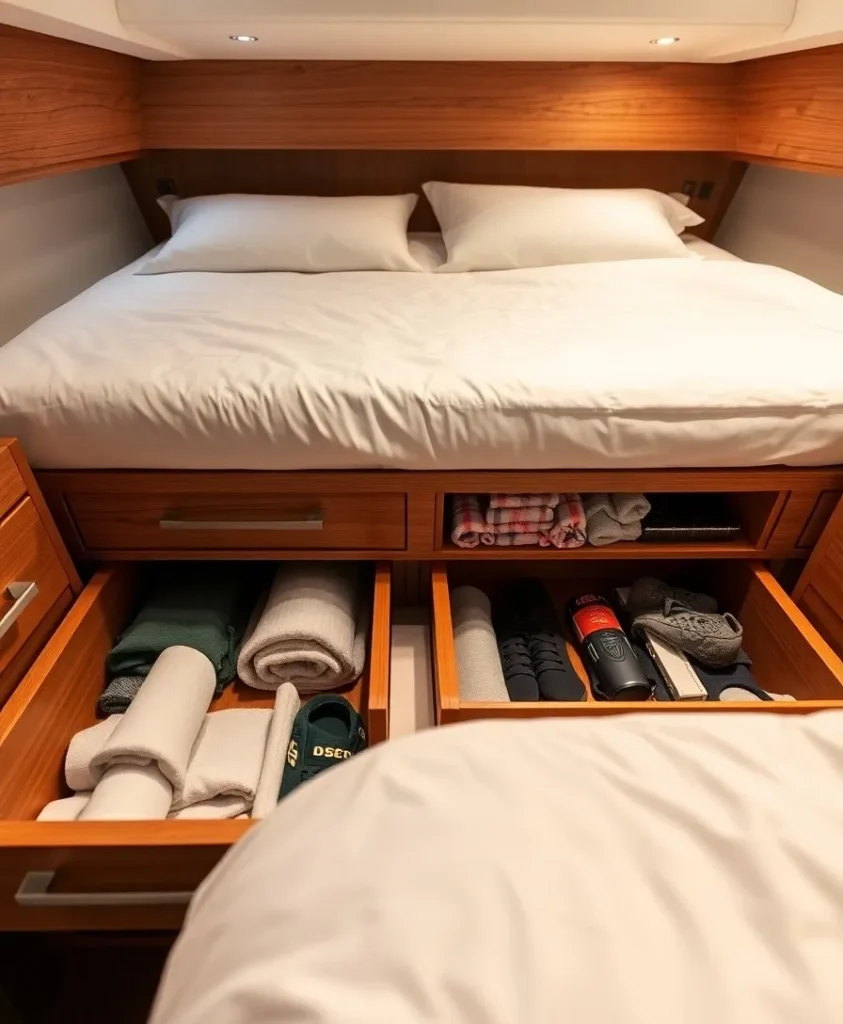
1. Under-Bed Storage Drawers
Under-bed drawers are one of the highest-ROI storage upgrades you can make on a yacht. That space beneath your mattress is prime real estate, and most factory-built cabins leave it completely wasted.
Install custom-built drawers that slide out smoothly even when the boat is rocking. Use them for off-season clothing, extra linens, tools, or anything you need access to occasionally but don’t want cluttering up the rest of the cabin. Soft-close hardware is worth the upgrade, trust me. The last thing you want at 2 a.m. is a drawer slamming open in choppy water.
2. Built-In Wall Cabinets
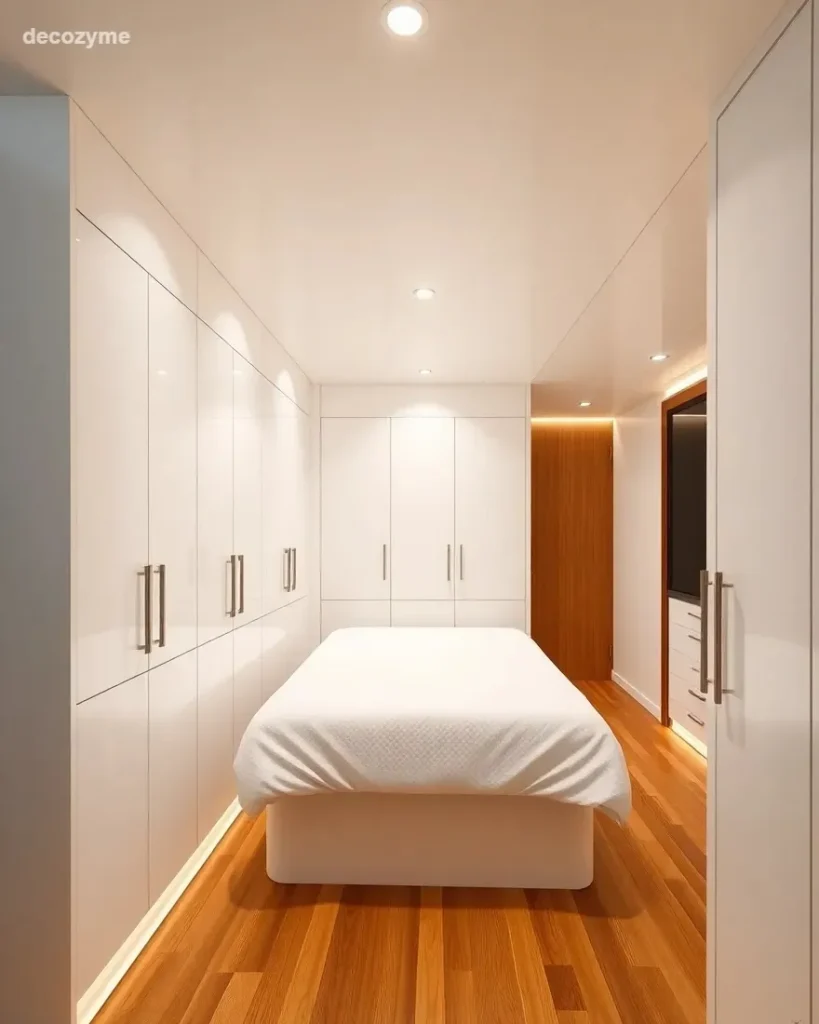
Built-in wall cabinets use vertical space efficiently and keep clutter completely out of sight. On a yacht, floor space is sacred; going vertical is always the smarter move.
Floor-to-ceiling built-ins along one wall can hold an impressive amount of gear. Think closed cabinet doors for a clean, streamlined look that won’t feel visually overwhelming in a tight cabin. Add soft LED strip lighting inside the cabinets, and suddenly they feel less like storage and more like a feature. IMO, this single upgrade does more for a yacht bedroom than almost anything else.
3. Fold-Down Wall Beds (Murphy Beds)
A fold-down wall bed transforms your sleeping area into a usable living space during the day. This works brilliantly in guest cabins or dual-purpose spaces where you want flexibility.
When the bed folds up, you suddenly have room to work, stretch, or just not feel trapped. Pair it with a fold-down desk (more on that later), and you’ve essentially created a full cabin that does double duty. Modern fold-down mechanisms are smooth, sturdy, and hold the mattress securely even in rough seas.
4. Compact Nightstand Shelves
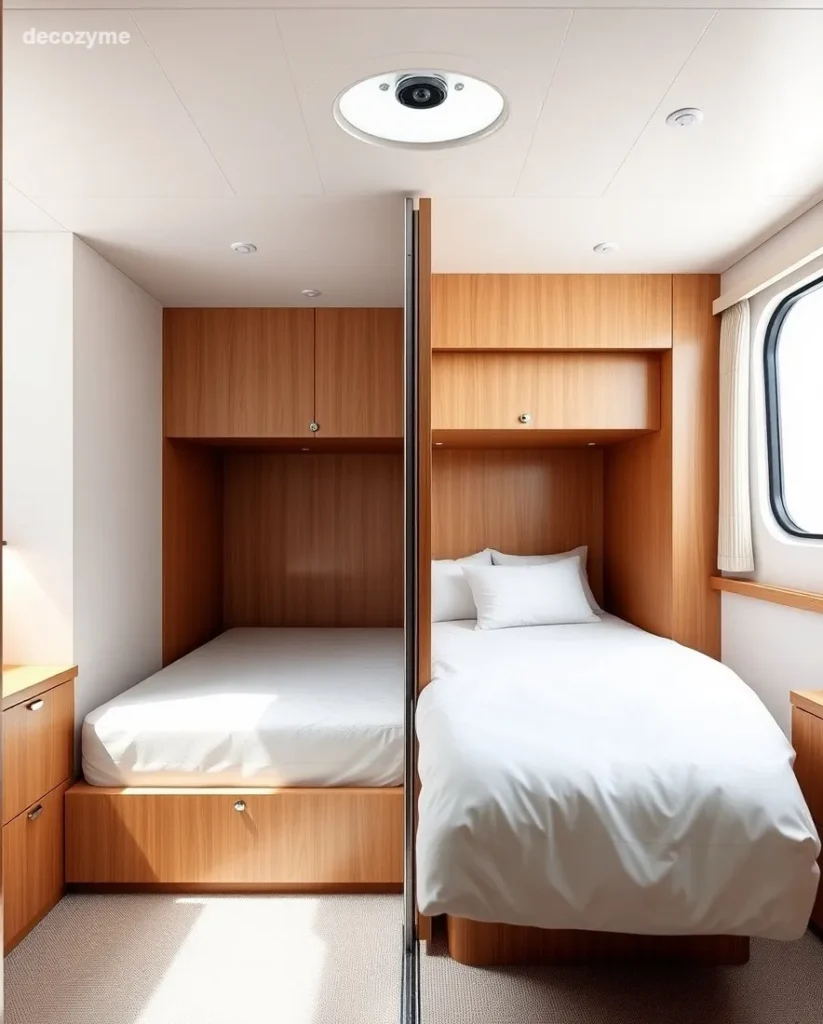
Wall-mounted nightstand shelves replace bulky bedside tables with something far more space-efficient. A traditional nightstand takes up floor space you simply don’t have on a yacht.
Mount a slim shelf right at bed height on either side of the sleeping area. Add a small lip or fiddle rail so your phone, glasses, and water bottle don’t go flying mid-passage. You get all the functionality of a nightstand with maybe 10% of the footprint. Sometimes,, es simple really is better.

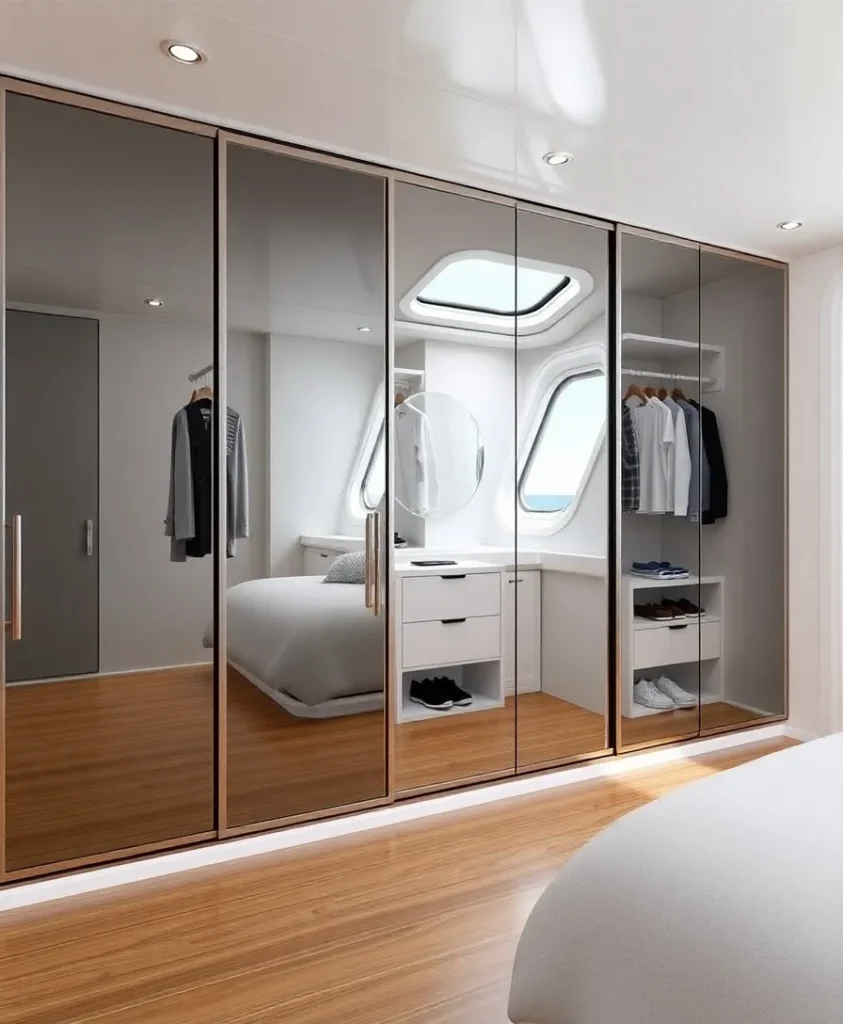
5. Sliding Door Wardrobes
Sliding doors on wardrobes eliminate the swing clearance that standard hinged doors need. On a yacht, that arc of spinnaker to open a door? You can’t afford it.
A floor-to-ceiling wardrobe with a sliding door feels surprisingly luxurious in a small cabin. Choose mirrored sliding panels, else, and you’ll also get the illusion of a bigger space, which brings me to another idea coming up later. Keep the interior organized with slim velvet hangers, stackable bins, and clear shoe pockets.
6. Multi-Purpose Headboards
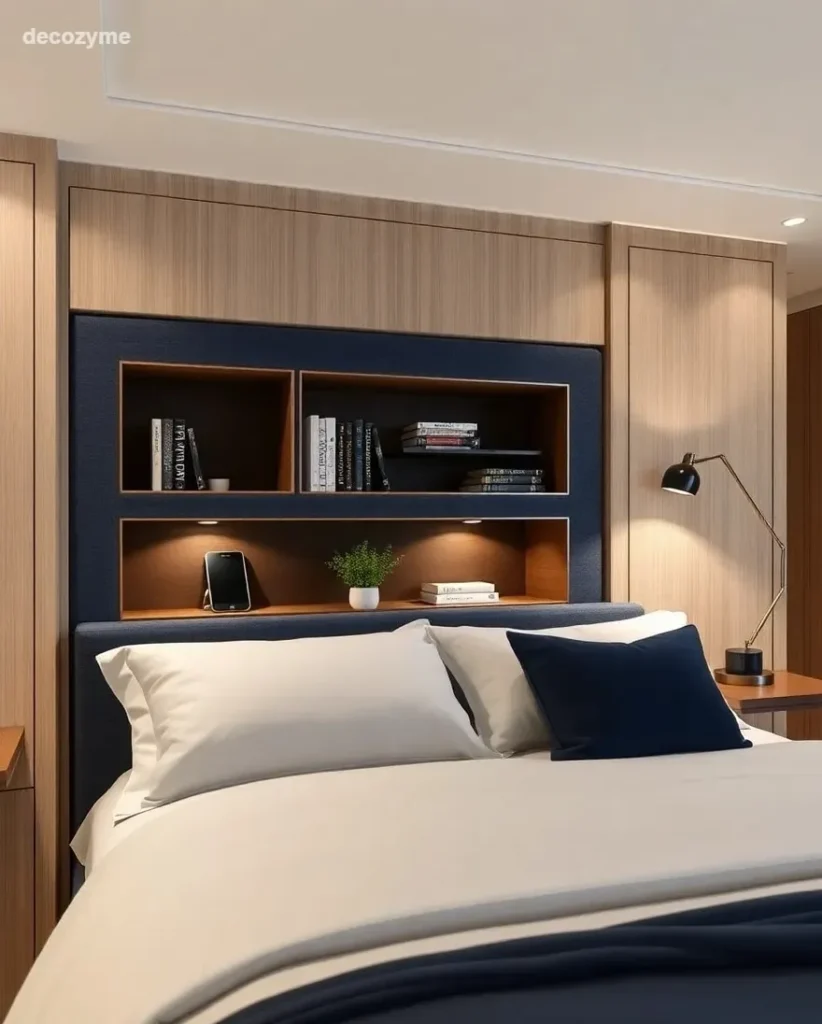
A headboard with built-in storage turns dead space behind your pillow into a surprisingly useful zone. Most yacht headboards are just decorative, which feels like a missed opportunity.
Look for headboard designs that incorporate shelving, charging ports, reading lights, and even hidden compartments. You can store books, a tablet, a small water carafe, and your phone charger all within arm’s reach without a single item taking up floor or surface space. It’s one of those ideas that makes you wonder why it isn’t standard everywhere.
7. Nautical Color Palette
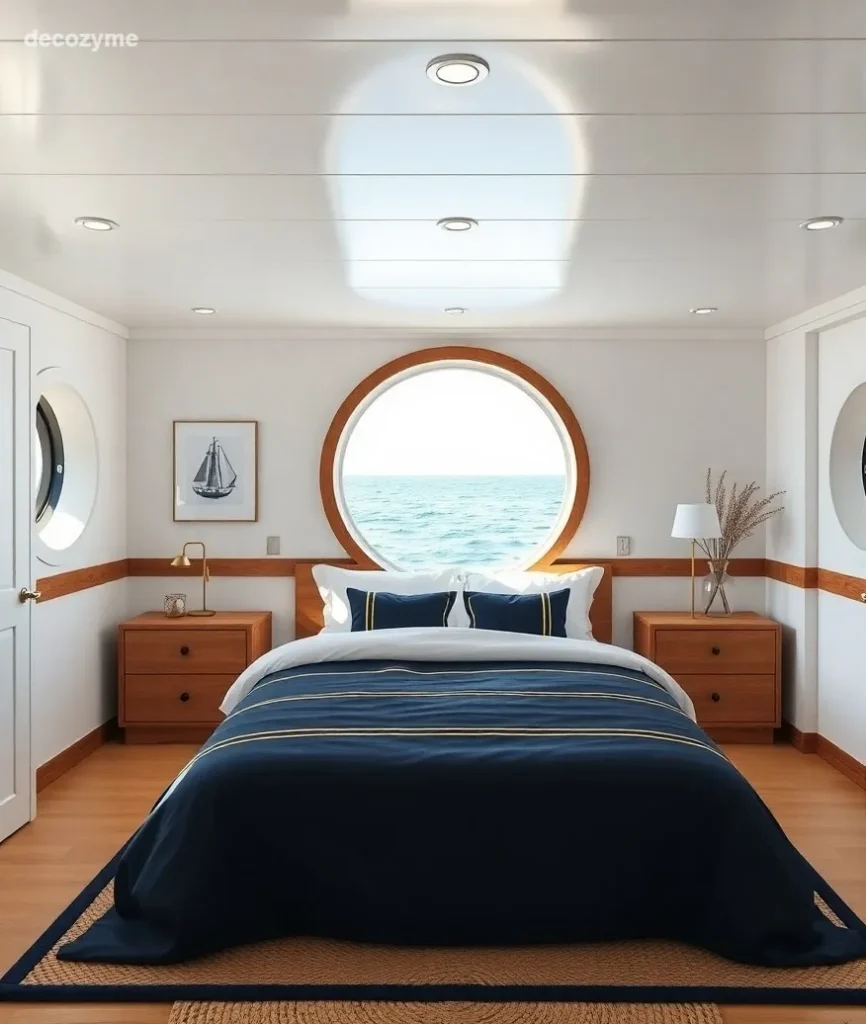
Light, cool tones like navy, white, sand, and seafoam make a yacht bedroom feel open and intentionally designed. Color choice has a massive impact on how spacious a small room feels, possibly more than any furniture decision.
A crisp white ceiling paired with navy accents and natural wood tones gives the space a classic maritime feel without veering into “tacky themed restaurant” territory. Stick with three colors maximum. The goal is calm and cohesive, because when you’re offshore and tired, the last thing you need is a visually chaotic bedroom.
8. Storage Ottomans
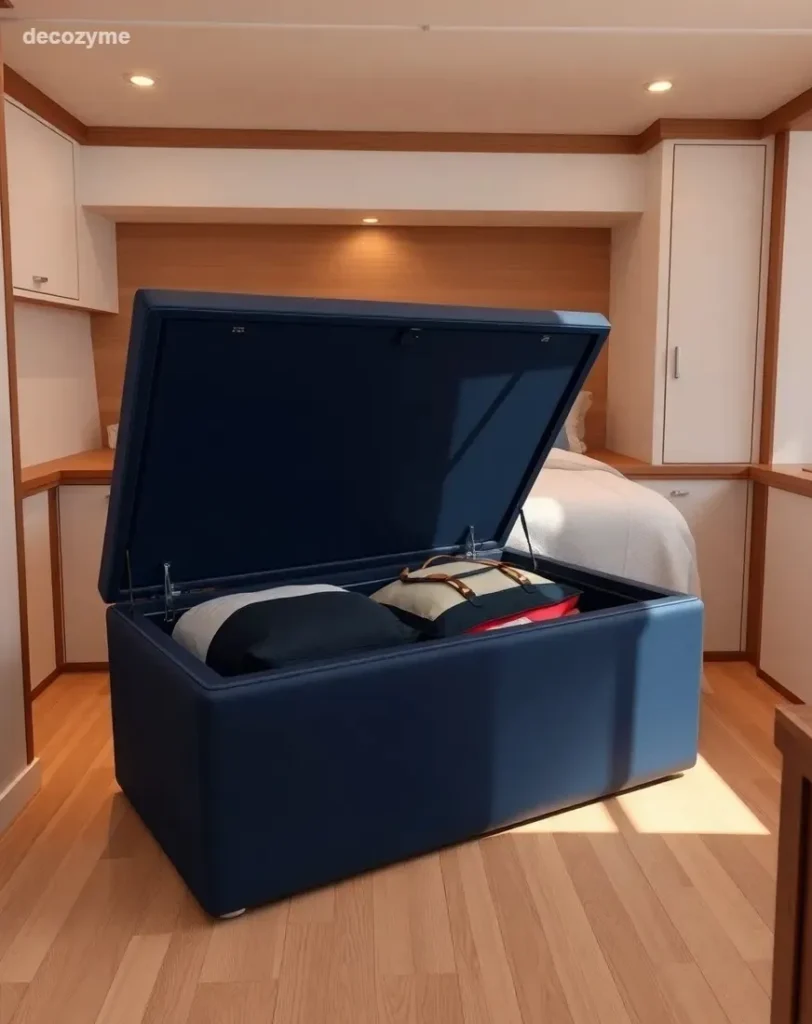
A storage ottoman at the foot of the bed gives you a seat, a surface, and a hidden storage compartment all in one piece. Triple-purpose furniture is the lifeblood of yacht interior design.
Choose a waterproof or easy-clean fabric (marine vinyl is a solid choice) and make sure the hinge hardware won’t rust. Store extra blankets, foul-weather gear, or backup supplies inside. When you’re not using it as storage, it works as a footrest, a step up to a high berth, or extra seating for a guest.
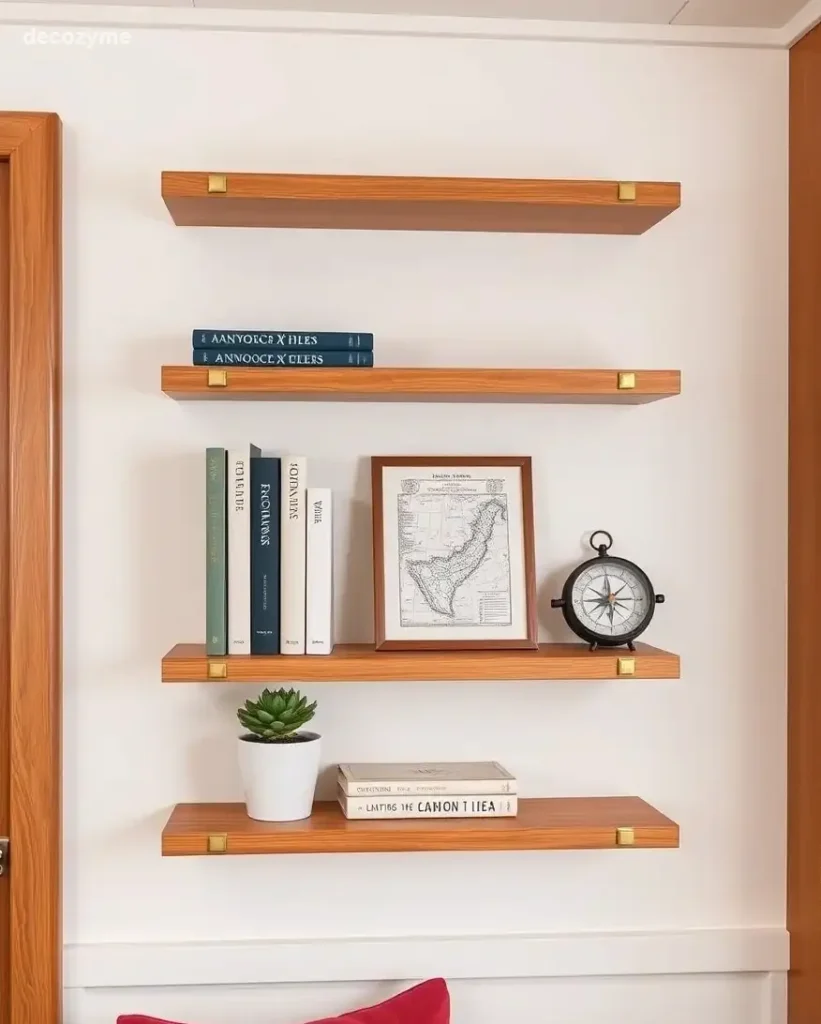
9. Floating Shelves
Floating shelves add display and storage space without consuming any floor area whatsoever. They’re inexpensive, easy to install, and weirdly satisfying.
Add fiddle rails, those small wooden or metal lips along the shelf edge, to keep items secure underway. Use floating shelves for books, small plants (succulents hold up surprisingly well aboard), navigational references, or decorative items that make the space feel more like home and less like a hospital room.
10. Hidden Compartment Floors
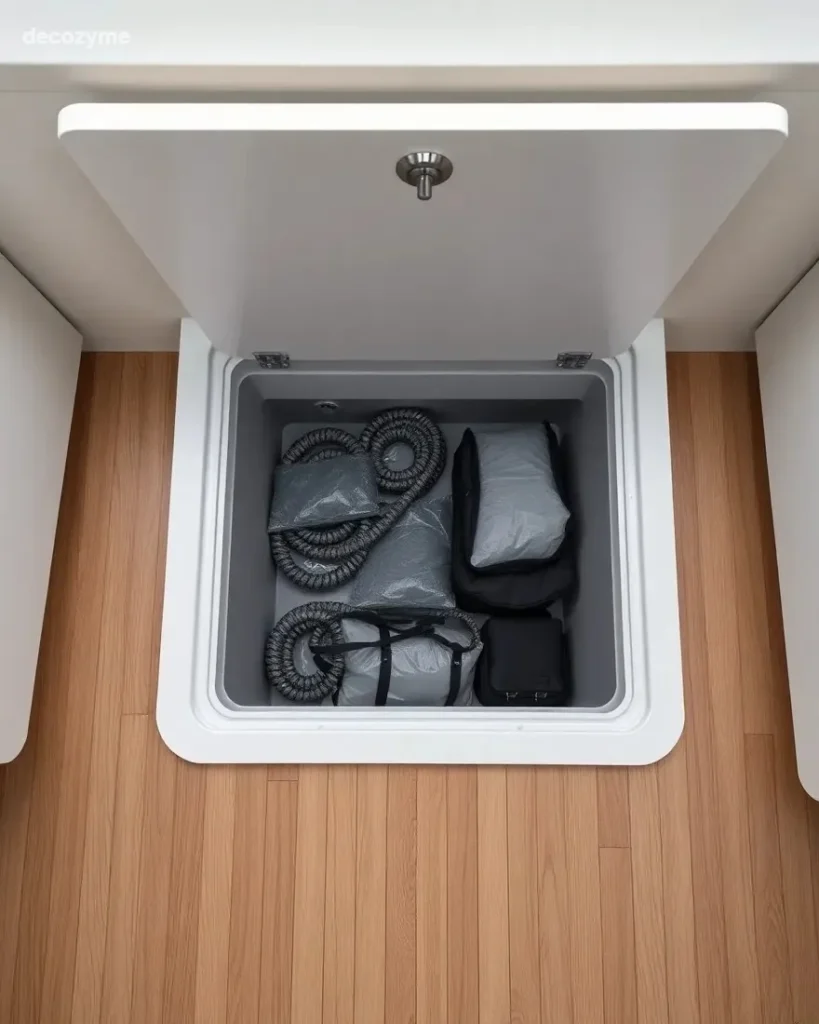
Lifting floor panels in a yacht bedroom can reveal significant storage space that most people never use. It’s essentially a hidden basement under your cabin.
This is especially useful for bulkier items: spare parts, canned goods, dive equipment, or anything that doesn’t need frequent access. Make sure the hatches are properly sealed and the storage space is ventilated to prevent moisture buildup, and mold below the floorboards is nobody’s idea of a good time.
11. Foldable Desks
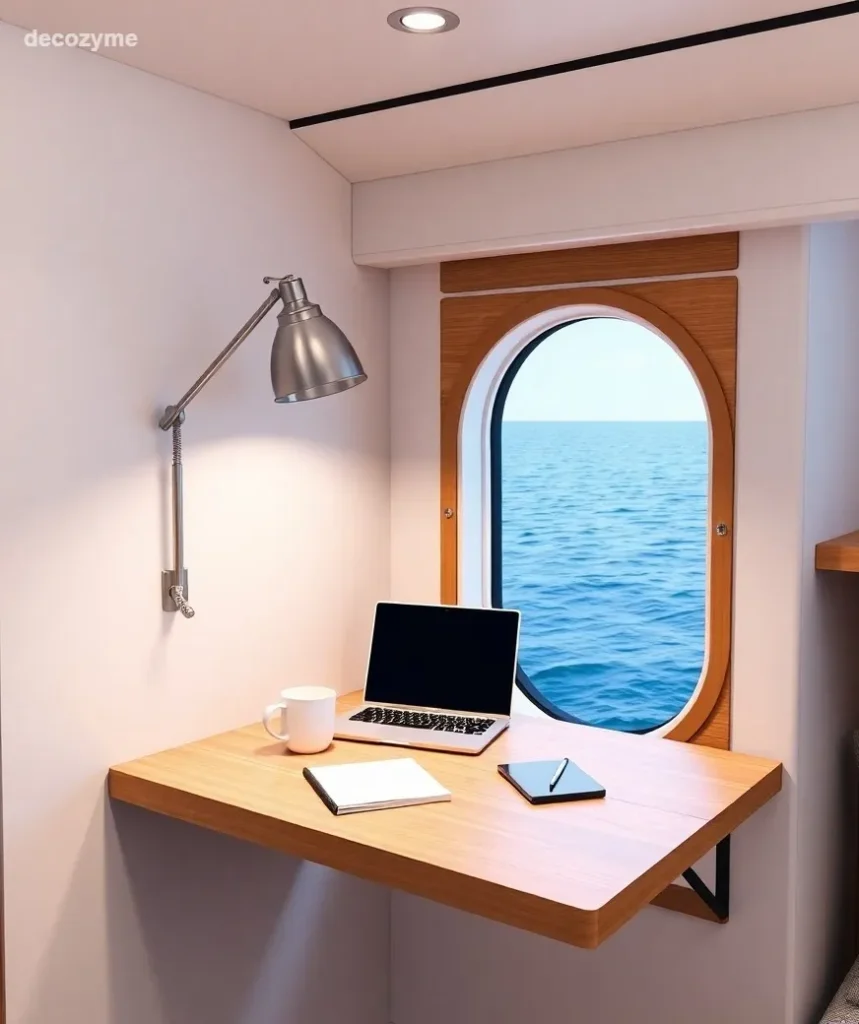
A wall-mounted foldable desk creates a workspace that disappears completely when you don’t need it. Working from a yacht is increasingly common, and this idea solves the “where do I even put a desk” problem elegantly.
Look for designs with a piano-hinge mechanism that folds flat against the wall when not in use. Some versions include built-in shelving above the desk surface for even more utility. Pair with a wall-mounted swing-arm light and a compact chair that slides under a ledge or stores elsewhere, and you’ve got a fully functional home office that vanishes in 30 seconds.
12. Corner Beds for Space Efficiency
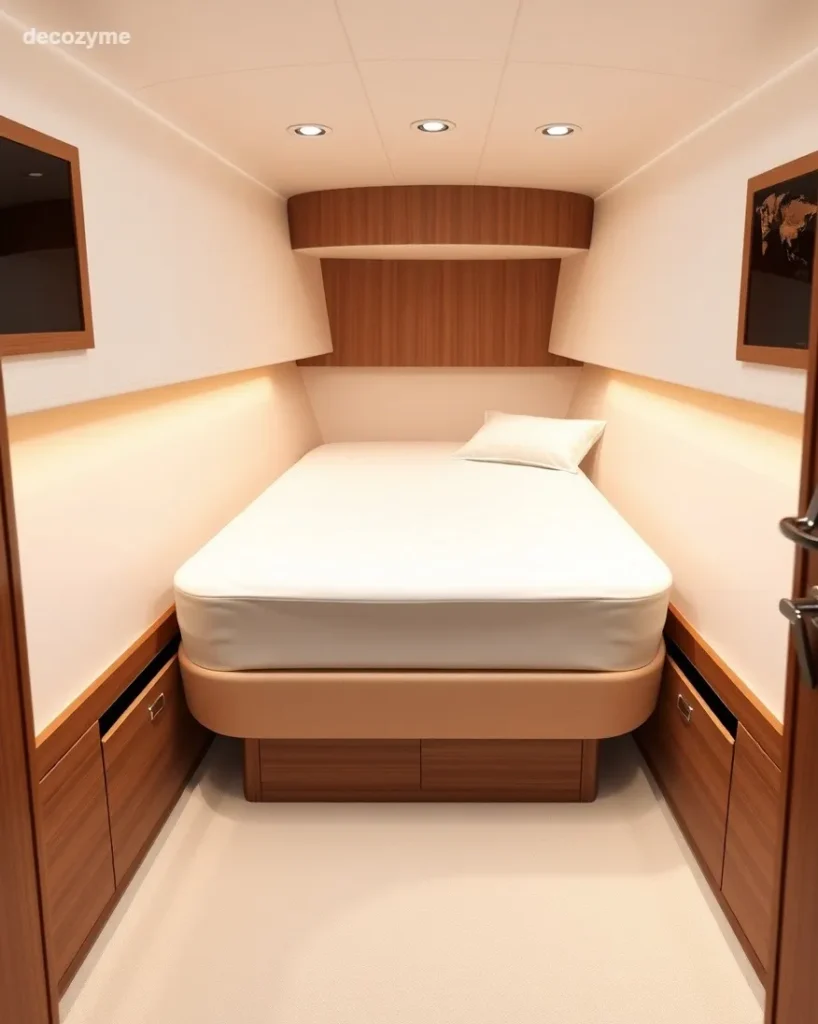
Positioning a bed in the corner of a cabin frees up the central floor area and creates a more open-feeling layout. It sounds obvious, but many yacht cabins push beds against one long wall, leaving awkward dead space at both ends.
A corner-positioned berth or L-shaped bed arrangement works particularly well in forward cabins where the hull narrows. Build up the corners with storage platforms that serve as both base and under-mattress drawers. You gain storage, you gain walkway space, and the cabin suddenly feels like it was professionally designed.
13. Vertical Storage Units
Narrow vertical storage towers make use of the full height of a cabin without eating into the floor plan. Think tall and slim rather than wide and low.
A 12-inch-wide vertical unit that goes all the way to the ceiling holds a remarkable amount of stuff. Use the lower sections for frequently accessed items and the higher shelves (with fiddle rails, of course) for things you grab less often. In my experience, vertical units also make rooms feel taller, a nice bonus in a cabin with a low overhead.
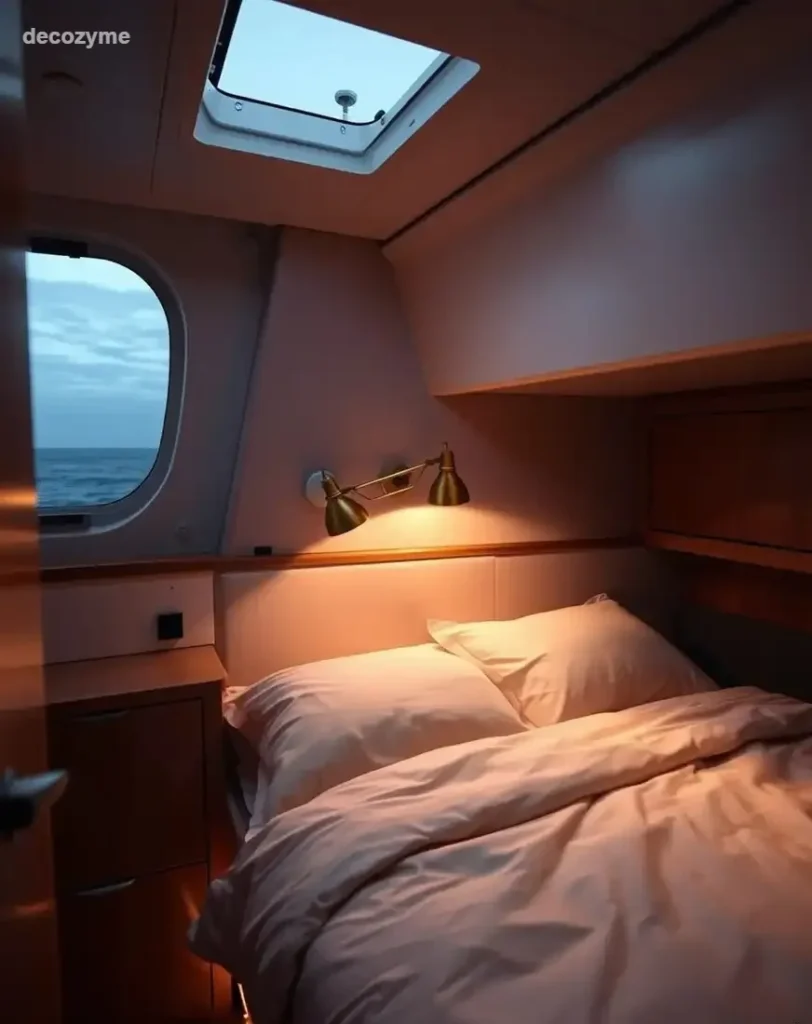
14. Soft Wall-Mounted Lighting
Warm, wall-mounted lighting creates an atmosphere in a yacht bedroom while keeping the ceiling clear and uncluttered. Overhead fixtures in small cabins tend to feel harsh and institutional.
Swing-arm wall lamps on either side of the berth give you an adjustable reading light without taking up surface space on a nightstand. Dimmer switches are worth their weight in gold; being able to dial down to a warm amber glow at anchor is one of life’s small but genuine pleasures. Look for LED fixtures with a CRI (Color Rendering Index) above 90 for the most flattering, natural-feeling light.
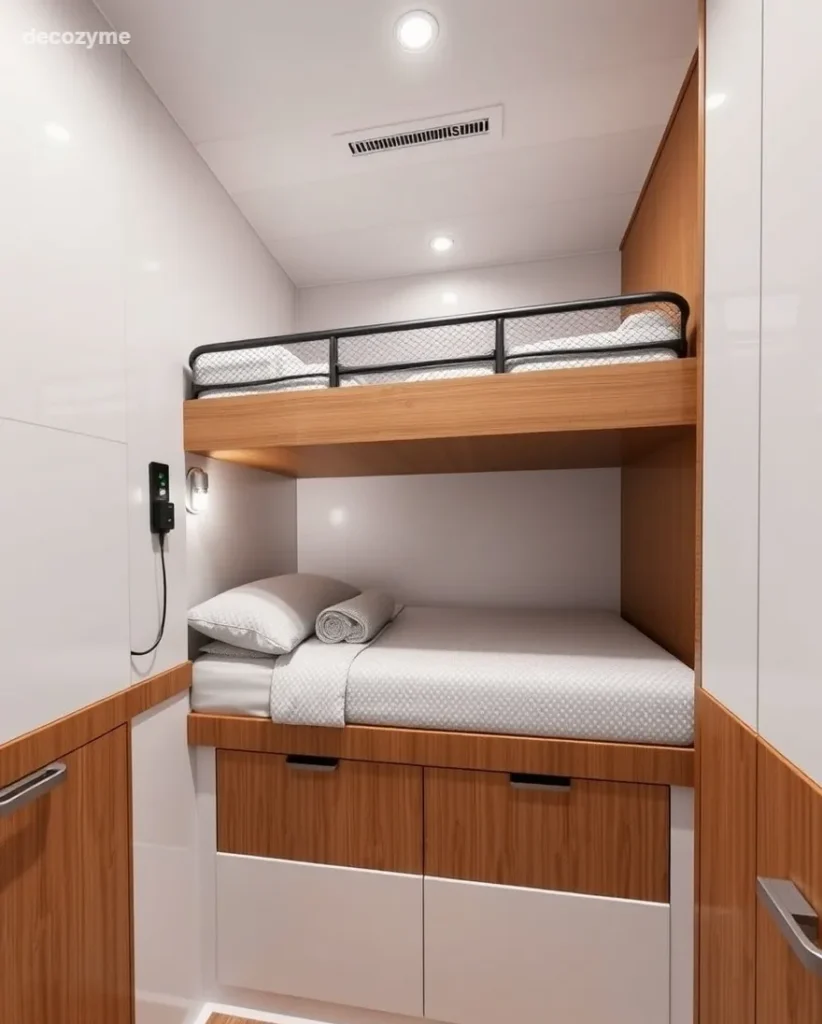
15. Built-In Bunk Beds
Built-in bunk beds are the gold standard for maximizing sleeping capacity in a small yacht cabin. They’re snug, they’re efficient, and, done well, they look great.
Unlike freestanding bunks, built-in versions integrate with the hull and cabinetry, using every odd angle to their advantage. Add individual reading lights and charging ports to each bunk so occupants aren’t fighting over one shared lamp. The lower bunk can incorporate pull-out drawers underneath, while the upper bunk sits against a wall with grab handles for safe boarding in rough conditions.
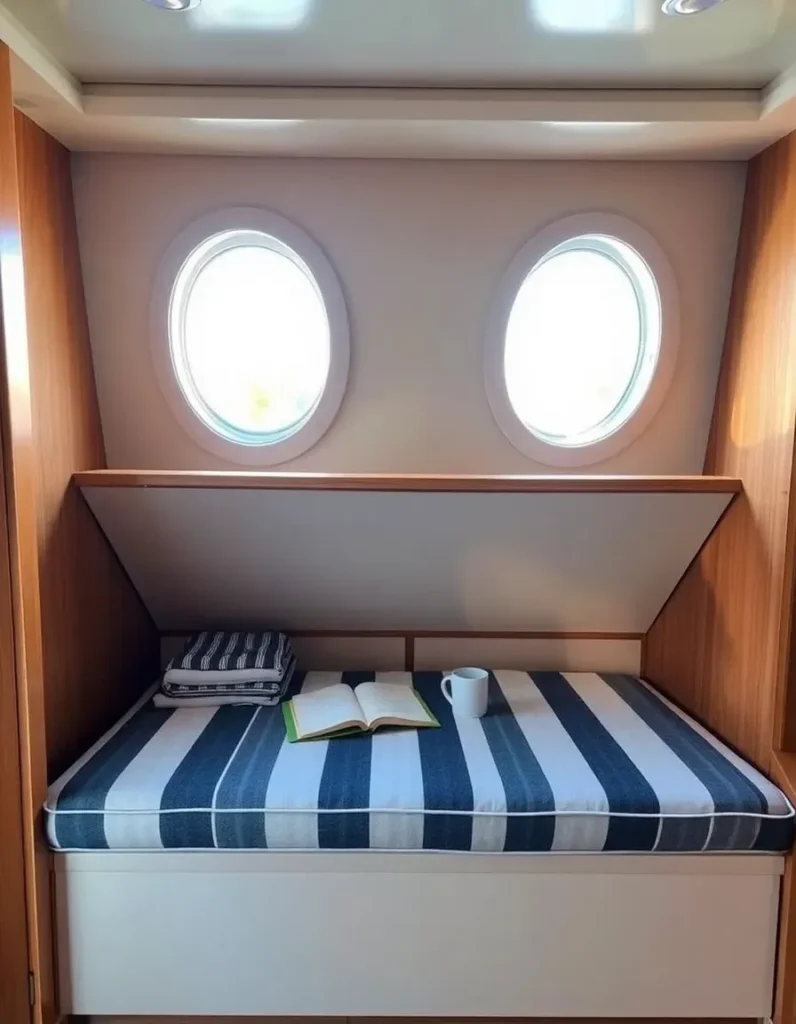
16. Under-Window Storage Benches
Built-in benches below porthole windows provide seating, storage, and a spot to watch the world drift by, all at once. The area beneath a window is often completely unused in yacht cabins.
Build a cushioned bench at seat height with hinged lids opening to reveal storage below. Use high-density closed-cell foam for the cushion (it won’t absorb moisture) and cover it in marine-grade fabric. This setup also works brilliantly as a reading nook, especially when you’re anchored somewhere beautiful and have nowhere else to be.
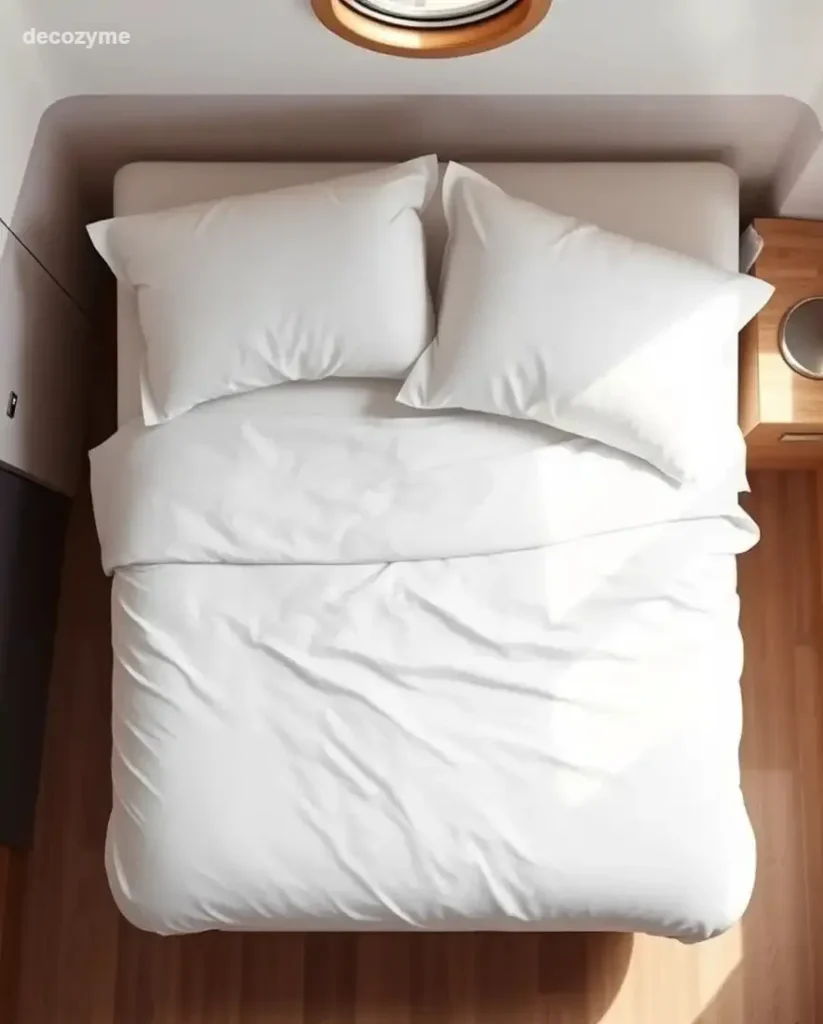
17. Minimalist Bedding Sets
Choosing minimalist, high-quality bedding keeps a yacht bedroom looking tidy even when you haven’t had time to make the bed properly. FYI, this matters more than you’d think.
Stick to a neutral duvet or coverlet in a tight weave that lies flat without bunching. Avoid decorative pillows; they look great in photoshoots, get thrown on the floor instantly, and contribute exactly nothing to your comfort. One quality pillow per person, a good duvet, and fitted sheets that actually stay on the mattress (marine-specific fitted sheets have deeper pockets for this exact reason). Simple. Done.
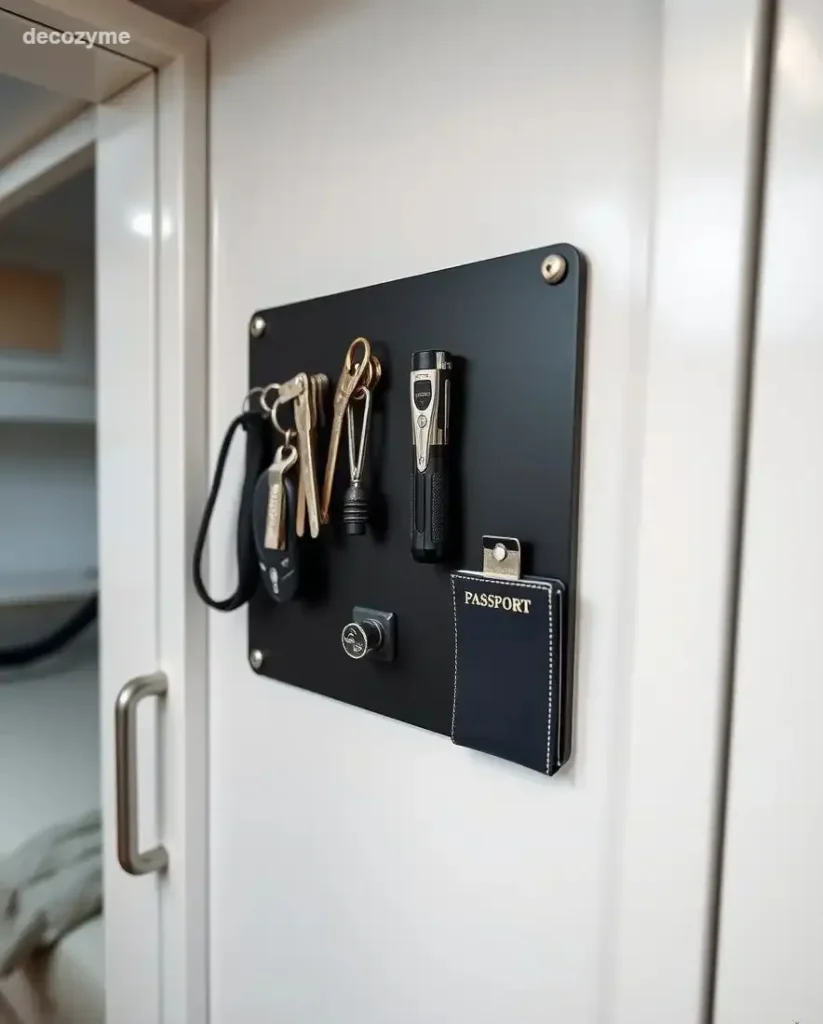
18. Magnetic Wall Organizers
Magnetic strips and panels on cabin walls keep small metal items organized and instantly accessible. Keys, tools, cooking utensils (for galley-adjacent cabins), and even charging cables can be kept in order this way.
Install a magnetic strip near the entrance of the cabin for keys and a multi-tool. Use one near the berth for small everyday items. The beauty is that nothing is ever “put away somewhere”; it’s right there, visible, within reach. For items that aren’t magnetic, small neodymium magnets can be glued to almost anything.
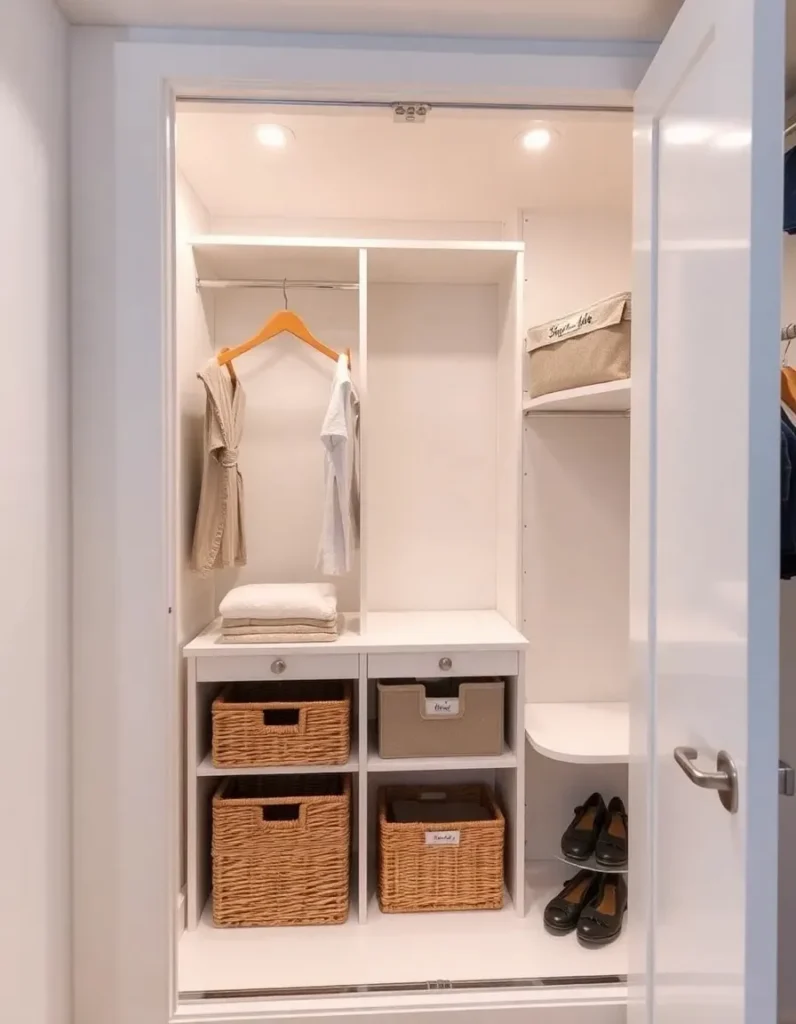
19. Compact Closet Systems
A well-organized closet system with adjustable shelves, hanging rods, and door-mounted organizers can double the usable storage in a small wardrobe space. The default setup in most yacht cabins is a single hanging rod and maybe one shelf. That’s it. It’s criminal.
Replace it with a modular closet organizer, the kind you’d find at a home goods store, cut to fit. Add a double hanging rod for short garments, pull-out baskets for folded clothes, and an over-door organizer for shoes or accessories. You’ll be amazed at how much more it fits when everything has a designated place.
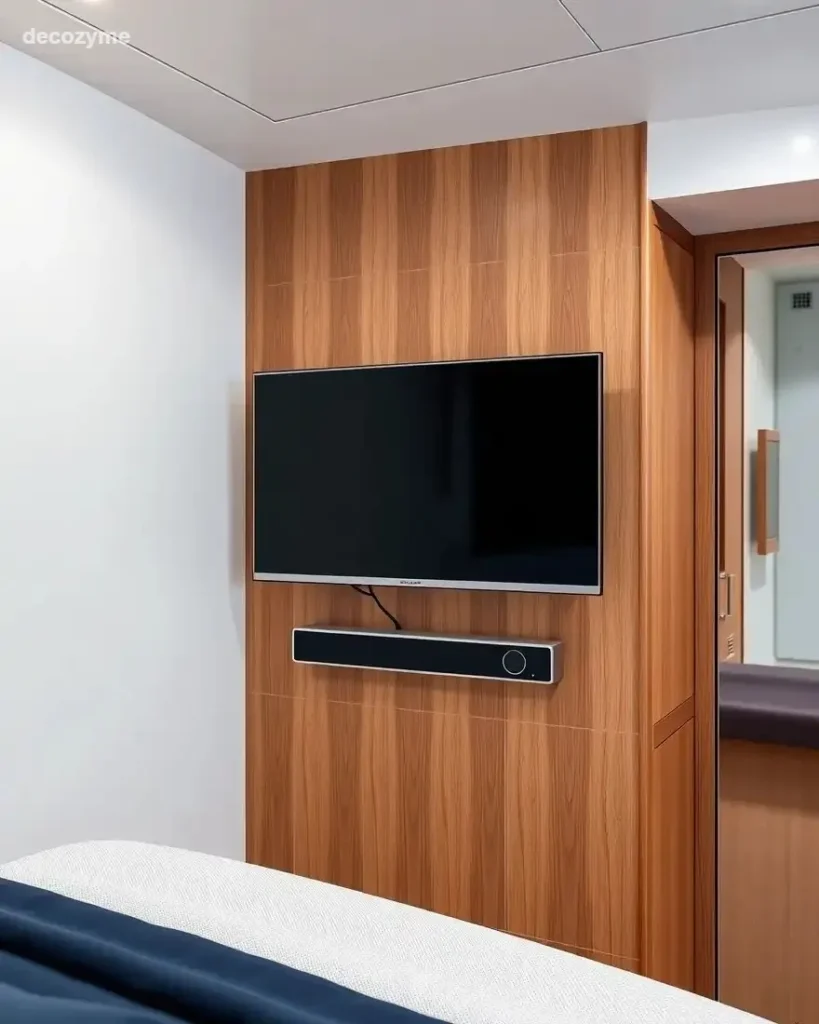
20. Wall-Mounted TV Units
A wall-mounted TV eliminates the need for a media console and keeps the floor plan completely clear. If you want entertainment in the cabin without sacrificing precious surface or floor space, this is the move.
Choose a swivel mount so the screen can be angled from the berth or a seating area. Run cables inside the wall cavity or along a neat cable track. A 24- to 32-inch screen is usually sufficient for a yacht cabin; bigger starts to feel aggressive in a tight space. Pair it with a soundbar mounted just below, and you’ve got a genuinely enjoyable setup.
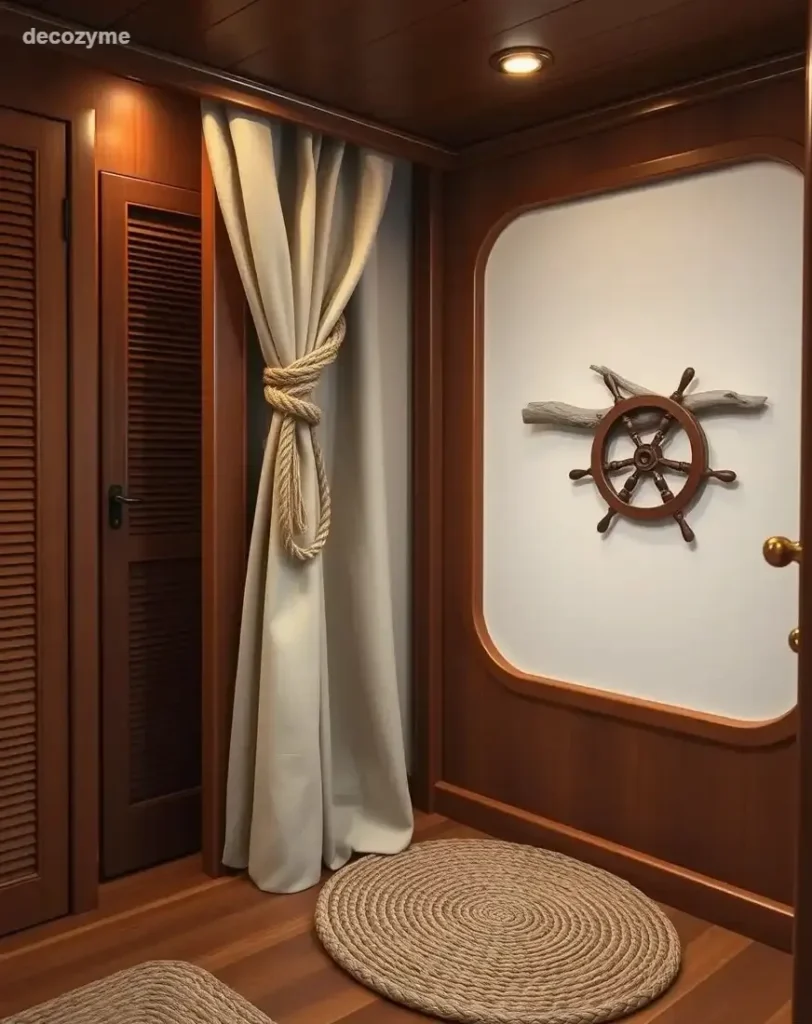
21. Rope and Wood Nautical Decor
Carefully chosen nautical decor adds warmth and personality to a yacht bedroom without adding bulk. The keyword there is carefully; nautical decor has a way of quickly tipping from “charming” into “gift shop on a pier.”
Stick to natural materials: a length of thick rope as a curtain tieback, a small piece of driftwood as wall art, a woven jute rug that adds texture underfoot. These touches connect the interior to the context of being on the water without screaming it. Less is genuinely more here. One or two well-chosen pieces do far more than a wall covered in anchors and ship wheels.
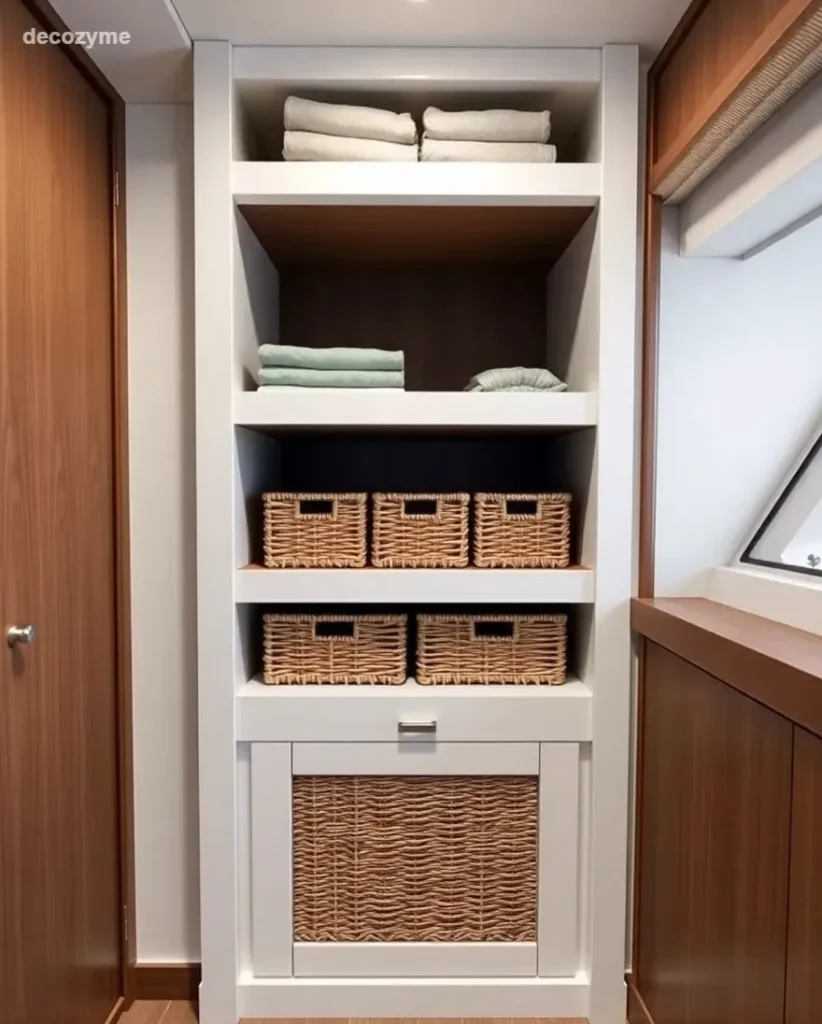
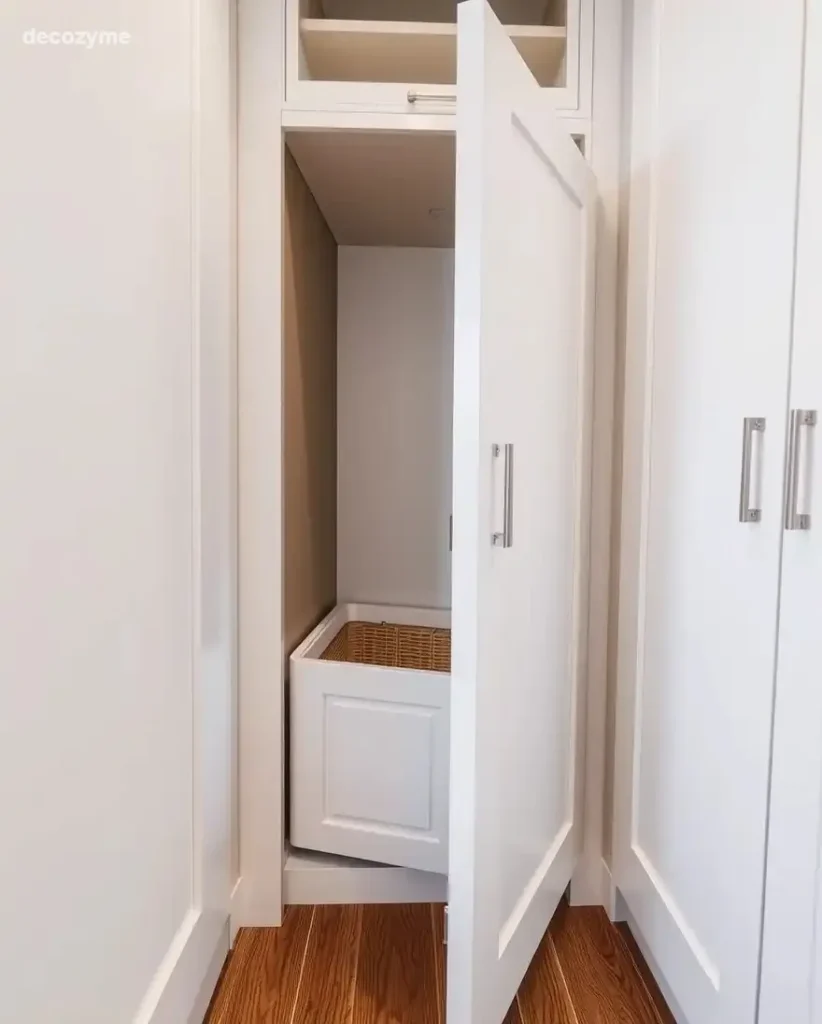
22. Hidden Laundry Compartments
A dedicated hidden laundry compartment keeps dirty clothes out of sight and stops them from migrating across every horizontal surface. If you’ve ever lived abroad, you know exactly what I’m talking about.
Build a slim pull-out hamper into an unused gap between a wardrobe and a wall, or incorporate one into the base of a closet. A ventilated door or wicker front allows airflow so things don’t get musty. This is one of those small-but-life-changing details that separates a thoughtfully designed cabin from one that always looks chaotic.
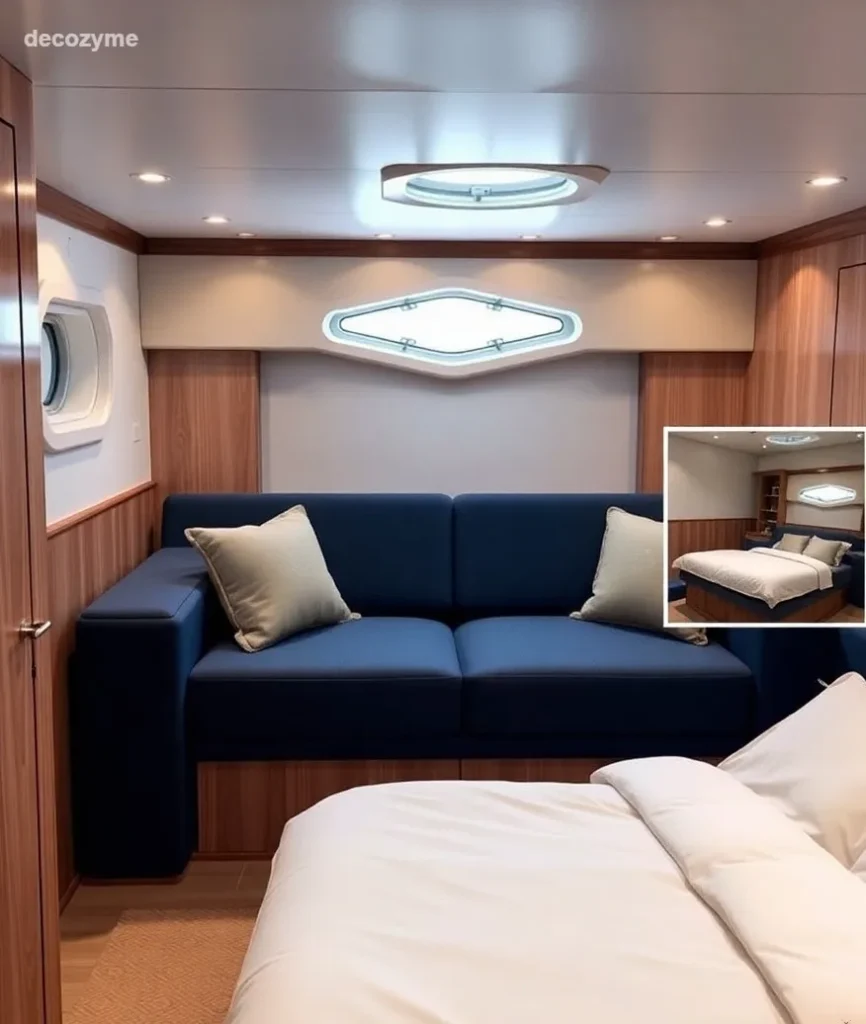
23. Convertible Sofa Beds
A convertible sofa bed transforms a lounge or sitting area into a sleeping space, perfect for guest cabins that double as day lounges. The best modern sofa beds convert in under a minute and sleep surprisingly comfortably.
Look for marine-specific convertible seating that’s built to handle the humidity and movement of a marine environment. Avoid cheap fold-out versions with thin foam mattresses; they’re uncomfortable enough on land and genuinely unpleasant offshore. A quality convertible sofa is an investment, but if you use it regularly, it pays for itself quickly in versatility.
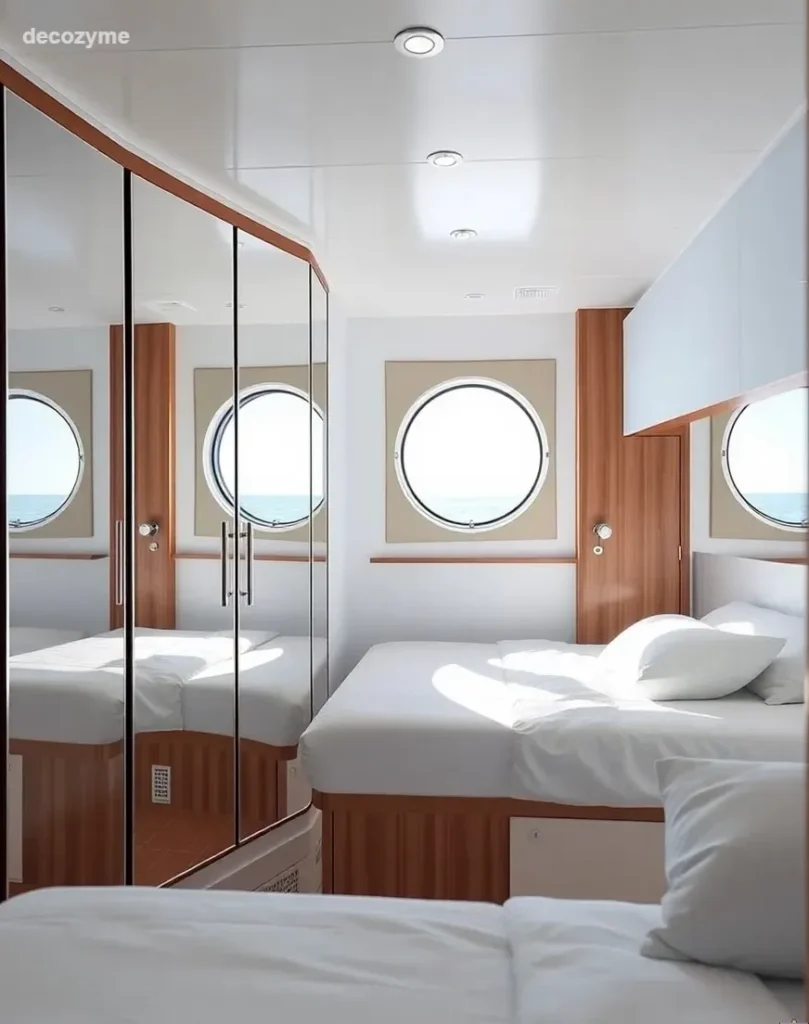
24. Mirror Panels for Space Illusion
Strategically placed mirrors make a yacht cabin feel noticeably larger by reflecting light and creating the illusion of depth. This is one of the oldest tricks in the interior design playbook, and it works every single time.
A full-length mirror on the back of a cabin door costs almost nothing and immediately makes the space feel more open. Mirrored wardrobe doors (as mentioned earlier) do double duty. Avoid placing mirrors where they’ll reflect clutter; they amplify everything, good and bad. Put them where they’ll catch natural light from a porthole, and the effect is genuinely impressive.
How to Plan Your Yacht Bedroom Redesign
Start With a Measurement Audit
Before you order a single thing, measure everything. Cabin dimensions, ceiling heights at multiple points (hull’s curve, your ceiling is not flat), door swing arcs, porthole positions. Draw it out on paper or use a simple room planner app. I can’t tell you how many times I’ve seen someone order beautiful custom furniture that simply doesn’t fit through the companionway.
Prioritize Multi-Purpose Furniture
Every piece of furniture in a yacht bedroom should ideally do at least two things. A bed with storage drawers. An ottoman that opens. A headboard with shelves. A bench with a hinged lid. When every square inch earns its place, the whole cabin starts to feel intentional rather than cramped.
Choose Marine-Grade Materials
This is non-negotiable. Marine environments are brutal; salt air, humidity, temperature swings, and constant vibration will destroy standard furniture in months. Choose stainless steel or bronze hardware, closed-cell foam for cushions, marine-grade fabrics, and moisture-resistant finishes on any wood. It costs more upfront. It saves you a complete redo in two years.
Think About Weight Distribution
On smaller vessels, especially, where you store heavy items affects how the boat sits in the water. Heavy storage, tools, spare parts, and canned goods should go as low and as centered as possible. Light, bulky items can go higher. It’s easy to ignore this during a redesign and then wonder why the boat has a slight list to port afterward.
Frequently Asked Questions About Yacht Bedroom Ideas
How do I make a yacht bedroom feel bigger?
Use light colors on walls and ceiling, install mirrors strategically, choose wall-mounted furniture instead of freestanding pieces, and keep surfaces clear. Adequate lighting, especially warm LEDs near the berth, also makes a huge difference. The combination of reflected light and minimal visual clutter tricks the brain into perceiving more space than actually exists.
What’s the best storage solution for a small yacht cabin?
Under-bed storage drawers and built-in wall cabinets give the best return on investment for most yacht cabins. They use space that’s typically wasted and keep the floor plan open. If you can only do one upgrade, under-bed drawers are usually the most impactful because mattress-height storage is both accessible and invisible.
What materials should I use for yacht bedroom furniture?
Stick to marine-grade materials throughout: teak or marine plywood for furniture, stainless steel or bronze for hardware, closed-cell foam for upholstery, and UV-resistant marine fabric for soft furnishings. Avoid MDF, particle board, and standard hardware store finishes; they’ll deteriorate quickly in a saltwater environment.
How do I reduce moisture and condensation in a yacht cabin?
Ventilation is the primary solution; ensure airflow through the cabin even at anchor. Use closed-cell foam for cushions (it doesn’t absorb moisture), add a small dehumidifier if the vessel is left unattended in humid climates, and avoid storing wet gear in the sleeping cabin. Vapor barriers behind wall panels can also help in particularly humid environments.
Can I fit a full-size bed on a yacht?
It depends entirely on the yacht’s size and layout. Many mid-range cruising yachts (38 feet and above) have aft cabins that accommodate a proper queen-size island berth. Smaller vessels typically use a V-berth forward, which tapers at the feet, comfortable for one, cozy for two. Custom mattresses cut to fit the hull shape are standard practice and not particularly expensive.
How do I stop items from falling off shelves when underway?
Fiddle rails, small raised lips along shelf edges, are the standard solution and should be on every shelf aboard. For more aggressive ocean passages, bungee cords across shelves or dedicated storage nets keep items secure. The golden rule is underway: nothing lives on a flat surface. Everything has a home with some kind of retention.
Wrapping It Up
A well-designed yacht bedroom isn’t about fitting more stuff into a small space; it’s about making that space work so well that you stop noticing its size. When every drawer slides smoothly, every surface has a purpose, and the lighting feels warm rather than clinical, the cabin stops being a compromise and starts being one of your favorite places on the boat.
Pick two or three ideas from this list that address your biggest current frustrations and start there. You don’t need to renovate everything at once. Even replacing a bulky nightstand with a wall-mounted shelf or adding under-bed drawers will immediately change how the space feels.
You spend a lot of time in that cabin; it deserves to actually work for you.