Your bedroom deserves better than a bare wall behind your bed. A headboard isn’t just furniture; it’s the focal point of your entire room, the thing that ties everything together or completely kills the vibe. I’ve spent way too many hours obsessing over headboard styles (my partner will confirm this), and I genuinely believe the right headboard can transform a boring bedroom into something you actually want to come home to.
So whether you’re redecorating from scratch or just tired of staring at that plain painted wall every morning, here are 15 headboard ideas that range from budget-friendly DIY to full-on luxury. There’s something for every taste, promise.
Why Your Headboard Actually Matters More Than You Think
Most people spend a fortune on a mattress and then completely ignore the headboard. I get it, the mattress is what you sleep on, right? But here’s the thing: your headboard sets the entire visual tone of the bedroom. It’s the first thing you see when you walk in the door and the last thing you see before you fall asleep.
A well-chosen headboard can:
- Make a small bedroom feel bigger (tall, slim designs draw the eye upward)
- Add warmth and texture to an otherwise cold, minimal room
- Pull double duty as storage if you pick the right style
- Completely anchor your bed so the room doesn’t feel like furniture floating in space
IMO, skipping the headboard is one of the biggest decorating mistakes people make. Let’s fix that.
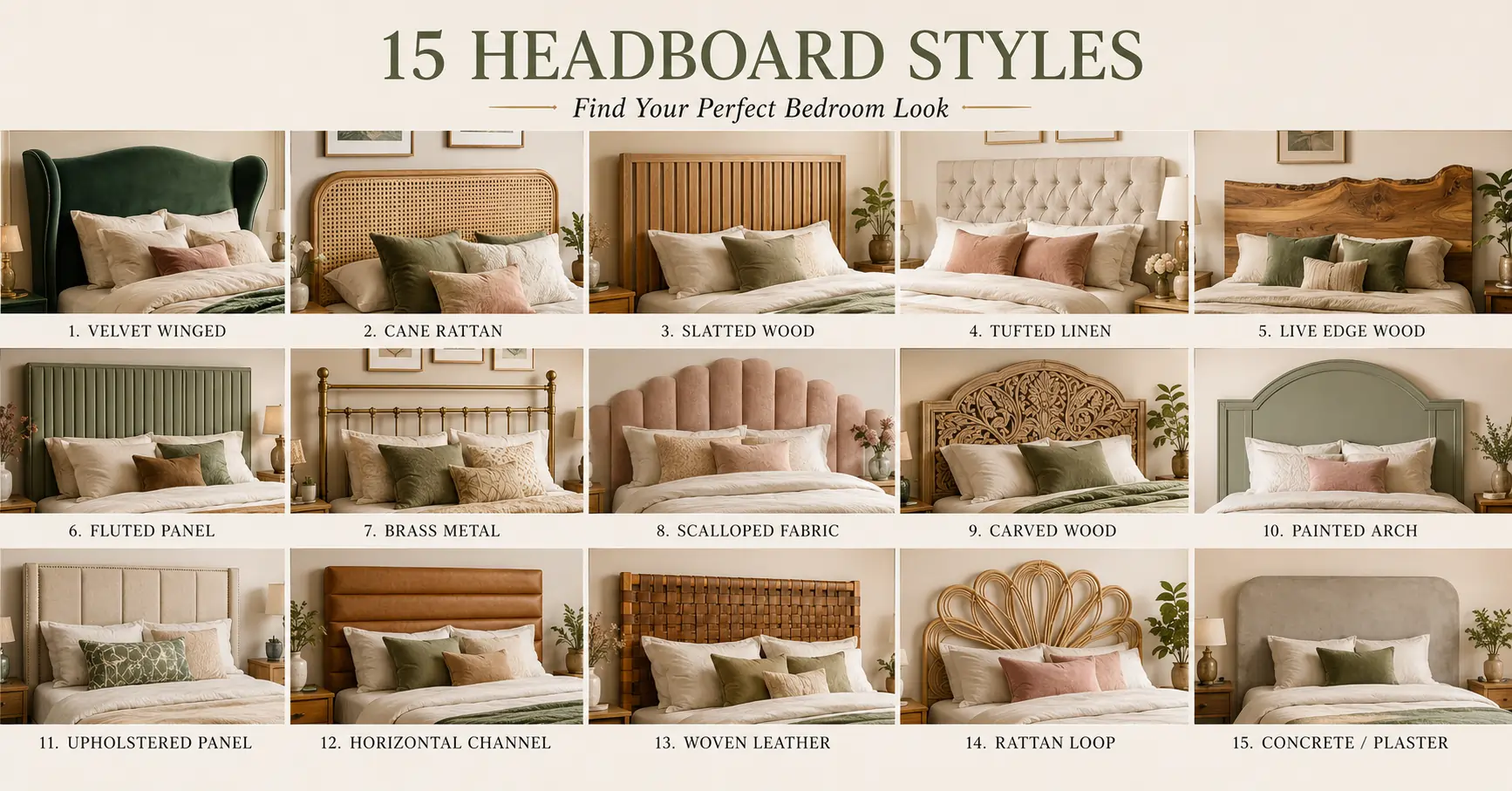
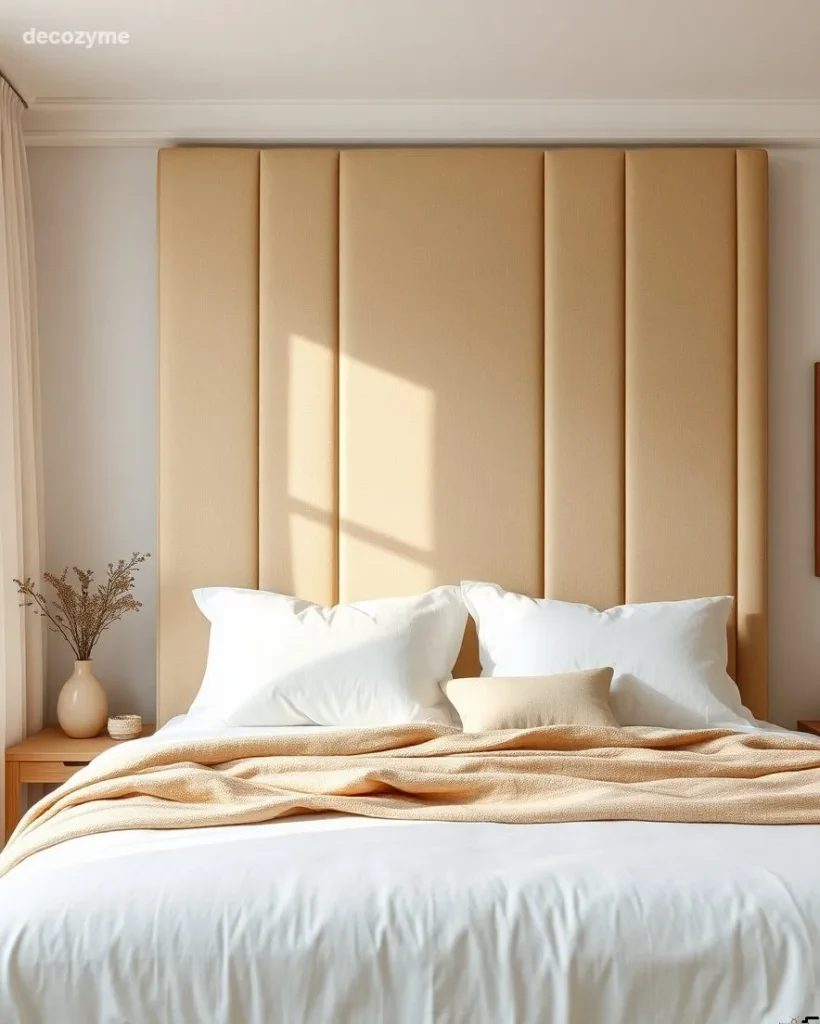
1. The Classic Upholstered Linen Headboard
An upholstered linen headboard is probably the most versatile headboard you can buy. It works in modern, traditional, Scandi, and coastal rooms without missing a beat.
The fabric adds softness and sound absorption, which is genuinely useful if you like reading in bed and don’t want your voice bouncing off hard walls. Neutral linen in ivory, oatmeal, or warm grey works with almost any bedding palette.
One thing I’ll say from experience: go for a deep buttoned or channel-stitched version if you want it to hold up visually over time. Flat panels look sleek on day one but tend to look a little sad after a year of leaning against them.
Best for: Neutral, timeless bedrooms | Fabric lovers | Anyone who can’t commit to a statement colour
2. The Tall Velvet Winged Headboard
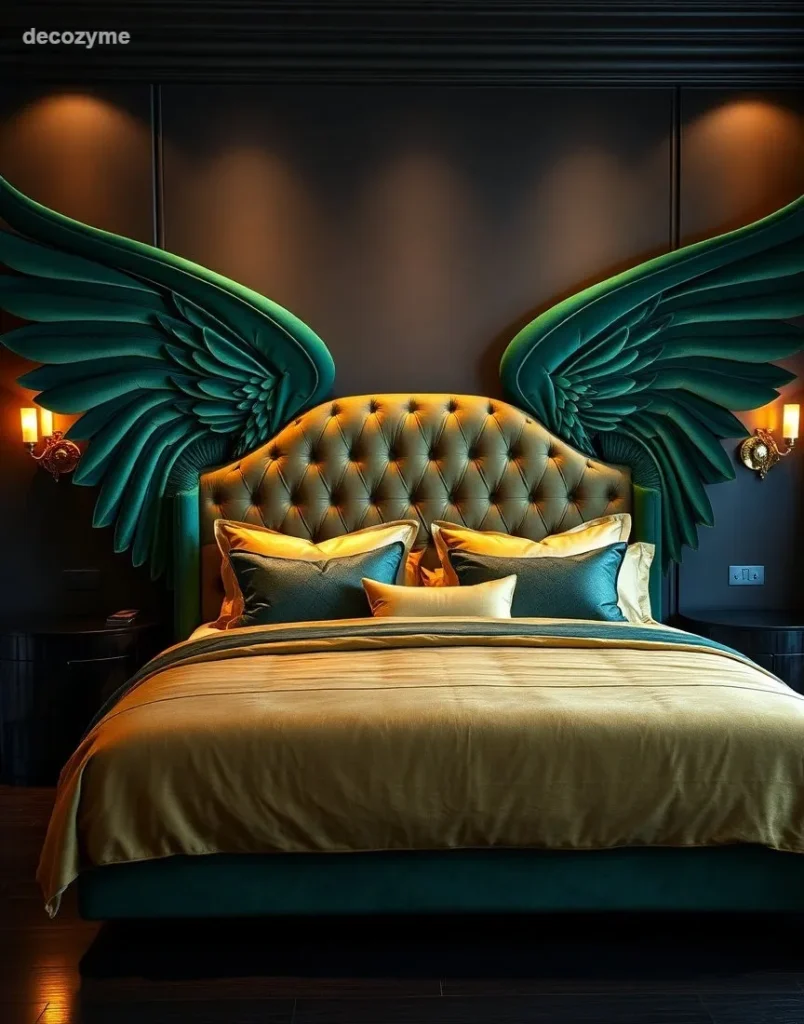
If you want drama, proper, unapologetic drama, a tall velvet winged headboard delivers every single time. The wings wrap around the sides of the bed and create this incredibly cocooning, hotel-suite feeling that’s honestly hard to replicate with any other style.
Velvet in deep jewel tones (emerald, sapphire, burnt ochre) looks absolutely stunning against white or light grey walls. And the height matters: go for at least 130–140cm if your ceilings allow it. A short winged headboard just looks a little… defeated.
I’ve seen this style work brilliantly in smaller rooms,, t;o, the verticality actually tricks the eye into perceiving more ceiling height. Counterintuitive, but it works.
Best for: Maximalist bedrooms | Luxury hotel aesthetic | Anyone who wants their bedroom to feel like a five-star suite
3. Slatted Wooden Headboard
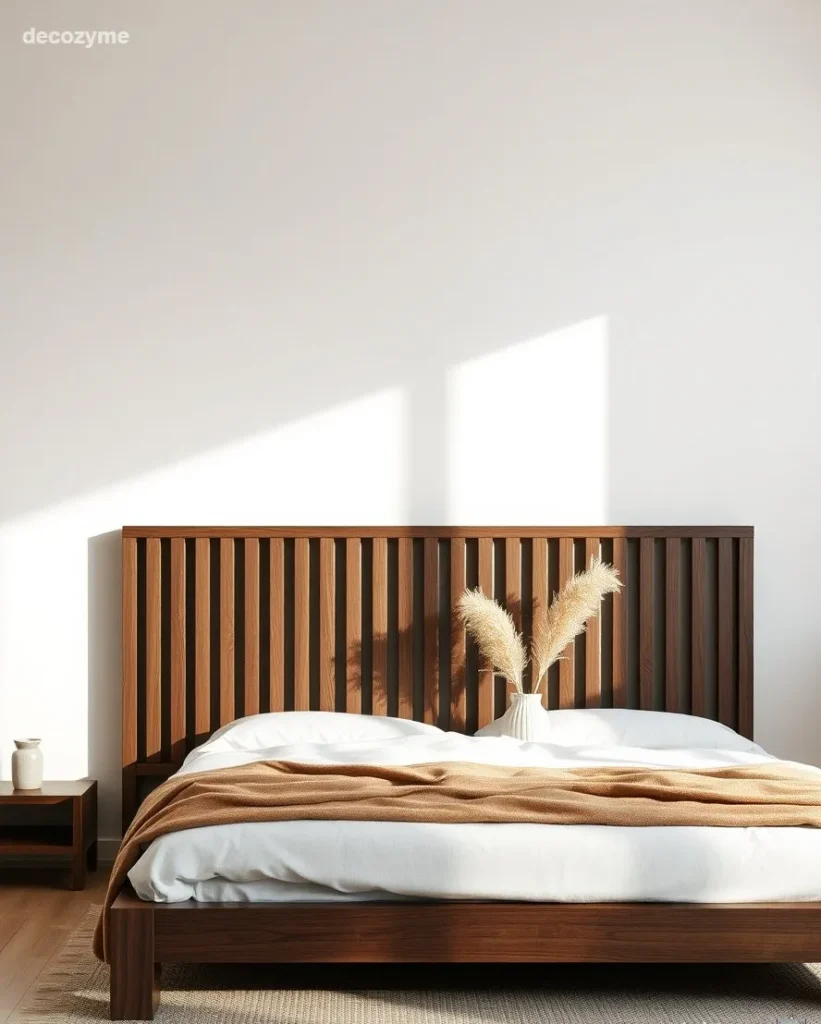
Here’s one that’s had a serious glow-up over the past few years. Slatted wooden headboards used to feel very “beach house circa 2009,” but the newer iterations, particularly in dark-stained oak or matte black-finished timber, look genuinely contemporary.
The beauty of a slatted design is in its visual rhythm. The repeating vertical lines create movement without clutter, and they work incredibly well in Japandi-style bedrooms where the goal is calm simplicity with natural material warmth.
- Lighter woods (ash, pine) → airy, Scandi feel
- Darker stains (walnut, ebony oak) → moody, sophisticated tone
- Natural/raw finish → rustic, organic, live-edge adjacent
If you’re doing a DIY version, this is also one of the more achievable builds, essentially timber battens fixed to a plywood backing. Satisfying project, genuinely impressive result.
Best for: Japandi, Scandi, and modern rustic bedrooms
4. Live Edge Wooden Headboard
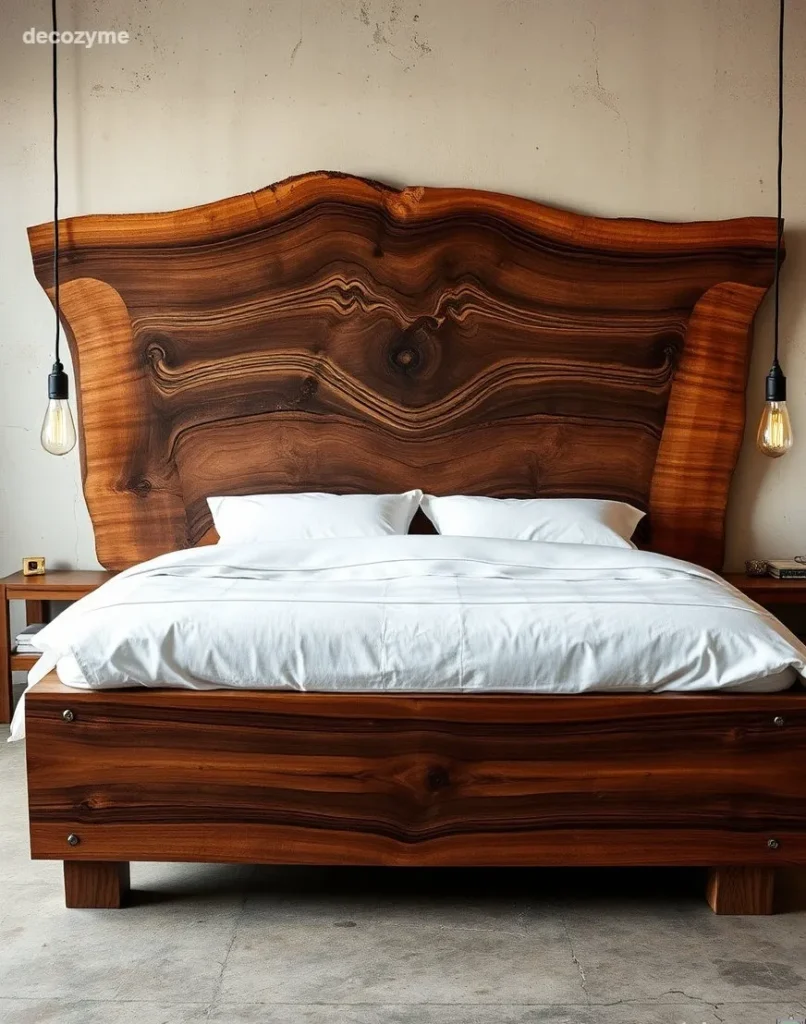
Speaking of organic, the live-edge headboard is for people who want their bedroom to feel like it grew there naturally. A live-edge slab keeps the original edge of the tree intact, with all its curves, knots, and grain variation. No two are identical. That’s the whole point.
This style is a genuine statement piece. You don’t need much else in the room when the headboard already has this much personality. Keep the bedding simple; crisp white linen works perfectly, and let the wood do the talking.
Fair warning: live-edge slabs are not cheap. A quality piece in walnut or maple can run into several hundred (or thousand) pounds/dollars, depending on the size. But treated well, it lasts decades and actually appreciates in character over time.
Best for: Nature-lovers | Statement-piece bedrooms | People who appreciate true craftsmanship
5. Scalloped or Fluted Headboard
If you’ve been on Instagram or Pinterest in the last two years, you’ve definitely seen the fluted headboard moment. The vertical grooves in the fabric or timber create a beautifully tactile surface that catches light in a way flat panels simply can’t.
Scalloped edges (curved arched tops) work similarly; they add a soft, romantic silhouette that feels both vintage and modern at once. It’s a rare design trick that manages to look equally at home in a 1920s Art Deco apartment and a brand new minimalist flat.
My personal take: the scalloped linen headboard in dusty pink or sage green is genuinely one of the most photogenic bedroom choices out there. Is it slightly trendy? Yes. Is it also just… really beautiful? Also yes.
Best for: Romantic, feminine bedrooms | Art Deco | Anyone who loves tactile texture
6. Cane or Rattan Headboard
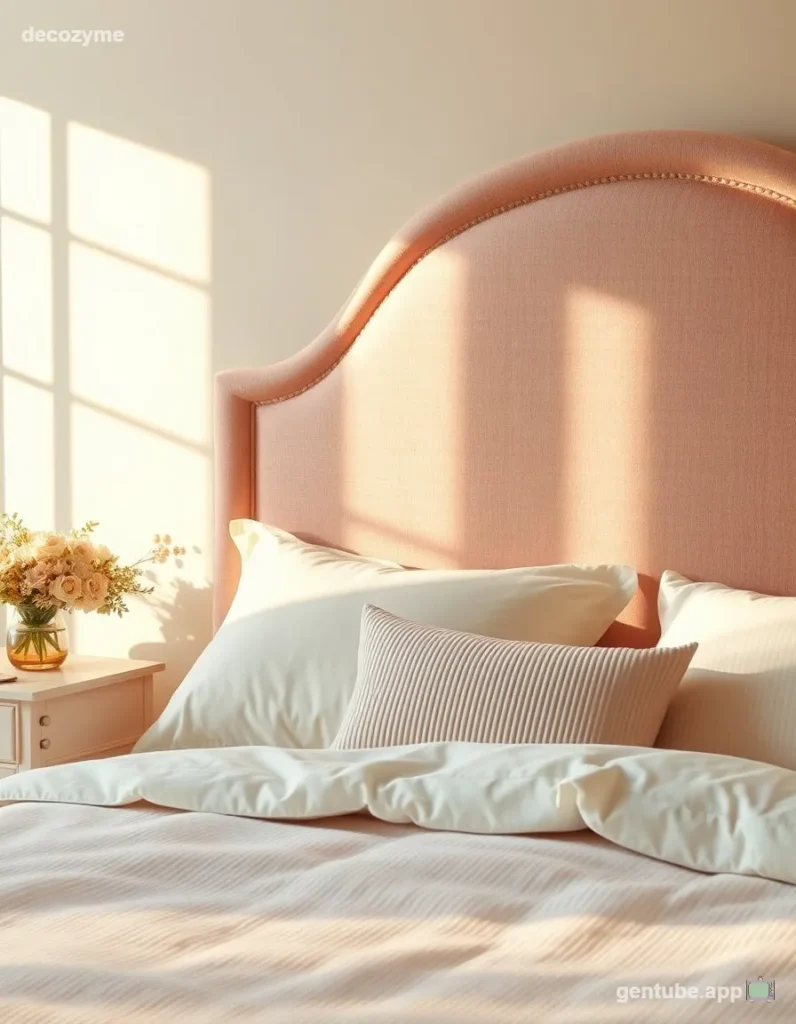
Cane and rattan have made a full comeback, and honestly, I’m not complaining. A cane headboard brings warmth, lightness, and a touch of that breezy bohemian energy that makes a bedroom feel lived-in and relaxed rather than showroom-stiff.
The fan-back rattan style,e in particular, where the cane fans out in a curved arch, creates a really striking silhouette that almost doubles as wall art. Pair it with woven cushions, linen bedding, and some trailing plants, and you’ve essentially built a tropical sanctuary without leaving the house.
Practical note: Canee can be slightly harder to keep clean than fabric or solid wood, so if you have pets or kids who treat your bed as a trampoline, maybe factor that in. (Speaking from experience here :
Best for: Bohemian, coastal, tropical, and mid-century modern bedrooms
7. Headboard with Built-In Storage
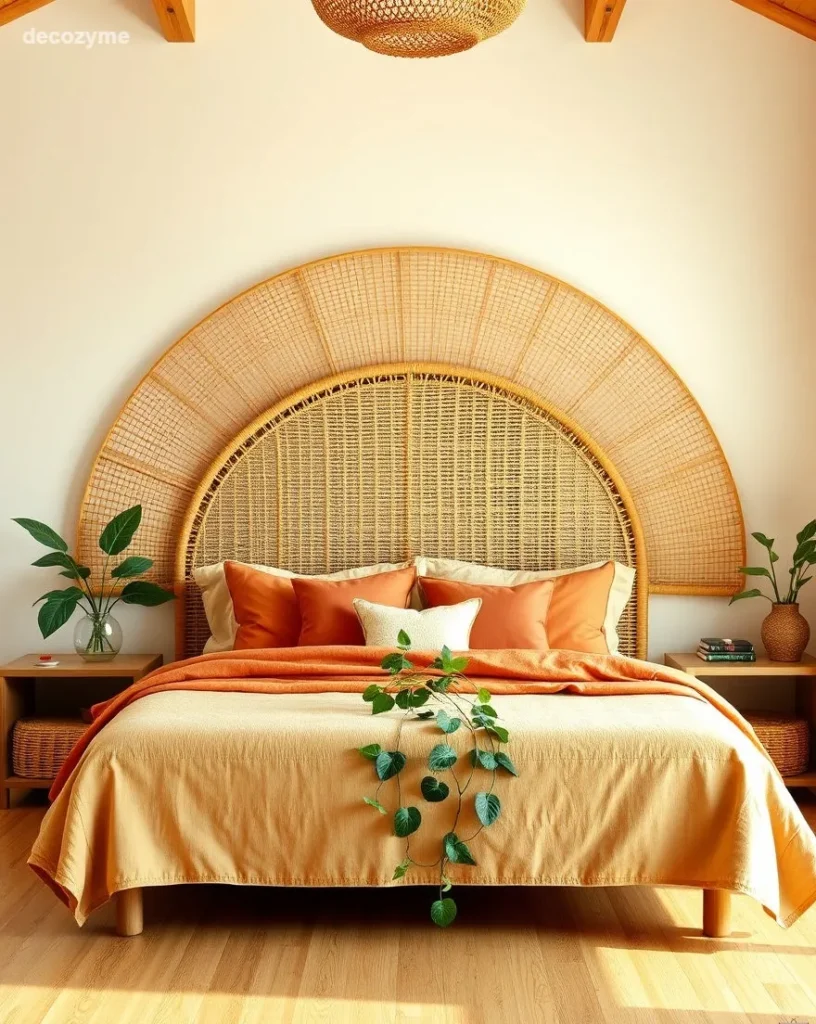
For smaller bedrooms or anyone who just needs more storage without cramming in another piece of furniture, a headboard with integrated shelving or storage is genuinely a game-changer. You get bedside storage, display space, and sometimes even lighting built into a single structure.
The Biface-style headboard with storage (as seen in Competitor 1’s roundup) takes this to a neat extreme; compartments framed into the headboard itself give you organised space without the visual bulk of floating shelves or bedside tables.
Things to look for in a storage headboard:
- Adjustable shelf depth, books and lamps need different spacing
- Built-in USB or power ports are genuinely useful in 2024
- Soft-close drawers or doors, trust me, you’ll thank yourself at 2 amm
Best for: Studio flats and small bedrooms | Minimalists who still need storage | People who read in bed
8. Padded Tufted Headboard for a Traditional Feel
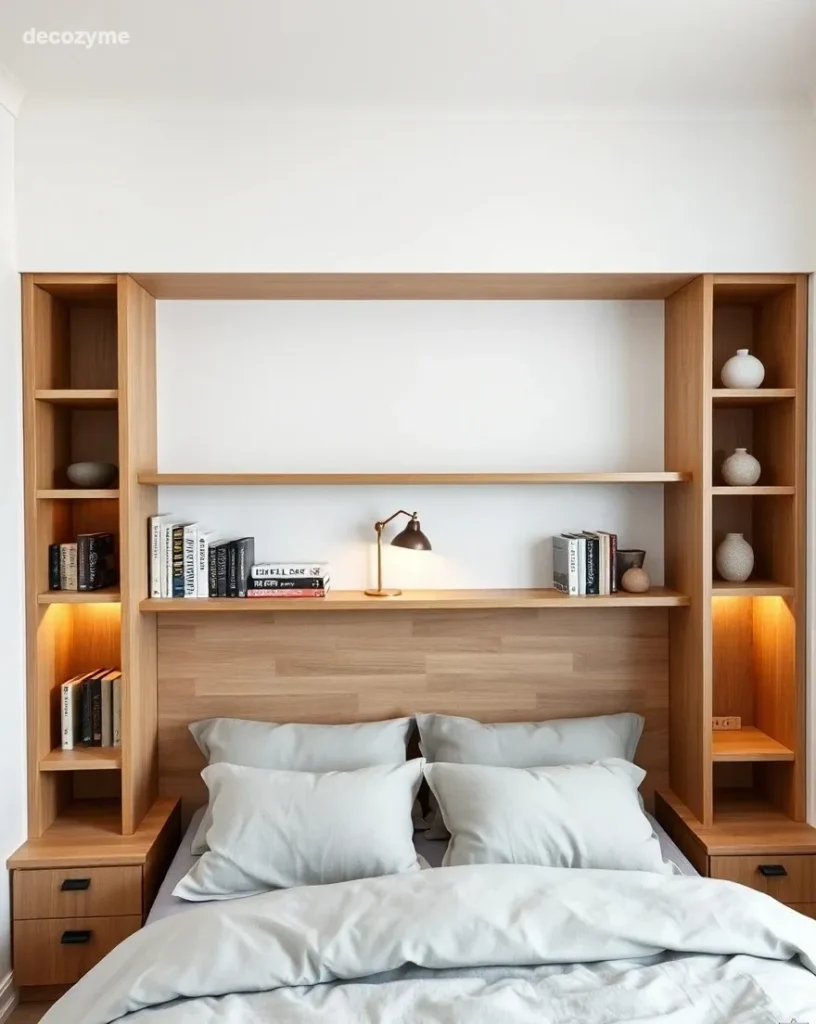
Button-tufted headboards have been around for decades for a very good reason: they look genuine and expensive,e and they’re incredibly comfortable to lean against. The deep tufting creates a quilted, sculptural surface that adds dimension to the wall without requiring anything else around it.
In a classic bedroom with wooden furniture and rich fabrics, a velvet or faux leather button-tufted headboard in charcoal, ivory, or deep burgundy feels appropriately luxurious. In a more pared-back modern room, a flat-tufted version in pale linen keeps the elegance without the grandeur.
The only downside? Dust collects in the tufting folds. Worth knowing before you buy, a lint roller becomes your best friend.
Best for: Traditional and classic bedrooms | Hotel-style luxury | Anyone who loves texture
9. Poured Plaster or Painted Wall Headboard
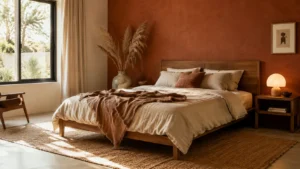
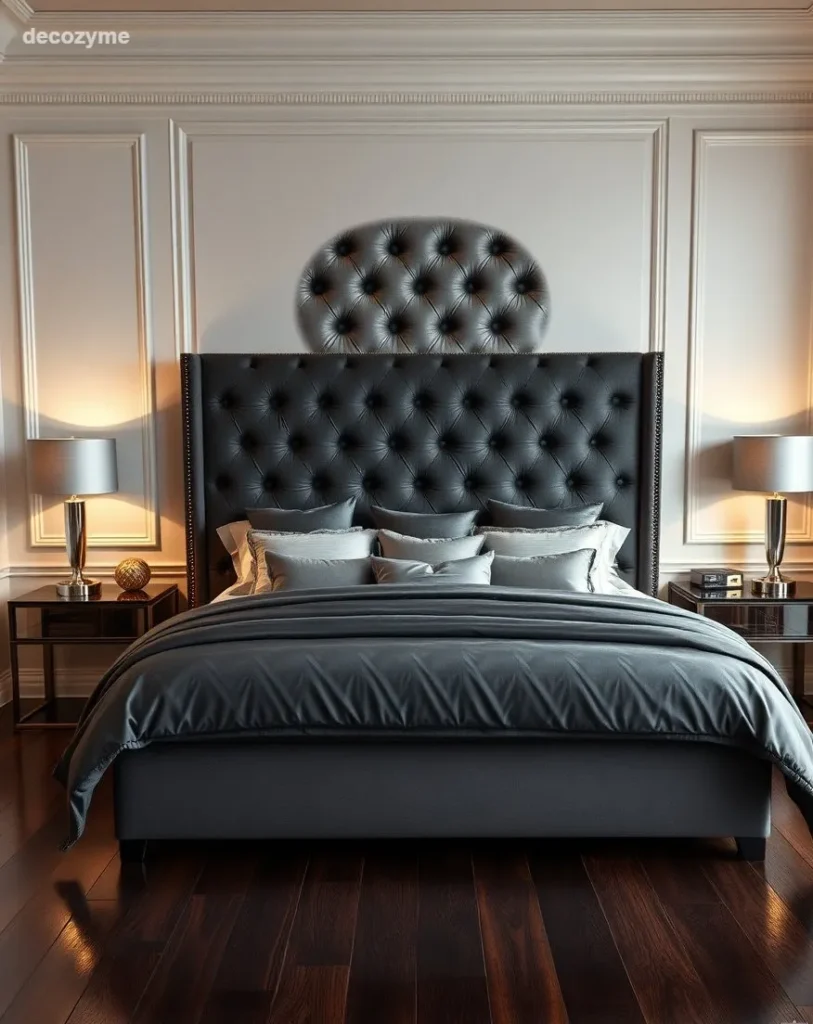
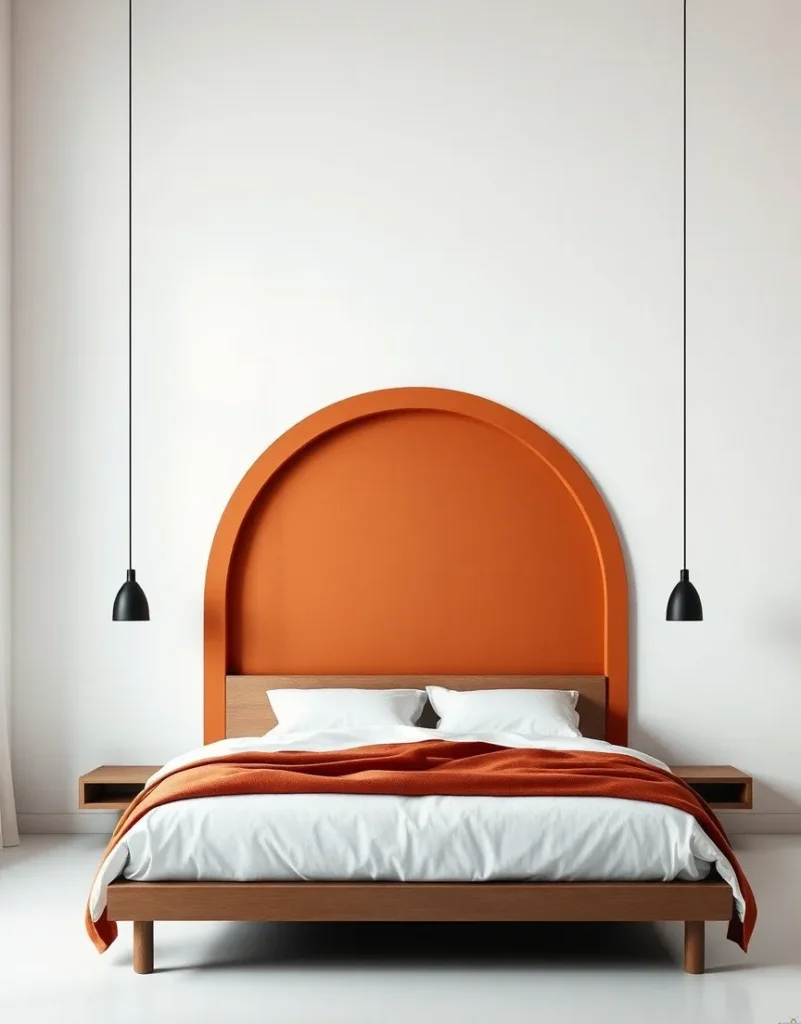
Wait, not a headboard at all? Hear me out. A painted arch or plaster panel directly on the wall behind your bed does exactly what a headboard does visually, for a fraction of the cost and with zero purchasing decisions. This is one of those ideas that sounds slightly wild until you see it done well.
A curved arch painted in a contrasting matte colour, terracotta against white, dusty blue against warm grey, deep green against blush, creates an incredibly sophisticated effect. Add a single pendant light on either side, and it looks like something from an interior design magazine.
FYI, this approach is also brilliant for renters who can’t drill into the wall; use removable paint or a large-format wallpaper panel instead.
Best for: Renters | Budget decorators | Minimalists who still want visual impact
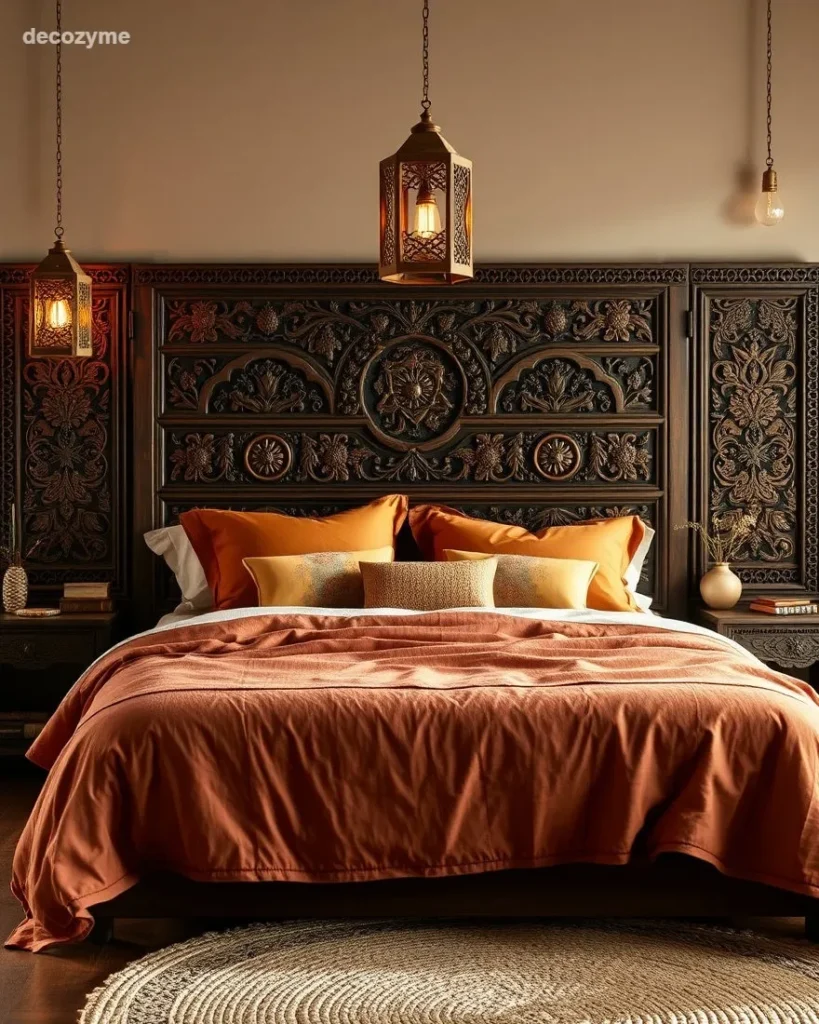
10. Carved Wooden Headboard
For bedrooms that want a sense of history and craftsmanship, a hand-carved wooden headboard brings something truly distinctive. Think intricate geometric patterns, organic botanical carvings, or Moroccan-inspired lattice work, the kind of detail that takes a skilled artisan hours to produce.
The Gentong carved wooden headboard (referenced by Competitor 1) is a great example of how this style can feel exotic and cosy simultaneously. These headboards tend to work best in rooms that aren’t trying to be minimal, let the carving breathe in a space with other natural textures and warm tones.
One thing to note: deeply carved wooden headboards can collect dust in the grooves. A dry soft brush or a low-power vacuum attachment handles it easily, but it’s worth knowing upfront.
Best for: Bohemian and global-inspired bedrooms | Heritage-style rooms | Collectors of artisanal pieces
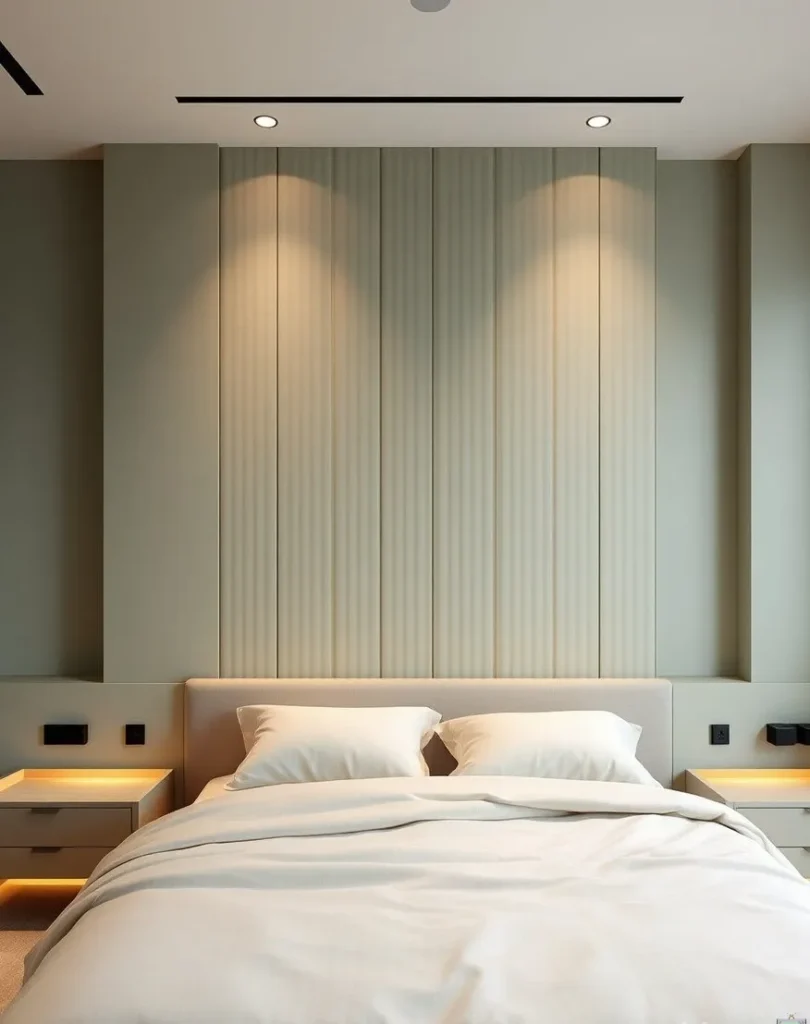
11. Extended Fluted or Integrated Headboard Panel
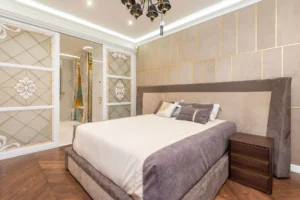
This is the one that interior designers seem to be putting in absolutely everything right now, and for good reason. An extended panel headboard runs the full width of the wall (or nearly), often incorporating the bedside tables into a single unified structure. It makes the bedroom feel architecturally considered rather than assembled from individual pieces.
Fluted panelling (those vertical groove details again) in painted MDF, timber, or even fabric gives the wall serious design intention. It’s especially effective in bedrooms with lower ceilings because the horizontal spread of the panel makes the room feel wider.
This is absolutely achievable as a DIY project if you’re handy. MDF fluted panels, a tin of eggshell paint, and some LED strip lighting behind the panel, is a weekend project that looks four times its cost.
Best for: Modern, architecturally-minded bedrooms | Open-plan bedroom areas | Anyone who wants a truly custom look
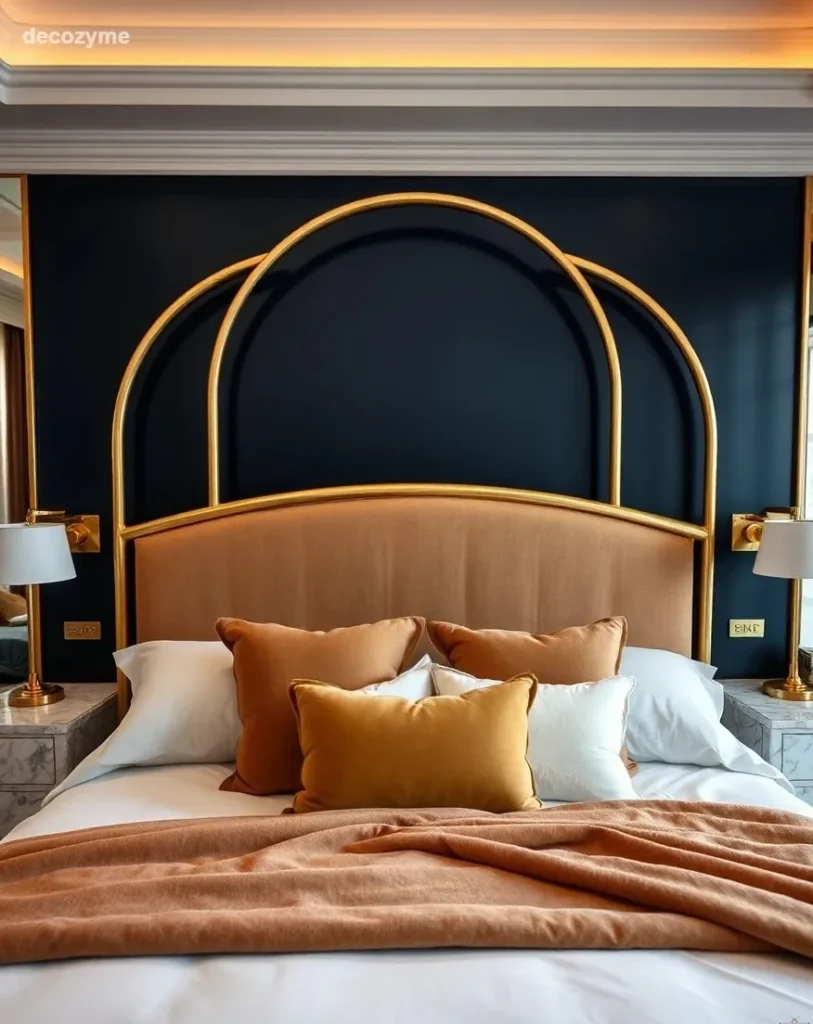
12. Metallic or Wrought Iron Headboard
Brass, brushed gold, matte black steel, antique bronze, and metallic headboards hit differently depending on the finish, and all of them bring a level of sophistication that’s hard to replicate in fabric or wood.
Warm metallics (brass, gold) work beautifully in rooms with terracotta, rust, cream, or deep green tones. They feel luxurious and slightly maximalist without being over the top.
Matte black metal suits the more industrial, contemporary bedroom, clean lines, no fuss, very intentional.
Rococo-inspired silver metallic (as per Competitor 2’s roundup) brings an almost theatrical grandeur that works brilliantly in a room that leans into the ornate.
Best for: Glam bedrooms | Industrial loft styles | Anyone who loves mixing metals with rich colours
13. DIY Headboard: Reclaimed Wood or Pallet Style
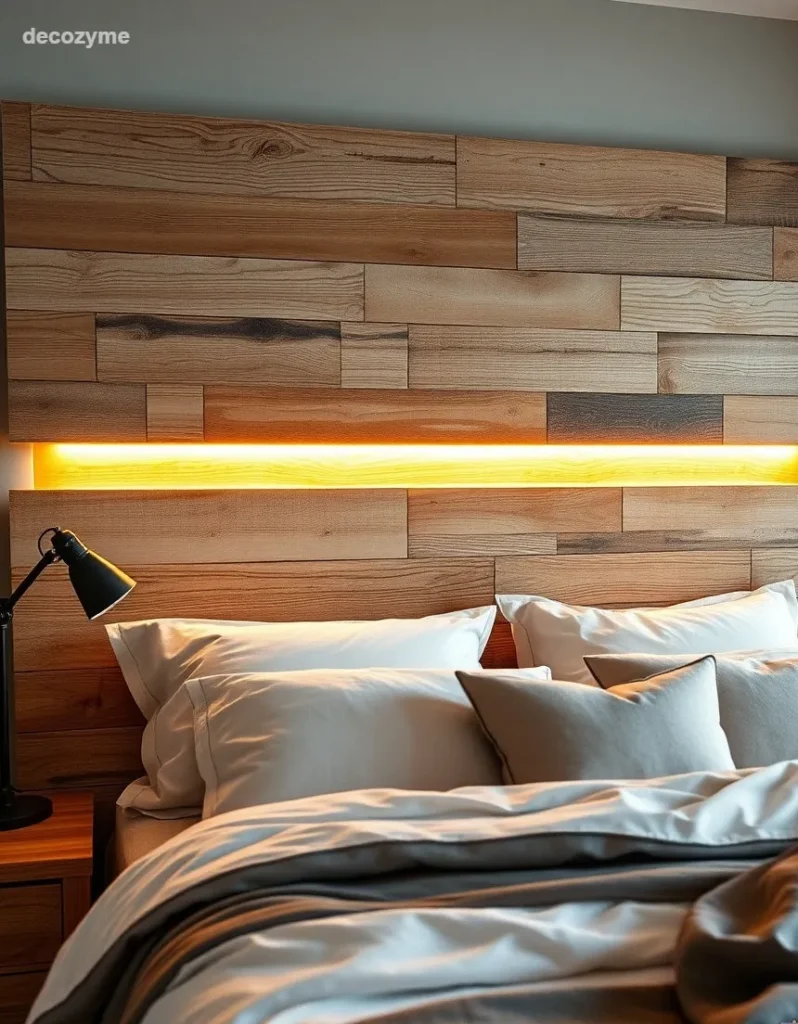
Not everything needs to cost a fortune. A reclaimed wood headboard, assembled from salvaged timber, old floorboards, or even clean pallet wood, can look genuinely brilliant if you approach it with a bit of care.
The key is in the preparation and finish: sand properly, treat the wood with either a natural oil or a matte varnish, and arrange the planks with intention (varying the grain direction or mixing widths looks far more considered than uniform rows).
Add some simple LED strip lighting behind it for ambient glow, and you’ve got a headboard that looks like it came from a high-end artisan furniture maker. The satisfaction of making it yourself is honestly half the appeal.
Best for: Budget bedroom transformations | Creative DIYers | Rustic, farmhouse, and industrial styles
14. Vintage Shutter Headboard
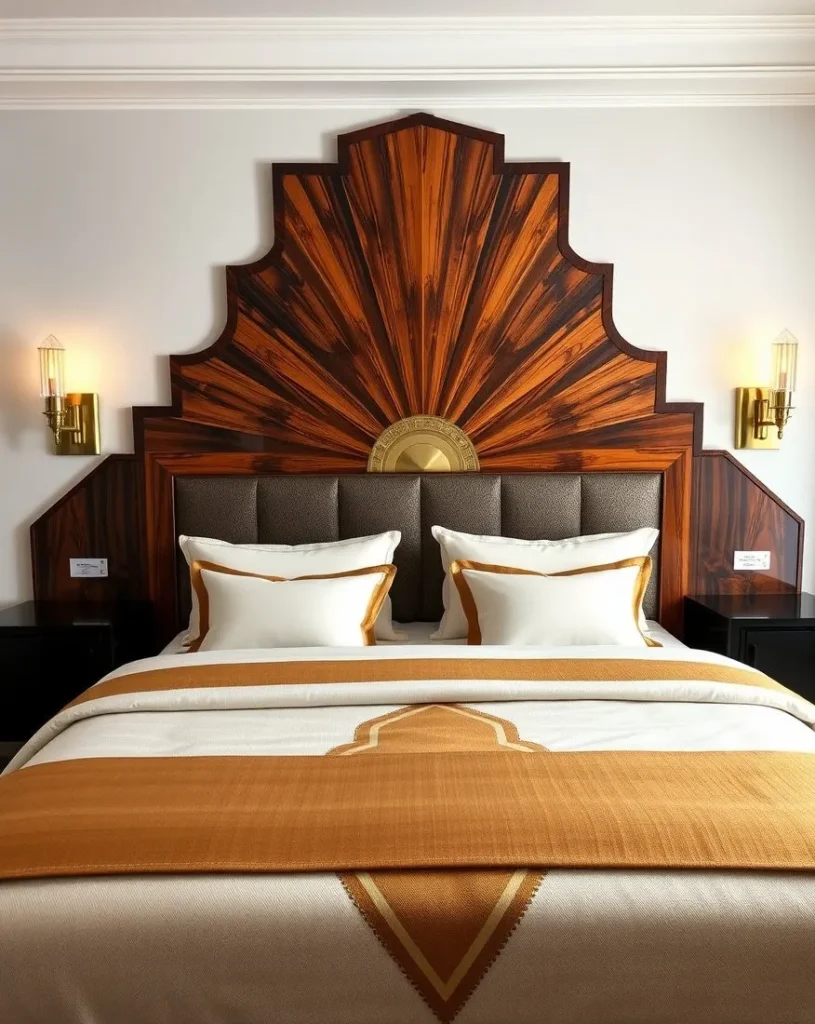
This one’s more niche but genuinely gorgeous when done right. Repurposed wooden shutters, either salvaged or bought new and distressed, mounted as a headboard, bring serious character and a strong sense of place. Think old French farmhouse, Provençal villa, or Mediterranean courtyard.
The natural weathered texture of aged shutters adds the kind of patina that money can’t buy. Pair with white linen bedding, terracotta accents, and warm wooden floors and the effect is almost transportive.
Best for: Vintage and farmhouse bedrooms | Anyone who wants a one-of-a-kind piece | Lovers of French country or Mediterranean style
15. The Art Deco Headboard
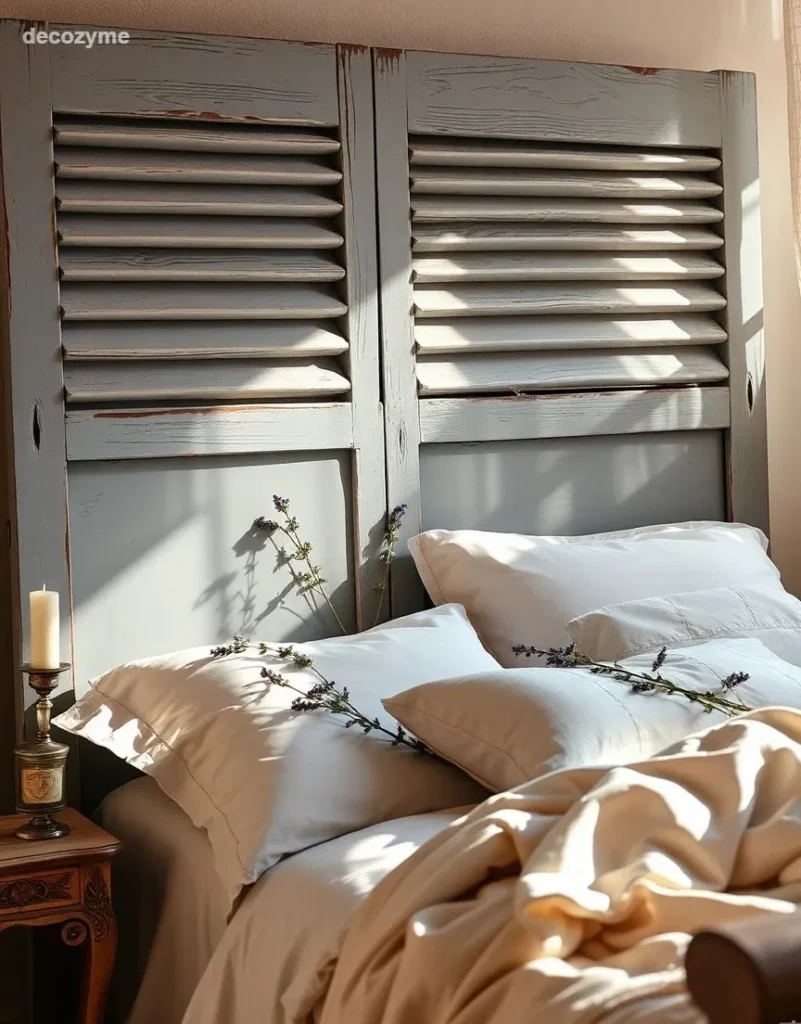
If you’ve ever stayed in a genuinely beautiful hotel and thought, ” Why doesn’t my bedroom feel like this?”, it’s probably because the hotel used Art Deco design principles. Geometric symmetry, bold shapes, rich materials, and that confident sense of proportion.
An Art Deco headboard typically features:
- Strong geometric shapes, fan patterns, chevrons, stepped arches
- Rich, contrasting materials, walnut with brass inlay, velvet with chrome trim
- Symmetry as a design principle, matching sconces or bedside tables, completes the effect
It’s arguably the most formal style on this list, but executed well, it produces bedrooms that feel genuinely timeless rather than trendy. Worth the investment if Art Deco resonates with you.
Best for: Period properties | Glamorous, formal bedrooms | Anyone who loves the 1920s-1940s aesthetic
How to Choose the Right Headboard: A Quick Buying Guide
Before you fall in love with a specific style, run through these practical checkpoints:
Consider Your Room Size First
- Small rooms: choose taller, slimmer headboards; they draw the eye up and make the space feel larger
- Large rooms: a wider panel or extended headboard fills the wall proportionally
- Low ceilings: avoid anything that rises significantly above the bed frame, as it’ll make the room feel cramped
Match the Style to the Room, Not Just the Bed
Your headboard should complement your existing furniture tone and colour palette. A carved wooden headboard in a high-gloss modern room will feel like a mistake, no matter how beautiful it is in isolation.
Think About Practicality
- Do you read or watch TV in bed? → Upholstered or padded headboard for comfort
- Do you have limited storage? → Built-in shelf or storage headboard
- Do you have pets? → Avoid deep tufting or delicate cane, both are hard to clean
Set a Realistic Budget
Headboard prices range enormously:
- Budget (under £150/$150): DIY options, simple painted wall panels, basic fabric headboards
- Mid-range (£150–£600/$150–$600): quality upholstered, slatted wood, rattan
- Luxury (£600+/$600+): bespoke upholstered, live edge, hand-carved, designer pieces
Frequently Asked Questions About Headboards
What headboard style is most popular right now?
Upholstered linen headboards and fluted panel styles are dominating right now, both because they’re incredibly versatile and because they photograph brilliantly. Cane and rattan are also having a sustained moment, particularly in boho and coastal rooms.
Do I actually need a headboard?
No, but you probably want one. Beyond aesthetics, a headboard protects your wall from scuffs and marks, provides something to lean against when sitting up in bed, and genuinely anchors the visual composition of the room. Bare walls behind beds tend to look unfinished.
What size headboard should I get?
As a rule, your headboard should be at least as wide as your mattress, ideally a few inches wider on each side. Height is more personal; taller headboards (120cm+) make more of a statement; shorter ones (80–100cm) suit lower-profile, minimalist rooms.
Can I attach any headboard to any bed frame?
Not always. Freestanding headboards, floor-standing designs, and wall-mounted headboards work independently of the bed frame. Bolt-on headboards need to be compatible with the specific frame size and attachment system. Always check before buying.
What’s the best headboard material for someone with allergies?
Smooth, non-porous surfaces are easiest to keep dust-free; solid wood or metal is ideal. If you prefer upholstery, choose a tightly woven fabric (not velvet or deep tufting) and hoover it regularly.
How do I fix a headboard to the wall without damaging it?
Command strips and adhesive hanging systems work for lighter headboards (under 5kg). For heavier pieces, use hollow wall anchors or locate the studs and use appropriate screws. For renters, a freestanding floor-mounted headboard avoids the issue entirely.
Final Thoughts
Choosing a headboard is genuinely one of the most impactful single decisions you can make in a bedroom. It’s not as expensive as a new mattress, not as disruptive as repainting, and it doesn’t require moving furniture. But the difference between a bedroom with the right headboard and one without is remarkable.
Take your time with it. Think about the overall mood you want: calm and minimal, cosy and dramatic, light and natural, bold and glamorous, and let that guide the material, height, and style choice rather than picking something purely because it looks good in a photo.
Whatever direction you go, the most important thing is that it feels right to you. It’s your bedroom. Make it somewhere you actually want to spend time.
Now, which one are you going with?