Create a Beautiful Kitchen That Feels Bigger, Brighter, and Effortlessly Stylish
If your kitchen feels like it’s working against you instead of for you, you’re definitely not alone. Small kitchens can feel cramped no matter how often you tidy up. The good news is that making a small kitchen feel bigger isn’t about knocking down walls. It’s mostly about smart choices with color, storage, and layout.
I’ve lived in a few tiny kitchens over the years (one apartment had a kitchen so small I could touch both walls at once, not exaggerating), and I’ve picked up a lot of tricks along the way. In this guide, I’m sharing 15 ideas that genuinely make a small kitchen feel more open and stylish, without requiring a full renovation. Let’s get into it.
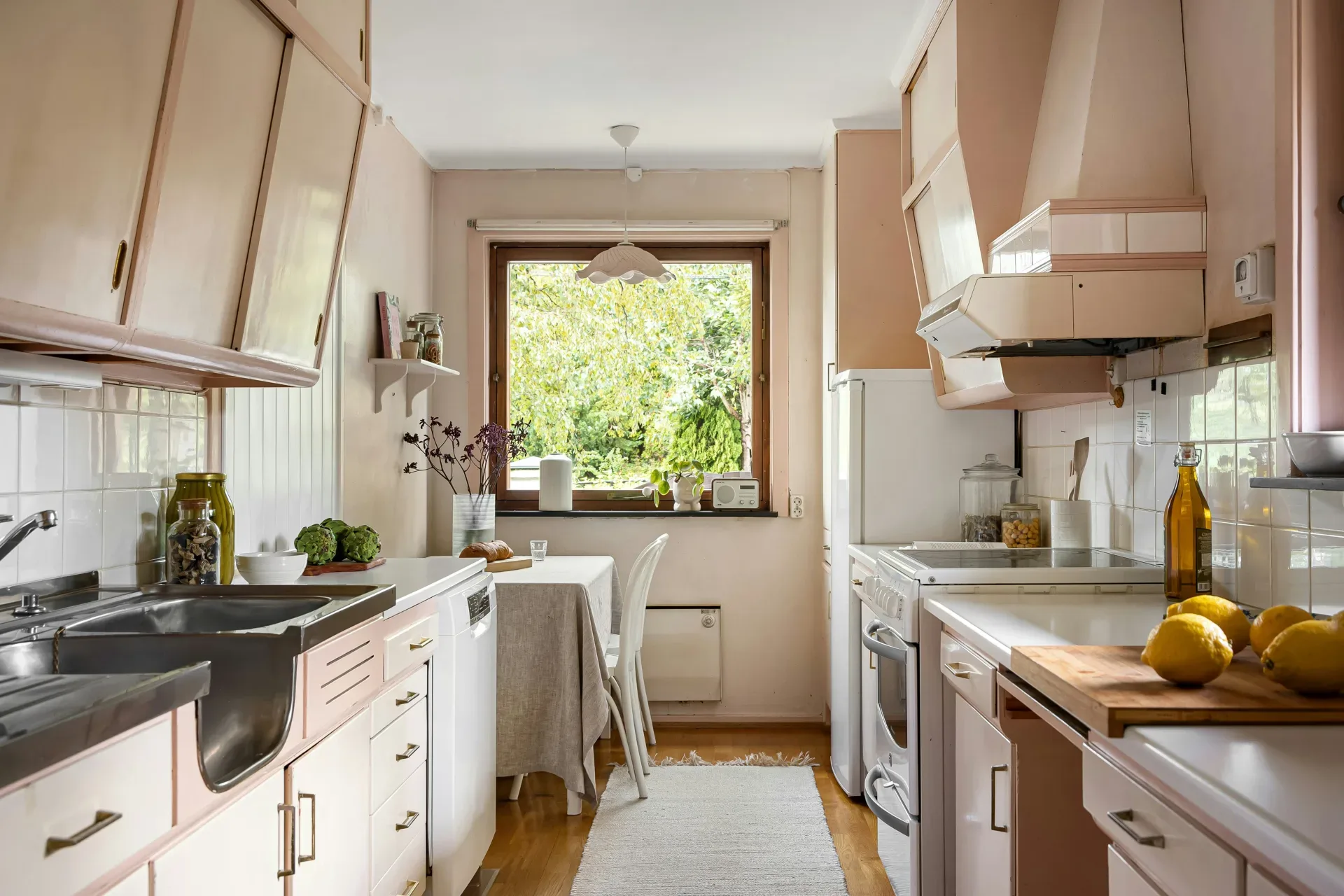
1. Use Light Color Palettes to Open Up Space
Light colors reflect more light, which makes any room, especially a small kitchen, feel bigger and brighter. White, cream, soft gray, and pale wood tones are go-to choices for a reason.
I painted my tiny kitchen’s walls a soft warm white a while back, and the difference was almost immediate. The room felt noticeably brighter, even though the actual square footage obviously didn’t change at all.
Styling Tips
- Stick to light, warm-toned neutrals for walls and cabinets
- Use light countertops to reflect even more light
- Add subtle texture (like a soft linen curtain) to avoid feeling sterile
- Reserve darker tones for small accents only
Why It Works
Light colors bounce light around a room rather than absorbing it, which creates the illusion of more space. Dark colors, while cozy in larger rooms, can make small kitchens feel more closed-in. This is one of those changes that’s relatively cheap but has an outsized visual impact.
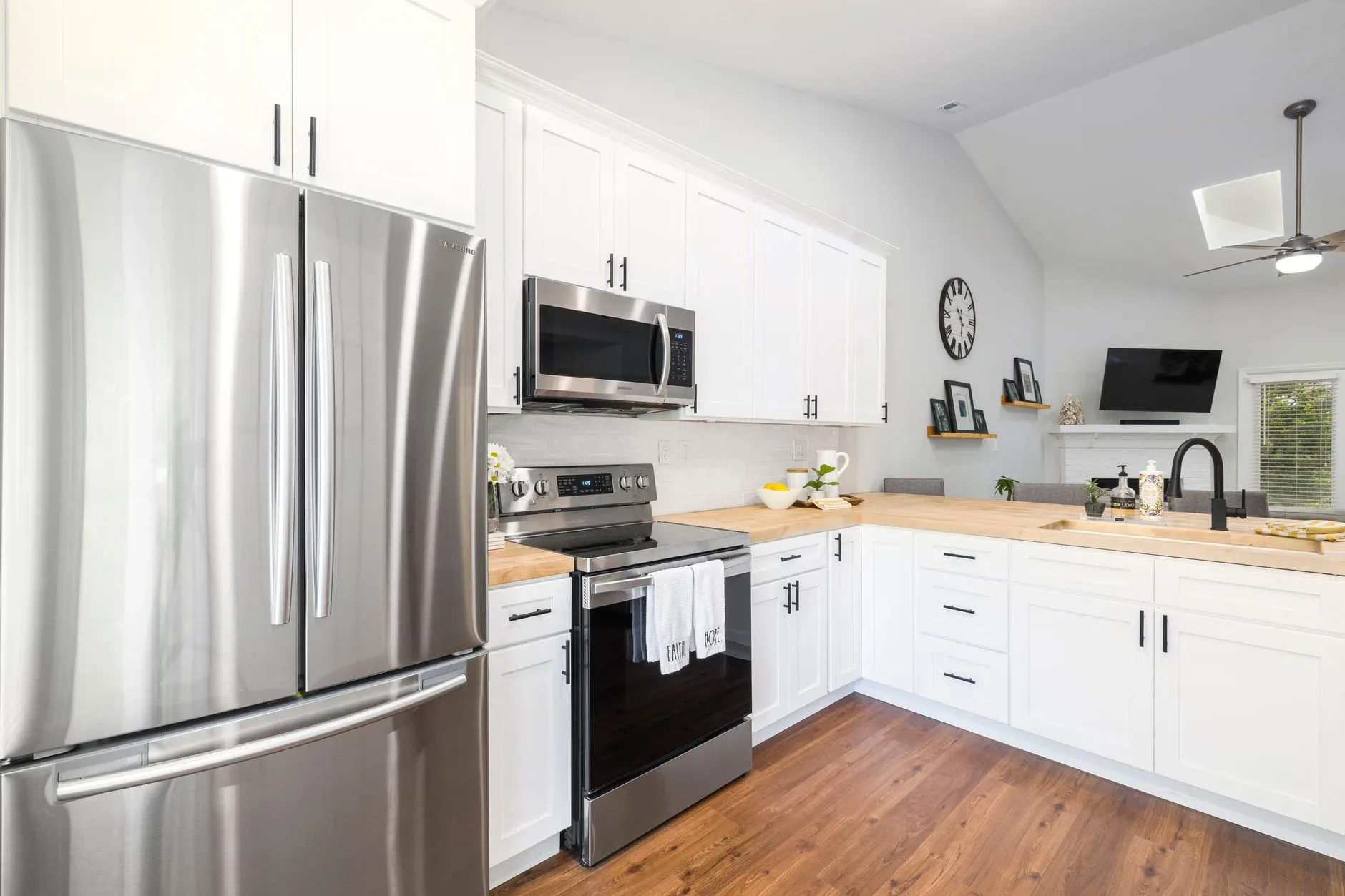
2. Install Open Shelving for Airy Storage
Open shelving keeps storage visible and light, rather than boxing it in behind heavy cabinet doors. It’s a popular small-kitchen trick for a reason; it adds storage without adding visual bulk.
I swapped a couple of upper cabinets for open shelves, and honestly, it made the whole kitchen feel less like a box. Ever notice how a wall of closed cabinets can make a room feel like it’s pressing in on you a bit? Open shelving fixes that.
Styling Tips
- Replace one or two upper cabinets with floating shelves
- Style with a mix of everyday dishes and a few decorative pieces
- Keep items grouped and tidy; open shelving shows everything
- Choose wood or matte finishes for a warmer look
Why It Works
Open shelves let your eye travel through the space rather than stopping at solid cabinet doors, making the room feel more open. They also create a sense of airiness; there’s literally less “stuff” blocking your view, even if the storage capacity is similar.
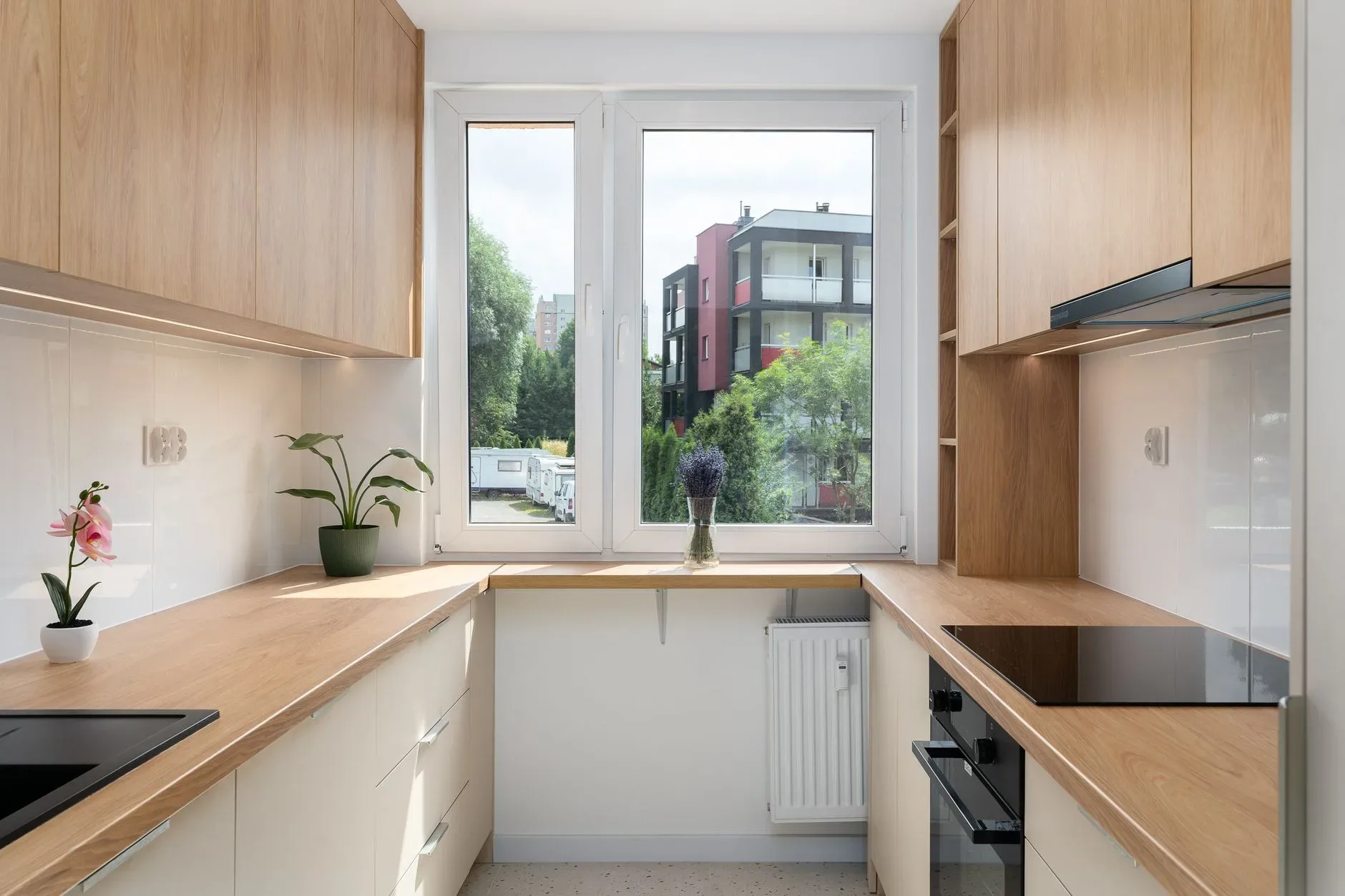
3. Add Mirrors or Reflective Surfaces for Depth
Mirrors aren’t just for bedrooms and bathrooms; a well-placed mirror or reflective surface in a kitchen can add depth and bounce light around, making the room feel larger.
I added a small mirrored backsplash section behind my stove, and it’s subtle, but it adds this nice sense of depth that I didn’t expect. IMO, reflective surfaces are one of the most underused tricks in small kitchen design.
Styling Tips
- Use mirrored or glass tile for a backsplash section
- Choose glossy cabinet finishes to reflect light subtly
- Position mirrors to reflect windows or light fixtures
- Stainless steel appliances also add a reflective quality
Why It Works
Reflective surfaces bounce both natural and artificial light around the room, creating a sense of depth that flat, matte surfaces don’t provide. This is the same principle interior
it just doesn’t get talked about as much for kitchens.
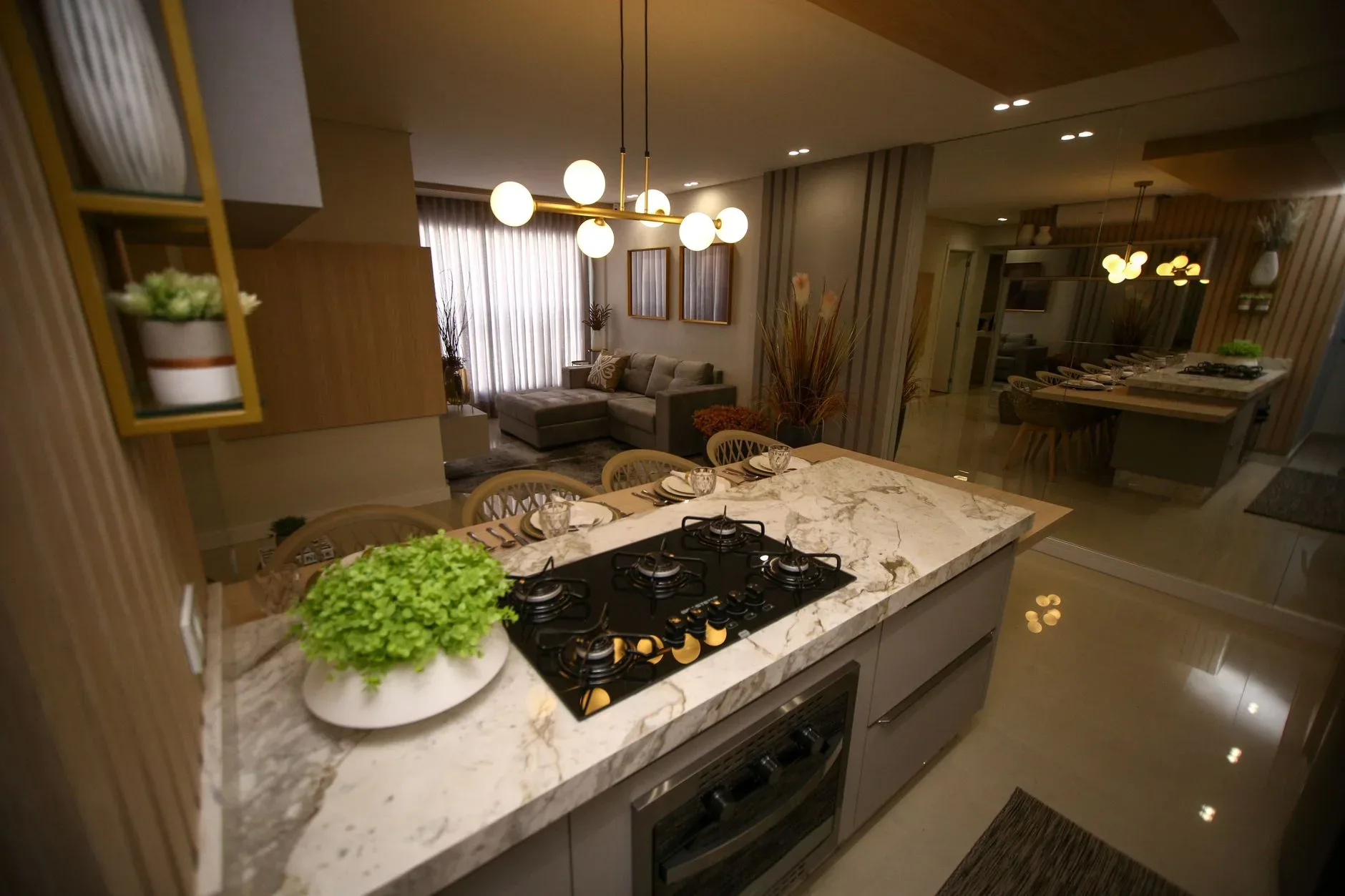
4. Use Vertical Storage to Maximize Space
When floor space is limited, the walls become your best friend. Vertical storage, tall cabinets, wall-mounted racks, hooks, takes advantage of space that often goes completely unused.
I added a tall, narrow shelving unit next to my fridge (a spot that was basically dead space before), and it now holds half my pantry items. Sometimes those awkward little gaps are exactly where extra storage is hiding.
Styling Tips
- Look for narrow gaps between appliances or cabinets for tall storage
- Use wall-mounted racks for pots, pans, and utensils
- Add hooks under shelves for mugs or towels
- Keep frequently used items at eye level, and less-used items higher up
Why It Works
Most small kitchens run out of floor space long before they run out of wall space. Vertical storage shifts the visual weight of the room upward and outward, rather than cramming everything into limited countertop or cabinet space, which keeps things functional without feeling crowded.
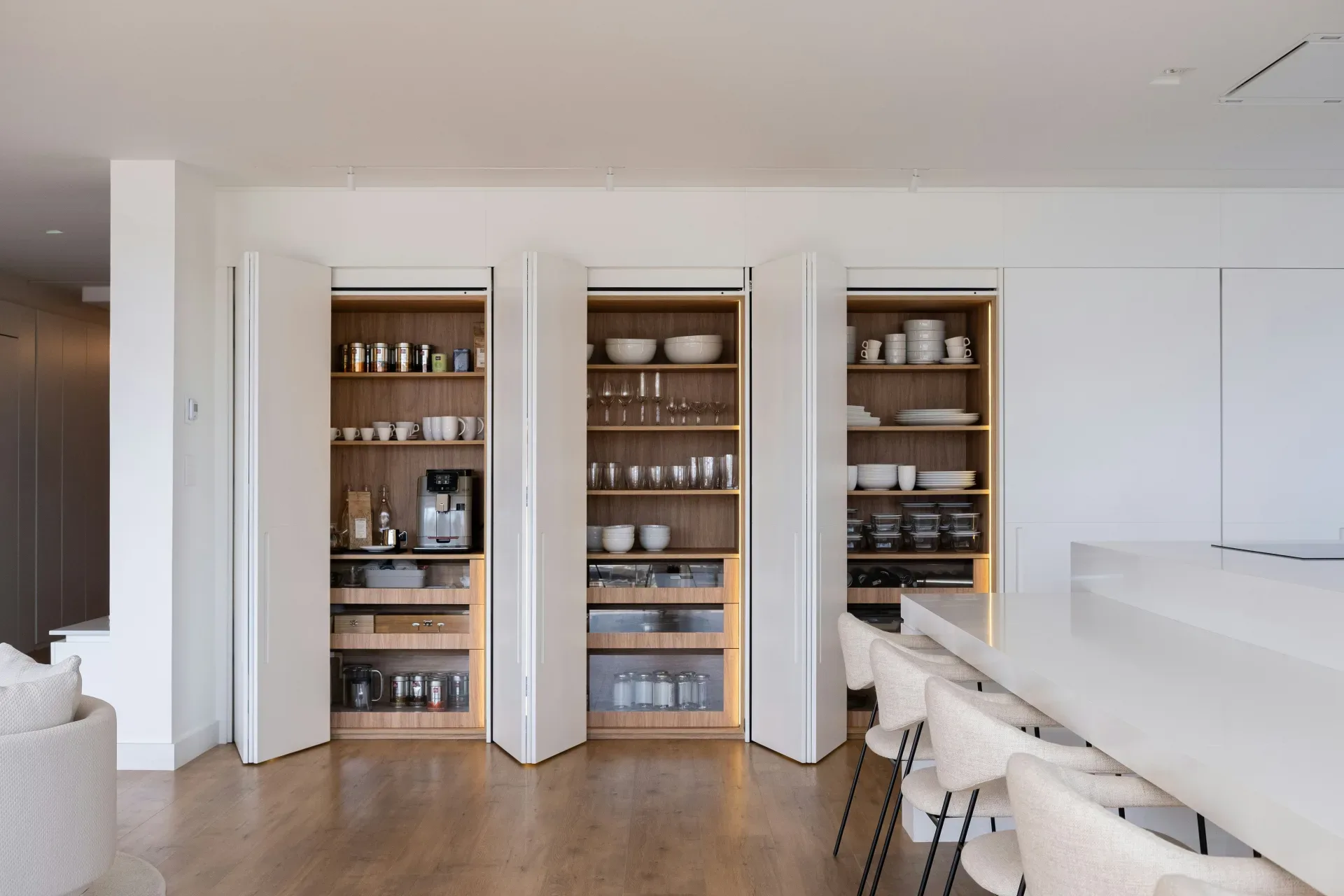
5. Choose Minimalist Cabinet Designs for a Clean Look
Ornate cabinet doors with heavy molding can make a small kitchen feel busier than it needs to be. Simple, flat-panel or shaker-style cabinets create a cleaner look that doesn’t compete with the rest of the room.
I’ll admit, I used to think more detail meant more “designed.” But after seeing how clean, simple cabinet fronts look in smaller spaces, I get why minimalist design is so popular in compact kitchens; it just breathes better.
Styling Tips
- Choose flat-panel or simple shaker-style cabinet doors
- Stick to one or two finishes maximum
- Opt for slim, simple hardware, or none at all, with push-to-open doors
- Keep cabinet colors consistent with walls for a seamless look
Why It Works
Minimal detailing reduces visual “noise,” which helps a small space feel calmer and larger. Ornate details, while beautiful in bigger kitchens, tend to multiply visually in small spaces; every line and groove adds up fast when there’s less room for your eye to rest.
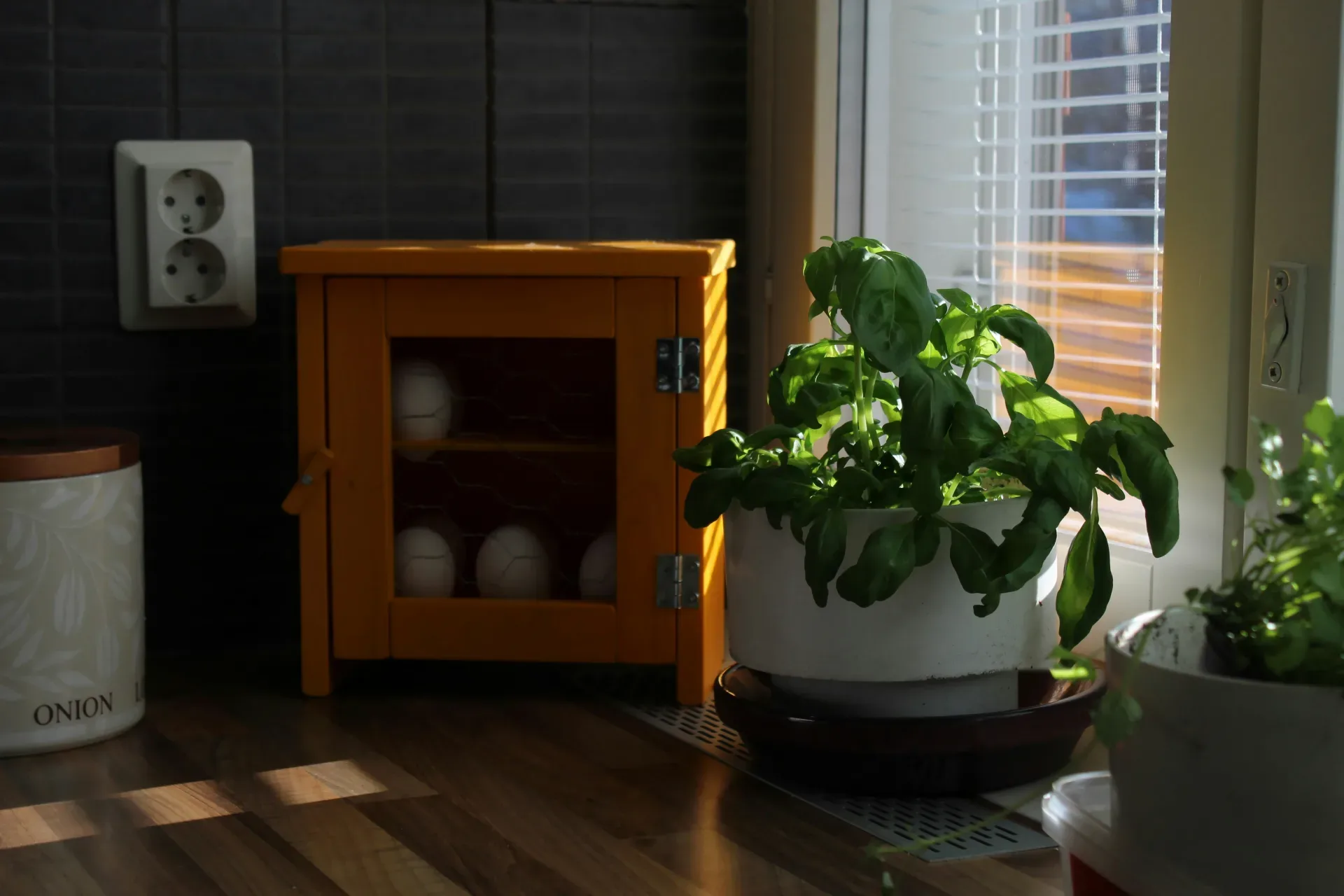
6. Add Under-Cabinet Lighting for Depth and Glow
Under-cabinet lighting adds a warm glow to countertops while also creating a sense of depth between the cabinets and the workspace below. It’s a small upgrade that makes a big difference, especially in kitchens without much natural light.
I installed a simple LED strip under my upper cabinets, and it’s become one of my favorite small upgrades. The kitchen feels warmer in the evenings, and it makes prepping food so much easier too, total win-win.
Styling Tips
- Choose warm white LED strips (2700K–3000K)
- Stick-on, battery, or plug-in options make installation easy
- Use as ambient lighting in the evening, not just for tasks
- Combine with overhead lighting for a layered effect
Why It Works
Layered lighting adds dimension to a room, and under-cabinet lights specifically highlight the gap between upper cabinets and countertops, an area that’s often dark and overlooked. That extra layer of light creates depth, making the kitchen feel more dynamic rather than flat.
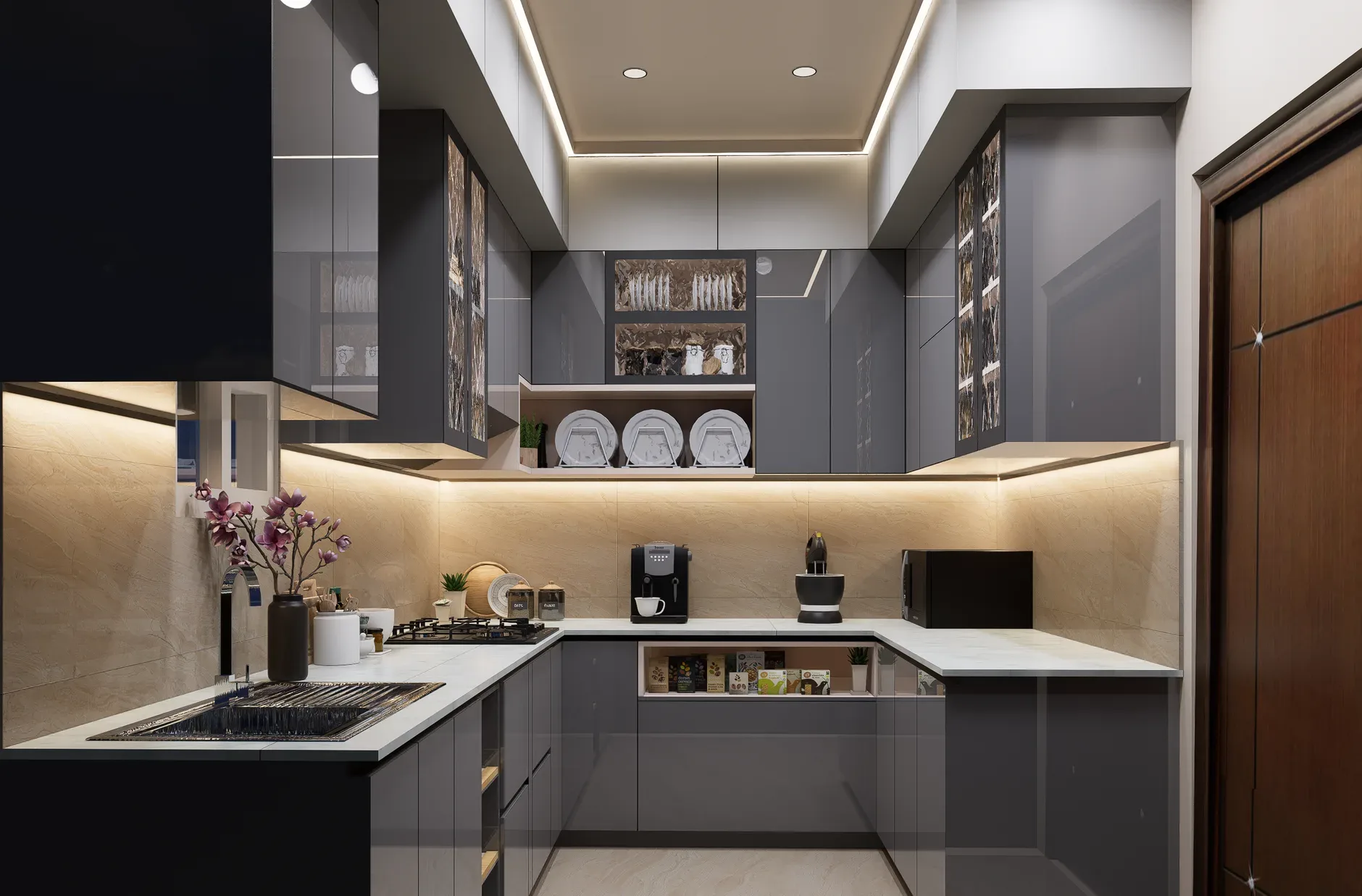
7. Use Transparent Storage for a Light Look
Glass jars, clear bins, and acrylic organizers keep your kitchen functional without adding visual bulk. Because you can see through them, they take up less “visual space” than solid containers, even if the physical footprint is the same.
I switched my pantry to glass jars for staples like pasta, rice, and flour, and not only does it look more put-together, but I can actually see what I’m running low on. Small change, surprisingly big impact.
Styling Tips
- Use glass jars for pantry staples, pasta, rice, oats, etc.
- Choose clear or acrylic bins for fridge and cabinet organization
- Label jars for a tidy, cohesive look
- Group similar-sized containers together for visual order
Why It Works
Transparent storage lets light pass through rather than blocking it, which keeps the space feeling open. It also tends to look more organized by default; clear containers naturally encourage tidier arrangements than mismatched boxes and bags.
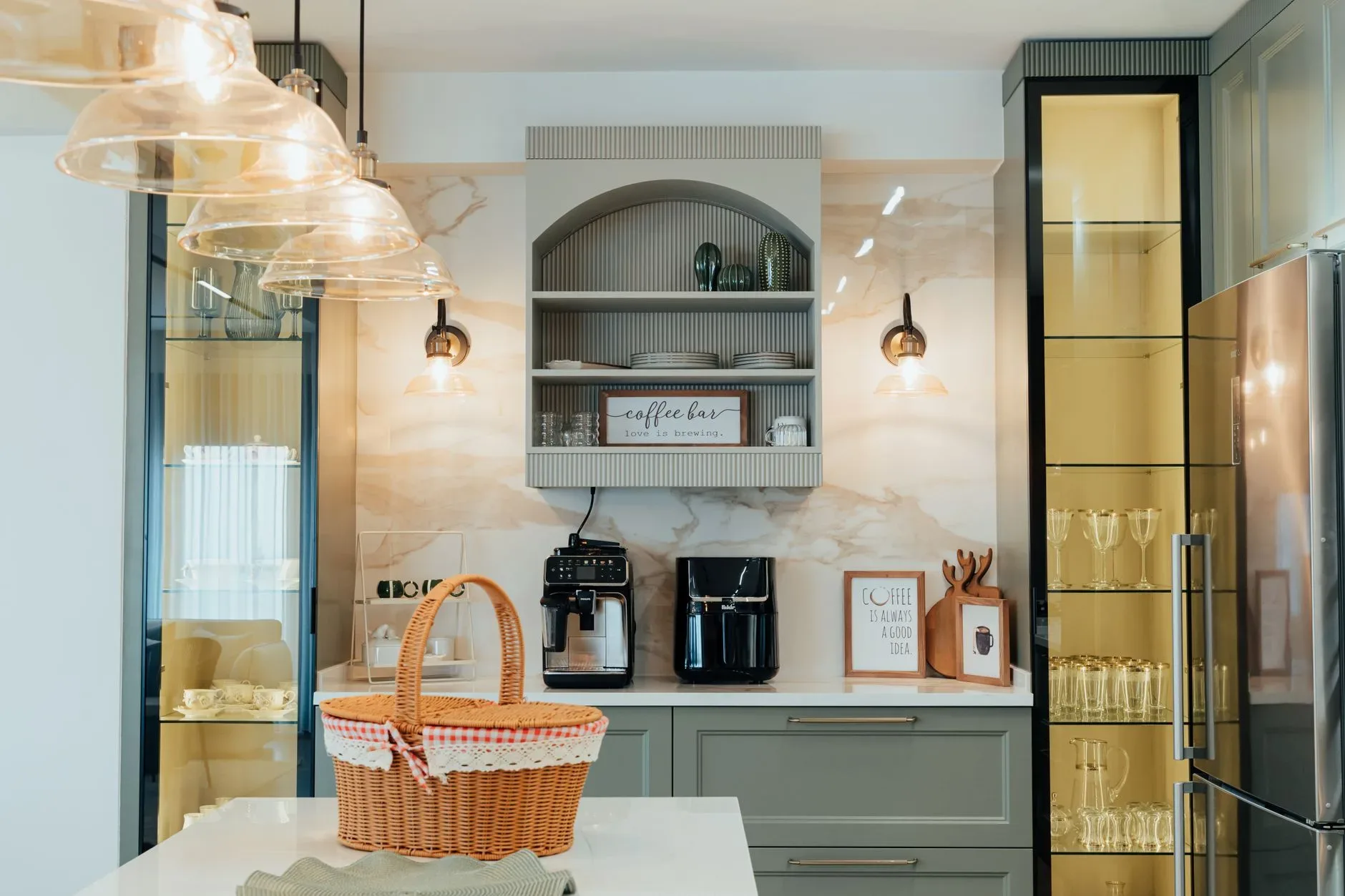
8. Add a Compact Kitchen Island or Cart
A small kitchen doesn’t mean no island; it just means a smaller one. A compact rolling cart or slim island adds extra counter space and storage without permanently taking over the room.
I added a narrow rolling cart with a butcher block top, and it’s honestly become my main prep area. The best part? I can roll it out of the way when I need more floor space, which feels like having my cake and eating it too.
Styling Tips
- Choose a cart with wheels for flexibility
- Look for built-in storage, drawers, shelves, or hooks
- Keep the top surface clear when not in use
- Match the cart’s finish to your existing cabinetry or counters
Why It Works
A mobile island gives you the functional benefits of extra counter space and storage without the commitment of a fixed structure. In small kitchens, flexibility often matters more than fixed square footage; being able to move something out of the way can make a huge difference.
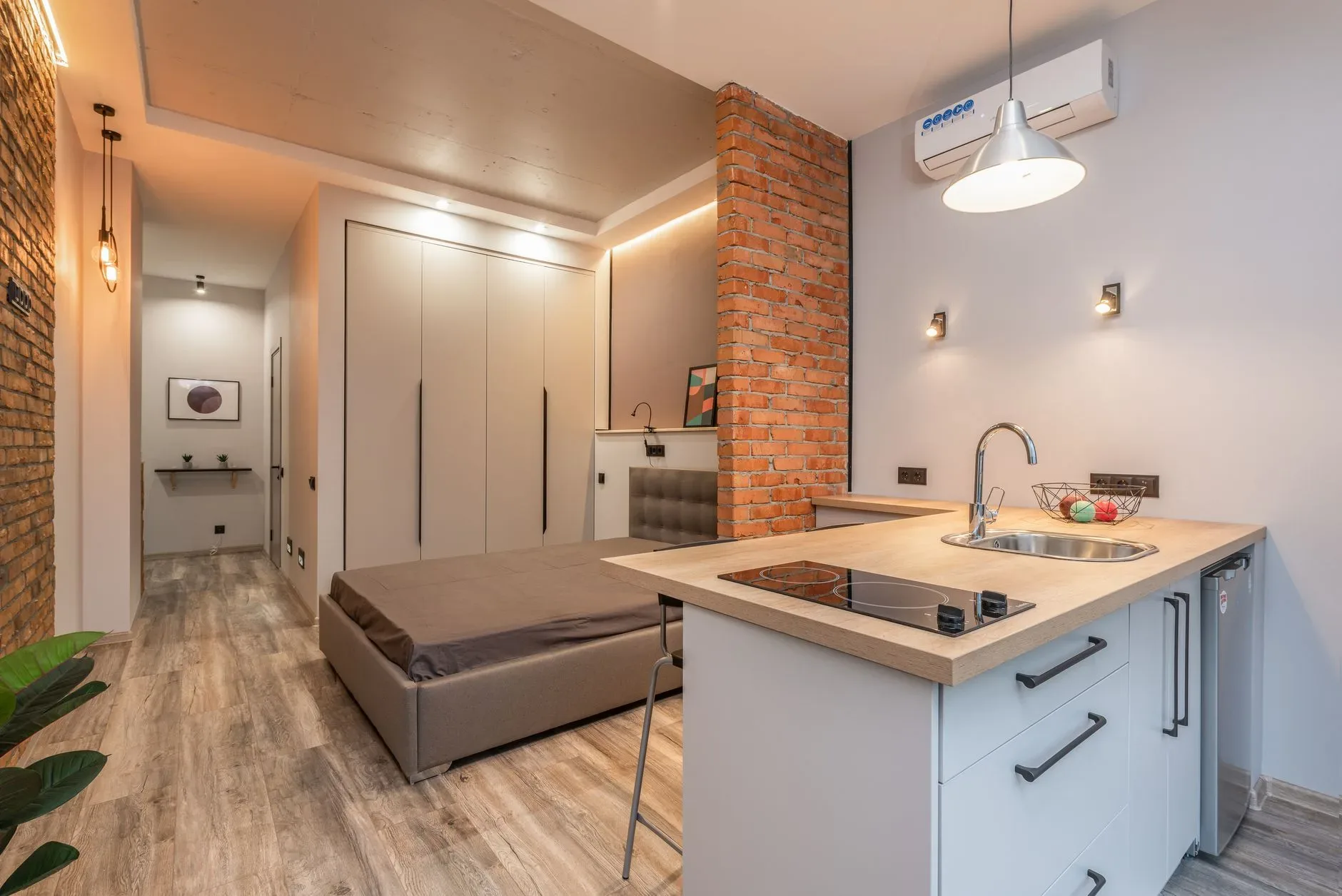
9. Keep Countertops Completely Clutter-Free
This one isn’t about adding anything; it’s about editing. A clear countertop instantly makes a small kitchen feel more spacious, even if nothing else changes.
This was a hard lesson for me, honestly. I used to keep every appliance out “for convenience,” but once I started storing things I don’t use daily, my counters felt like they doubled in size. They didn’t, obviously, but it sure looks that way.
Styling Tips
- Store appliances you don’t use daily in cabinets
- Limit countertop decor to one or two items
- Use trays to corral small items like oils or utensils
- Do a quick countertop “reset” at the end of each day
Why It Works
Clutter on countertops is one of the biggest visual culprits in making small kitchens feel cramped. Clear surfaces give your eyes room to “rest,” which makes the whole space feel calmer and more open; it’s one of the simplest, most effective changes on this list.
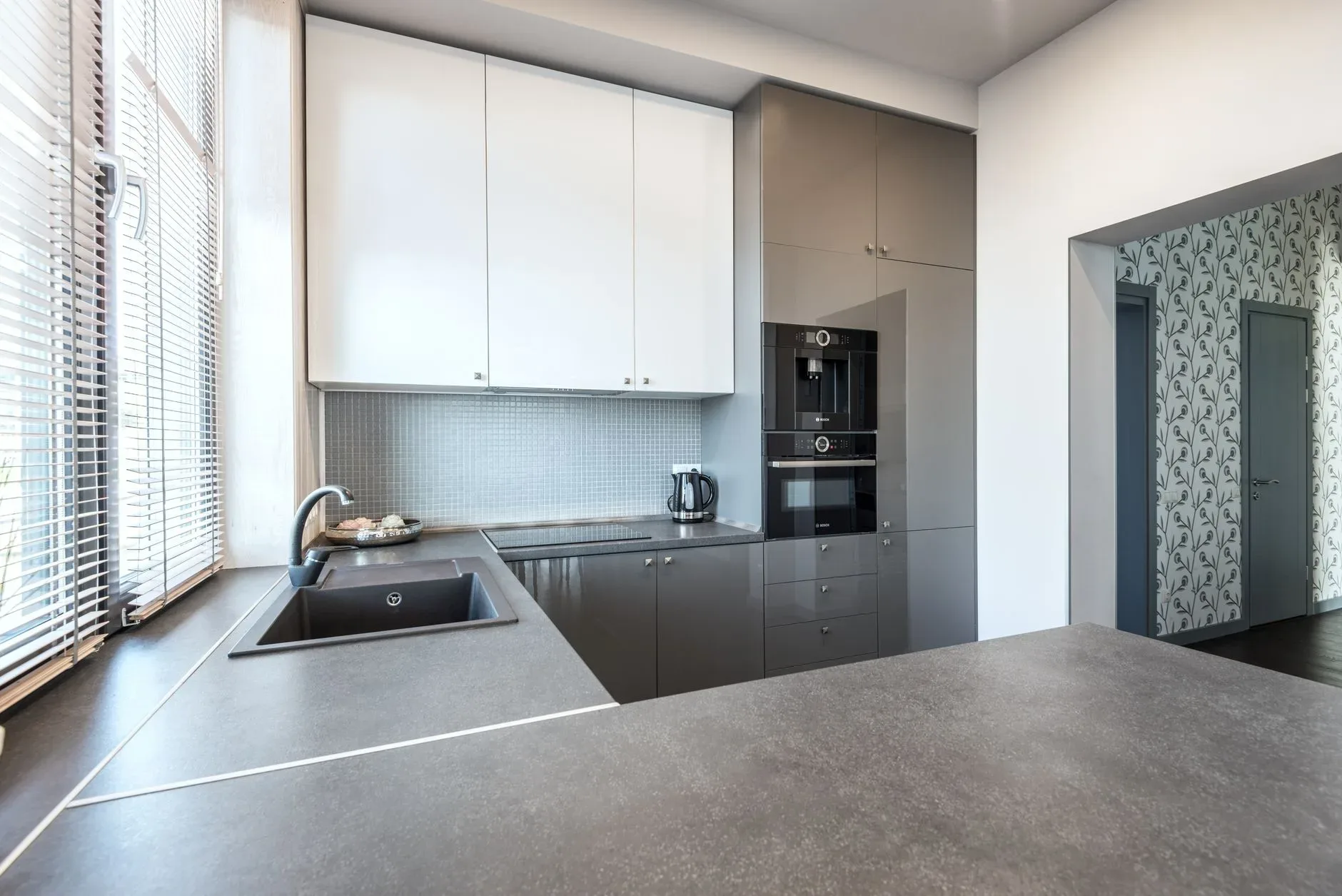
10. Use Slim Furniture to Save Space
If your kitchen includes a dining area, slim furniture, narrow tables, armless chairs, or bench seating, takes up less visual and physical space than bulky alternatives.
I swapped bulky chairs for slim bistro-style ones around my small kitchen table, and the area instantly felt less crowded. They’re not necessarily less comfortable either, just less visually heavy, if that makes sense.
Styling Tips
- Choose chairs with thin legs and open backs
- Consider a drop-leaf or extendable table for flexibility
- Bench seating along a wall can save additional space
- Stick to lighter wood tones for a less bulky look
Why It Works
Slim furniture takes up less visual “weight” in a room, even when the actual footprint isn’t dramatically smaller. Open, airy furniture designs let light and sightlines pass through, which contributes to that all-important feeling of spaciousness.
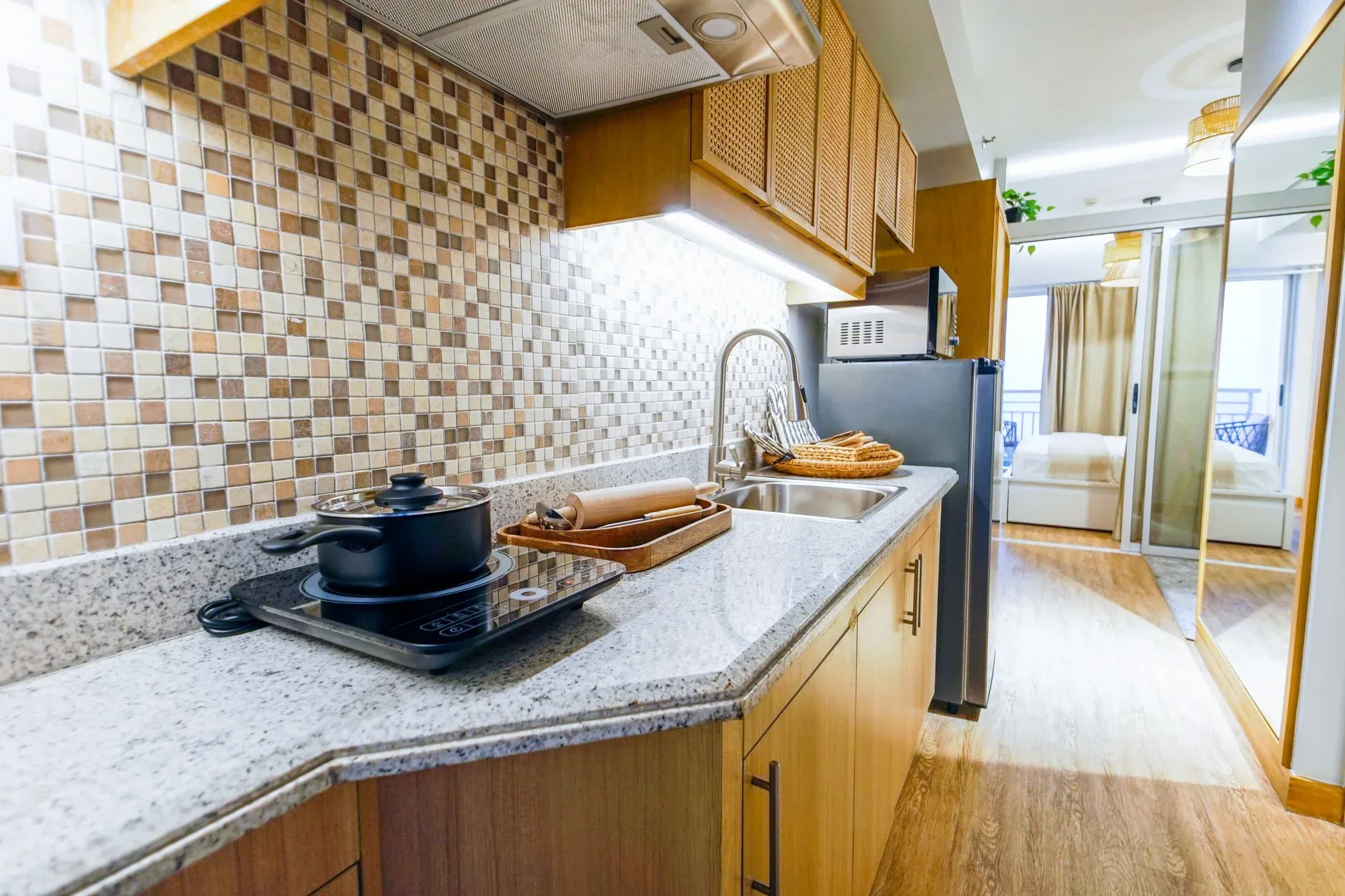
11. Add Greenery for Fresh Natural Energy
A few plants or fresh herbs add life, color, and freshness to a small kitchen, and they don’t take up much space at all. A small herb garden on a windowsill is both decorative and genuinely useful.
I keep a few small herb pots on my windowsill: basil, mint, and a stubborn rosemary plant that refuses to die no matter how much I neglect it. Honestly, this is one of my favorites because it adds life and flavor to meals.
Styling Tips
- Choose low-maintenance herbs like basil, mint, or rosemary
- Use small pots that fit on windowsills or narrow shelves
- Add one larger plant in an underused corner if space allows
- Group plants together for a more intentional look
Why It Works
Greenery introduces a natural, organic element that softens the hard surfaces typical of kitchens, tile, metal, and laminate. It also adds a sense of life and freshness, which makes the space feel more inviting without requiring any major changes.
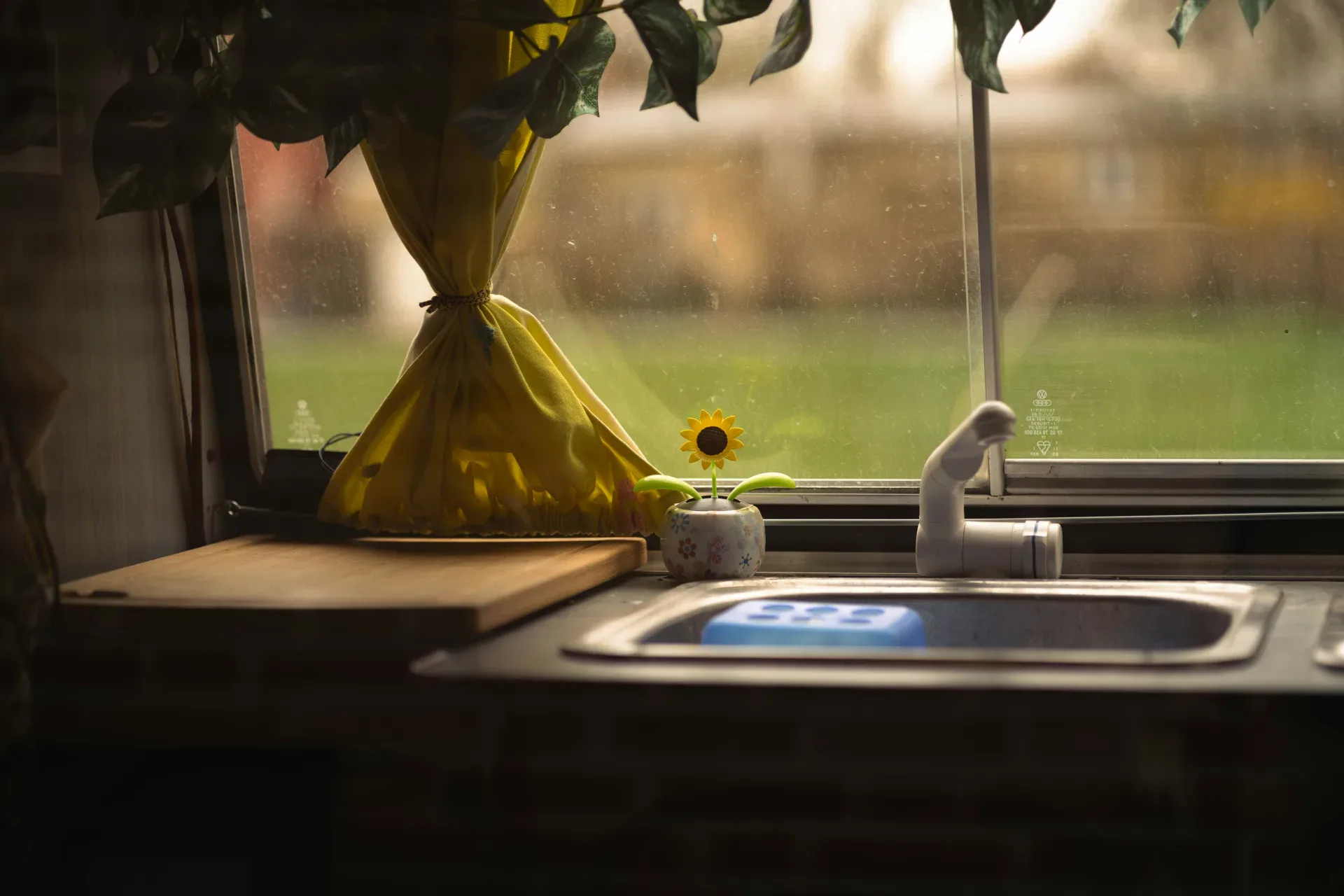
12. Use Light Flooring for a Spacious Effect
Just like walls and cabinets, flooring color affects how big a room feels. Light wood tones, pale tile, or light-colored vinyl can make a small kitchen feel more open underfoot.
I’m not entirely sure I’d have guessed flooring made such a difference, but after seeing a friend’s kitchen with light oak floors versus my darker tile, the contrast was obvious. Lighter floors really do seem to “open up” a room in photos and in person.
Styling Tips
- Choose light wood, pale tile, or light vinyl flooring
- Keep grout lines (if using tile) light to avoid visual breaks
- Pair light flooring with light or warm-toned cabinets
- Add a small rug in a similar tone for warmth without contrast
Why It Works
Light flooring reflects more light upward, contributing to the overall brightness of the room. It also reduces visual contrast between the floor and walls, which removes a “boundary” that can make a room feel boxed in.
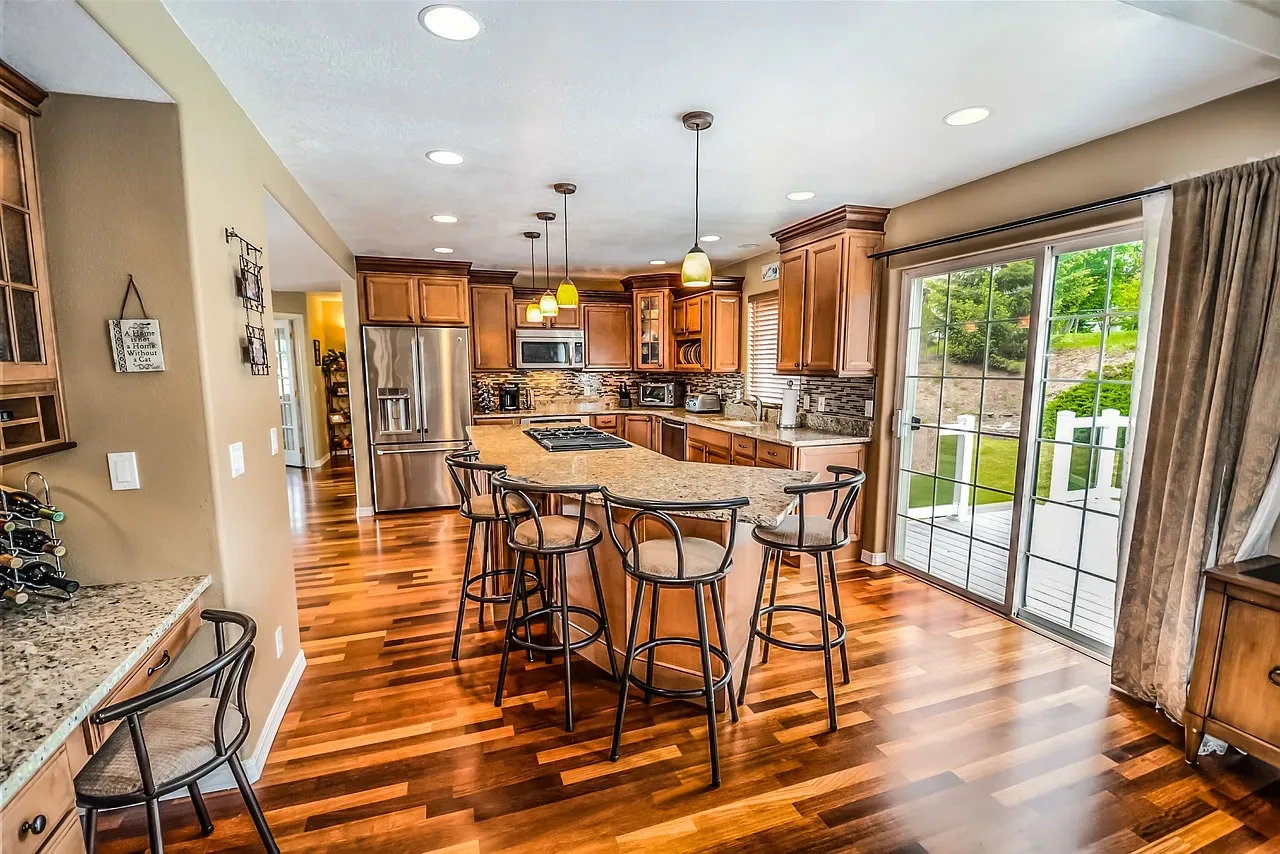
13. Install Sliding Doors for Space Efficiency
If your kitchen has a door to a pantry, laundry area, or adjoining room, swapping a swinging door for a sliding one can free up valuable floor space. Swinging doors require a clearance area that’s often wasted space in small kitchens.
I replaced a swinging pantry door with a simple sliding barn-style door, and it freed up just enough space to fit a small shelf that wasn’t possible before. Don’t overlook this one if your kitchen has any swinging doors eating into your layout.
Styling Tips
- Look for doors that currently swing into tight spaces
- Barn-style sliders add a decorative element too
- Pocket doors are an option if you’re open to minor renovation
- Choose finishes that complement your cabinetry
Why It Works
Swinging doors require clearance space that often can’t be used for anything else, not storage, not furniture, nothing. Sliding doors eliminate that “dead zone,” freeing up space that can be used more functionally, even if it’s just a few extra square feet.
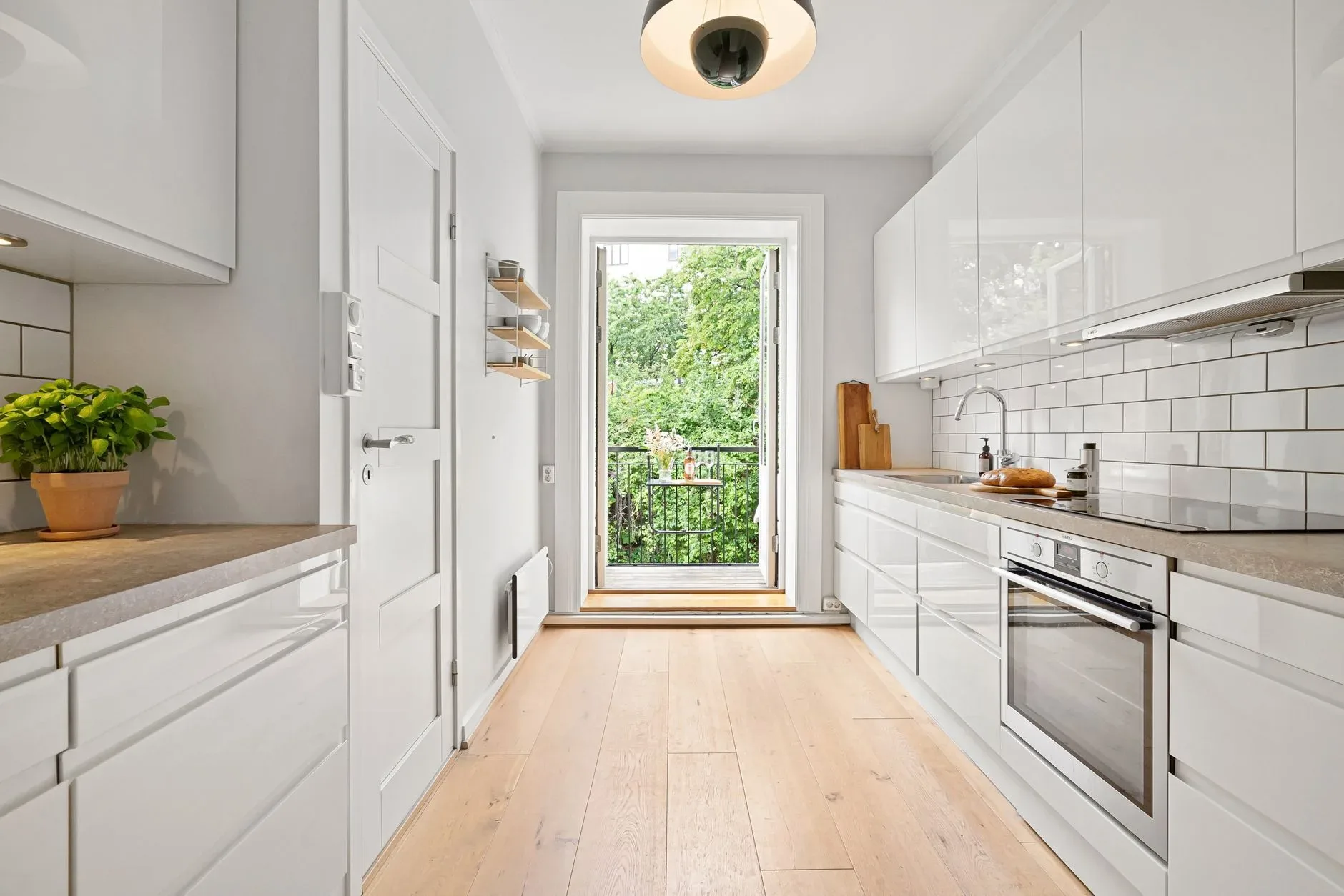
14. Add Compact Wall Mounted Dining Setup
For very small kitchens, a wall-mounted folding table or narrow ledge can provide a spot for quick meals without permanently taking up floor space. Fold it down when needed, fold it up when you don’t.
I added a small fold-down table near my window for quick breakfasts, and it’s honestly perfect for a kitchen this size. When it’s folded up, you’d never even know it’s there, which is exactly the point.
Styling Tips
- Choose a fold-down table mounted to a wall or cabinet side
- Pair with stools that tuck away when not in use
- Position near a window for natural light while eating
- Match the table finish to existing cabinetry for cohesion
Why It Works
A fold-down table provides functional dining space only when needed, which is ideal for kitchens where every square foot counts. This kind of flexible furniture is a classic small-space solution; function exists, but only when you actually need it.
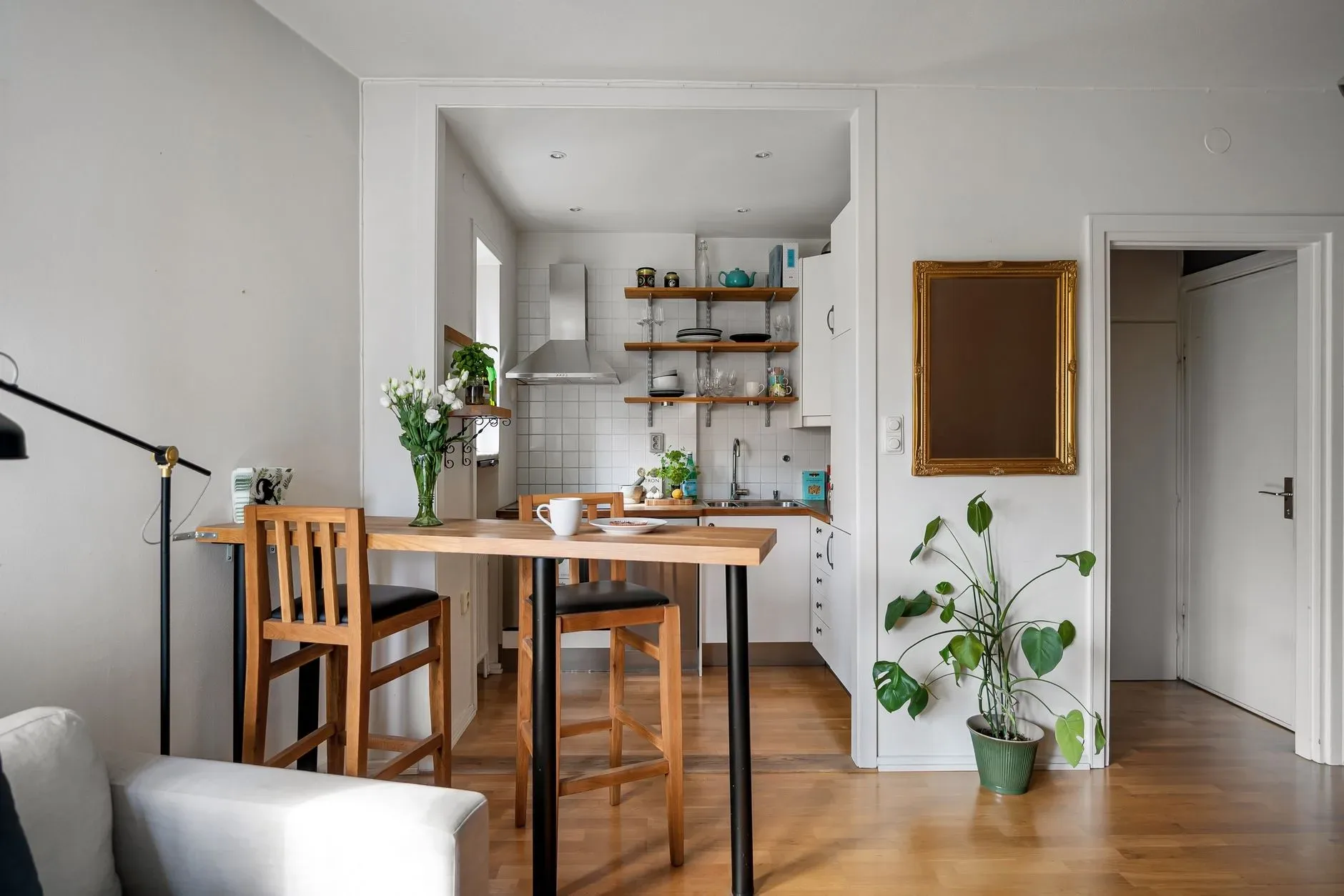
15. Stick to Cohesive Design for Visual Harmony
To wrap things up, the single biggest factor in making a small kitchen feel bigger might just be cohesion. When colors, materials, and styles flow together without abrupt contrasts, the whole space feels calmer and larger, even if nothing physically changed.
I know it sounds simple, but tying together my cabinet color, countertop, and flooring into one cohesive palette made a bigger difference than almost any single item on this list. It’s less about any one “thing” and more about how everything works together.
Styling Tips
- Choose a consistent color palette across cabinets, walls, and floors
- Limit material types, wood, metal, stone, to two or three total
- Avoid abrupt contrasts between adjacent surfaces
- Use small accent colors sparingly, rather than throughout
Why It Works
Visual cohesion reduces the number of “breaks” your eye registers as it moves through a space. Fewer breaks mean the room reads as one continuous area rather than a series of separate elements, and that continuity is a big part of what makes small spaces feel larger than they are.
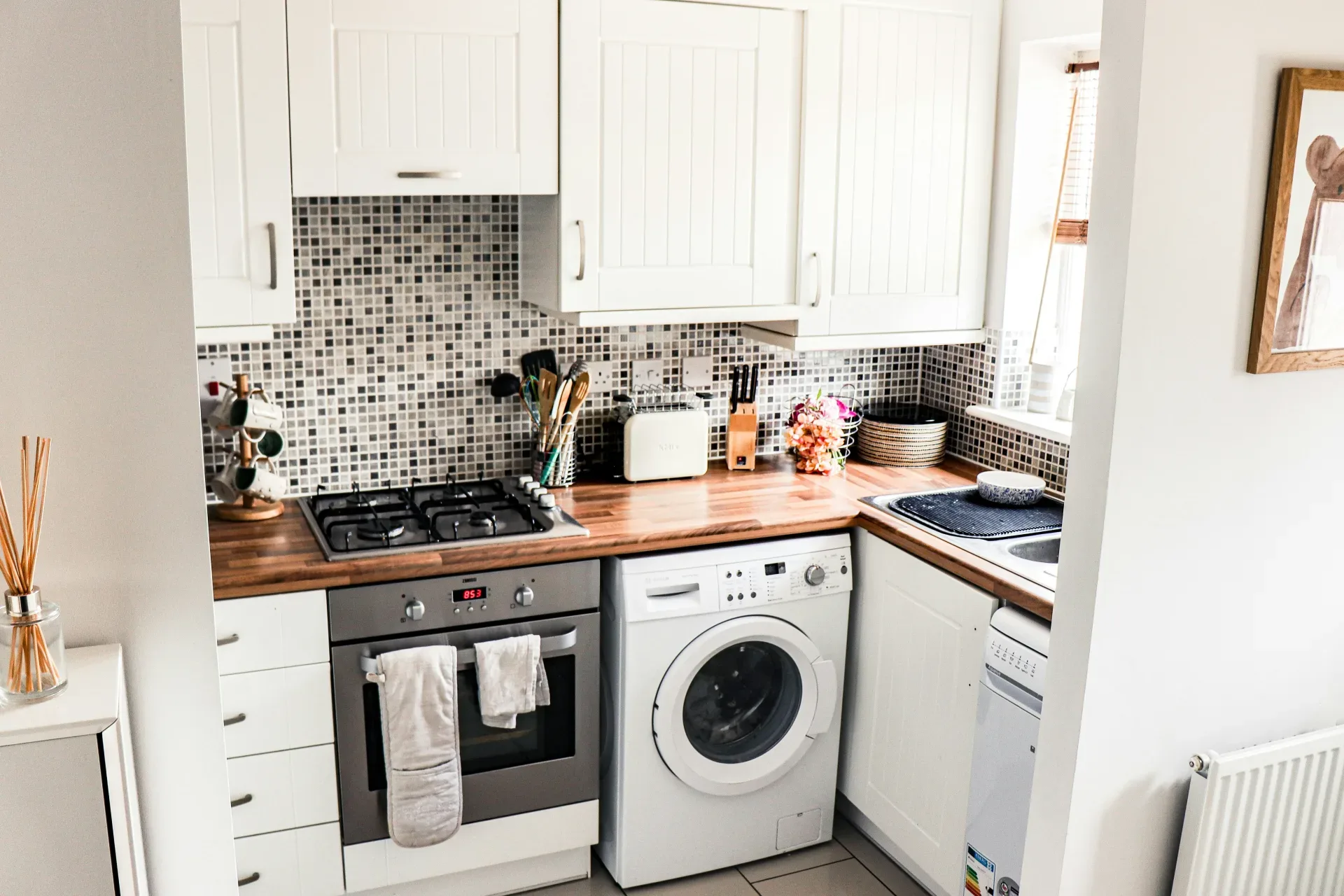
Final Thoughts
And that’s 15 ways to make a small kitchen feel more spacious and stylish, without a full renovation in sight. You don’t need to tackle all of these at once; even one or two changes, like decluttering countertops or adding under-cabinet lighting, can shift how the whole room feels.
The best small kitchens aren’t necessarily the ones with the most expensive upgrades; they’re the ones where every choice works together toward feeling open and intentional. Save this guide to Pinterest so you can come back to it, and if you try one of these ideas this weekend, I’d love to hear which one made the biggest difference for you. Happy decorating! 🙂