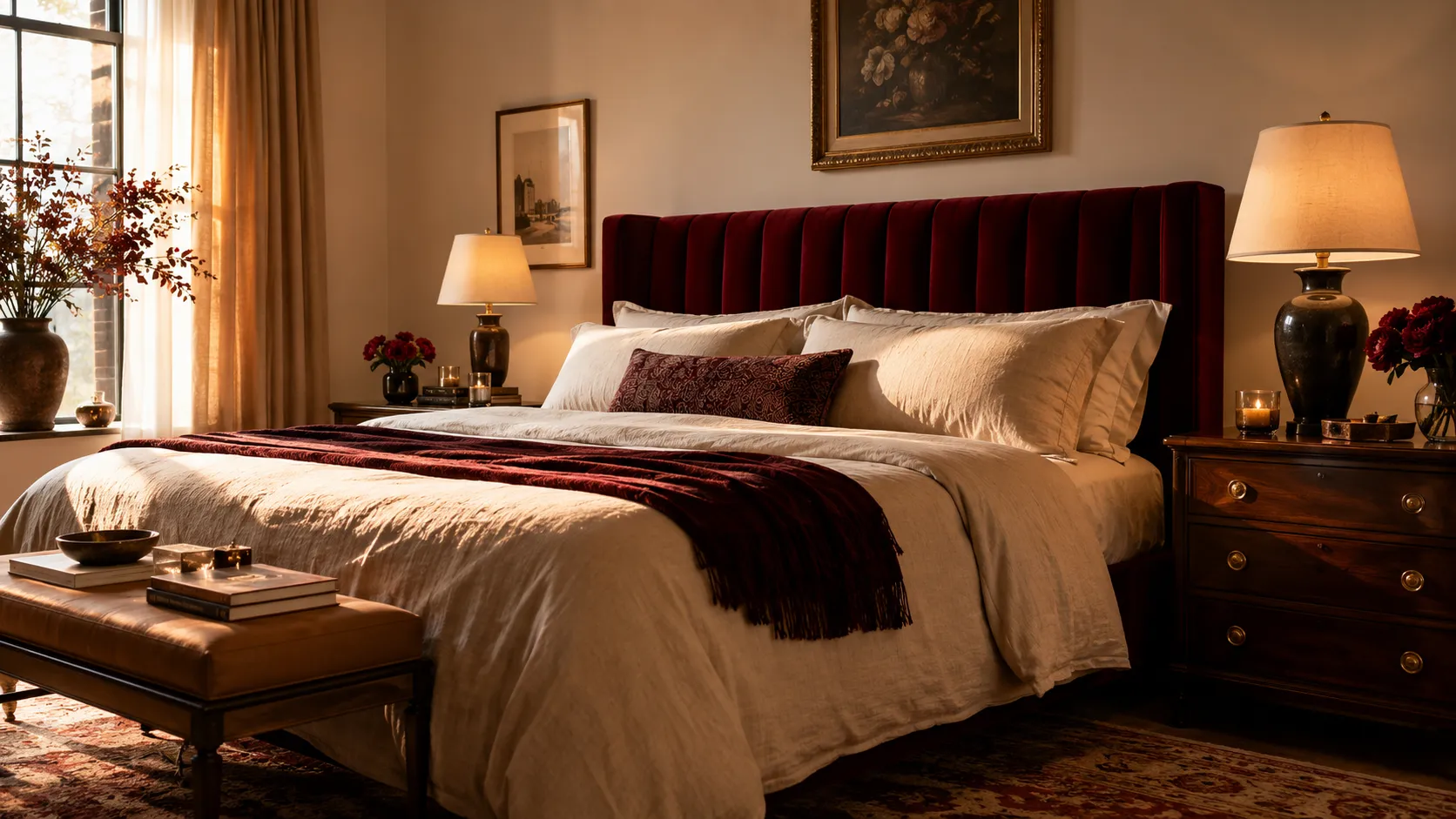
Your bedroom deserves better than “beige and vibes.” Cherry decor, whether that’s deep cherry red accents, cherry wood furniture, or cherry blossom-inspired softness, is one of those rare aesthetics that works across so many different styles. Cozy? Yes. Romantic? Absolutely. Weirdly versatile? You’d be surprised.
I’ll be honest, when I first started playing around with cherry tones in my own bedroom, I thought I’d end up with something that looked like a Valentine’s Day card exploded. Instead, I ended up with the warmest, most grounded space I’ve ever lived in. So let me share what actually works, and what to avoid, across these 15 ideas.
Why cherry decor hits different right now
Cherry as a decor theme isn’t just trending on Pinterest (though yes, it’s everywhere there). It taps into something deeper; people want warmth. They want character. They’re tired of the all-white, all-gray rooms that feel more like a hotel lobby than a home. Cherry delivers richness without going over the top. That’s the sweet spot.
Whether you lean into cherry wood’s natural warmth, cherry red as an accent color, or the whimsical cherry blossom print direction, each path leads somewhere genuinely beautiful. The trick is knowing which path fits your room.
The 15 cherry bedroom decor ideas
Anchor the room with a cherry wood bed frame.
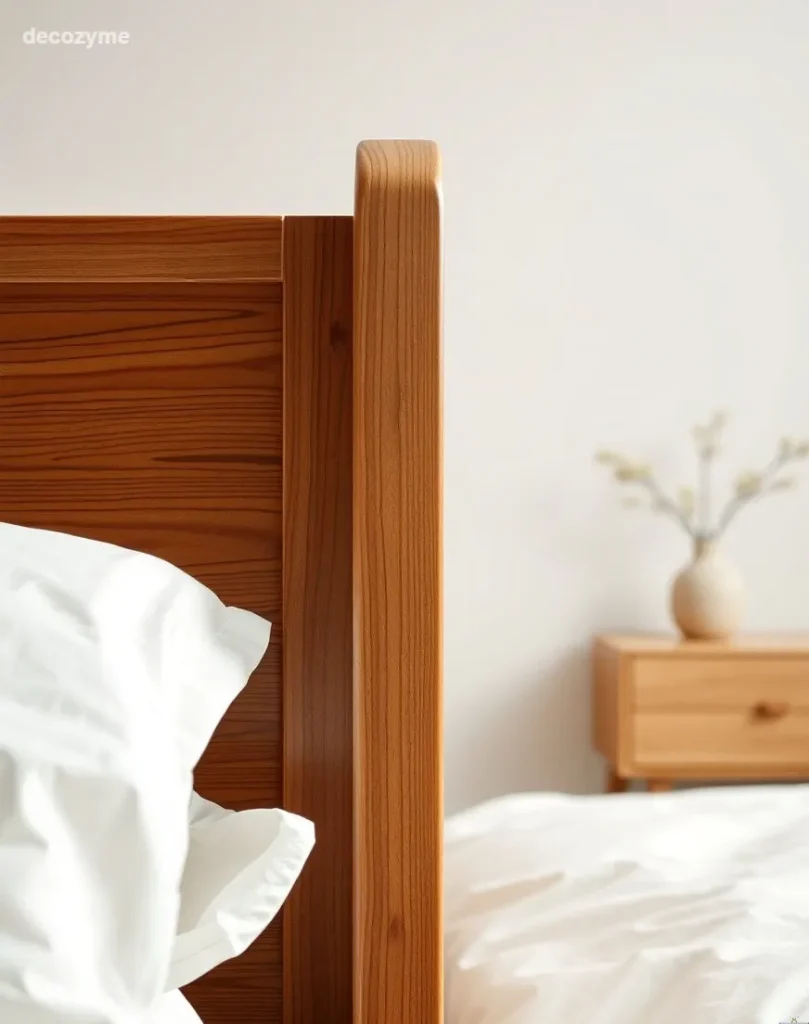
This is the move that changes everything. A solid cherry wood bed frame, especially one with clean lines and minimal ornamentation, gives your entire bedroom a warm, grounded foundation that no painted piece of furniture can replicate. Cherry wood deepens over time, me too, which means your room gets more beautiful the longer you have it. IMO, that’s a rare quality in furniture.
Pair it with cream or ivory bedding to let the wood breathe. Dark navy? Also stunning. Just avoid matching cherry wood nightstands at first; it can tip into “old-fashioned” territory fast if the rest of the room isn’t balanced.
Use cherry red as a single statement accent wall.
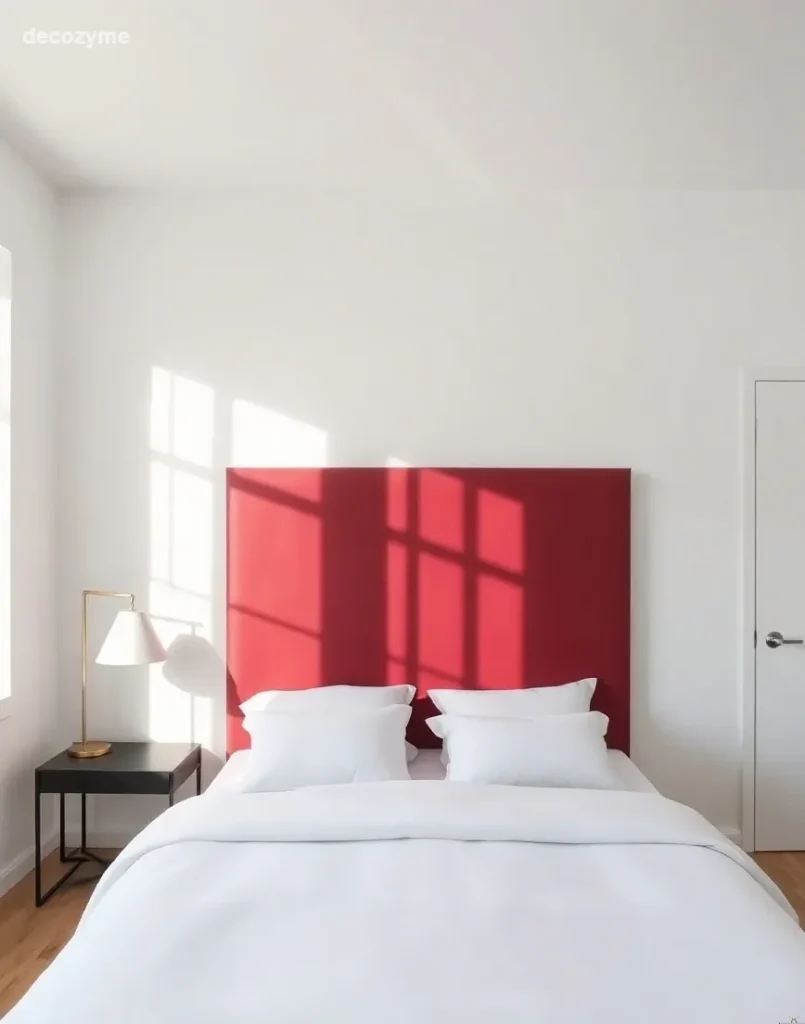
One wall. That’s it. Don’t paint the whole room cherry red unless you want to feel like you’re sleeping inside a tomato. One deep cherry red accent wall, behind the headboard, is the obvious choice, creating instant drama without overwhelm. Keep the other three walls white or warm ivory.
The key detail people miss: use a matte finish, not satin. Matte absorbs light softly and makes the color feel richer. Satin reflects and can make the wall look almost wet. Not the vibe.
Layer cherry blossom prints for a soft, romantic feel
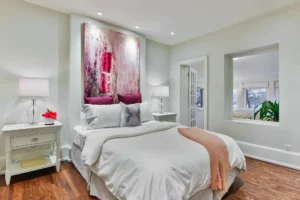
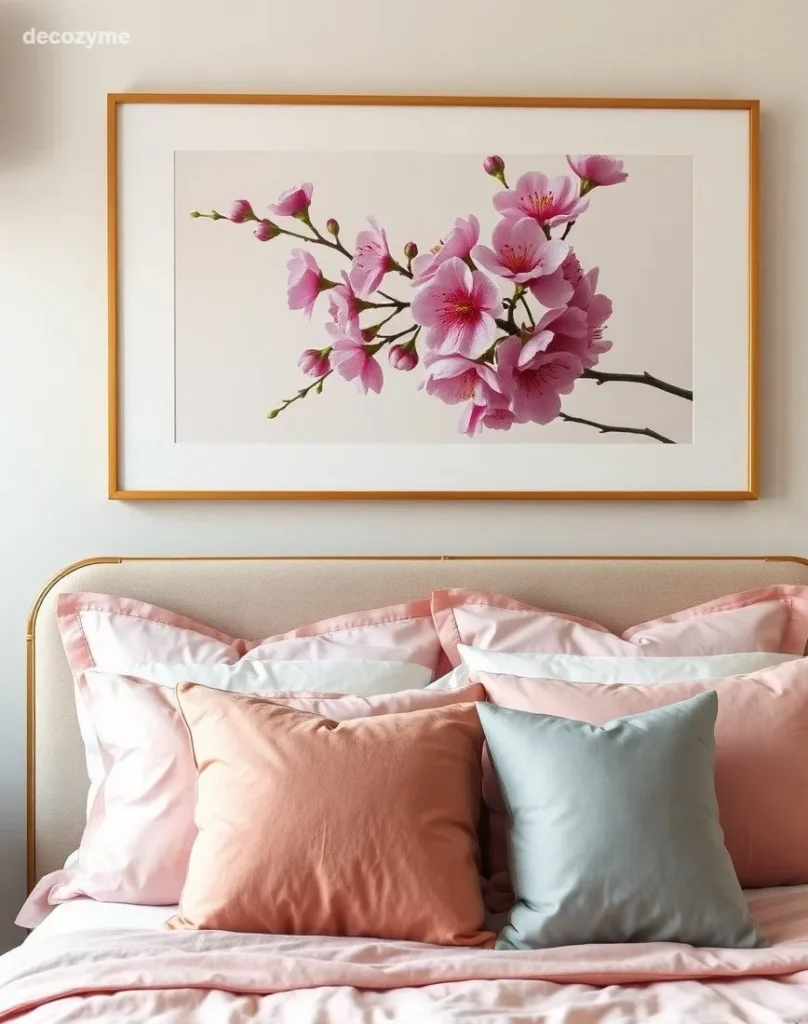
This one leans more feminine and whimsical, but done right, it’s genuinely stunning. Think a single large cherry blossom print above the bed (framed, not a canvas print, the frame matters), paired with blush or dusty rose bedding. Restraint is everything here. One statement print. Not a blossom print duvet AND blossom wallpaper AND blossom throw pillows. That’s a theme park, not a bedroom.
Bring in cherry red through textiles first.
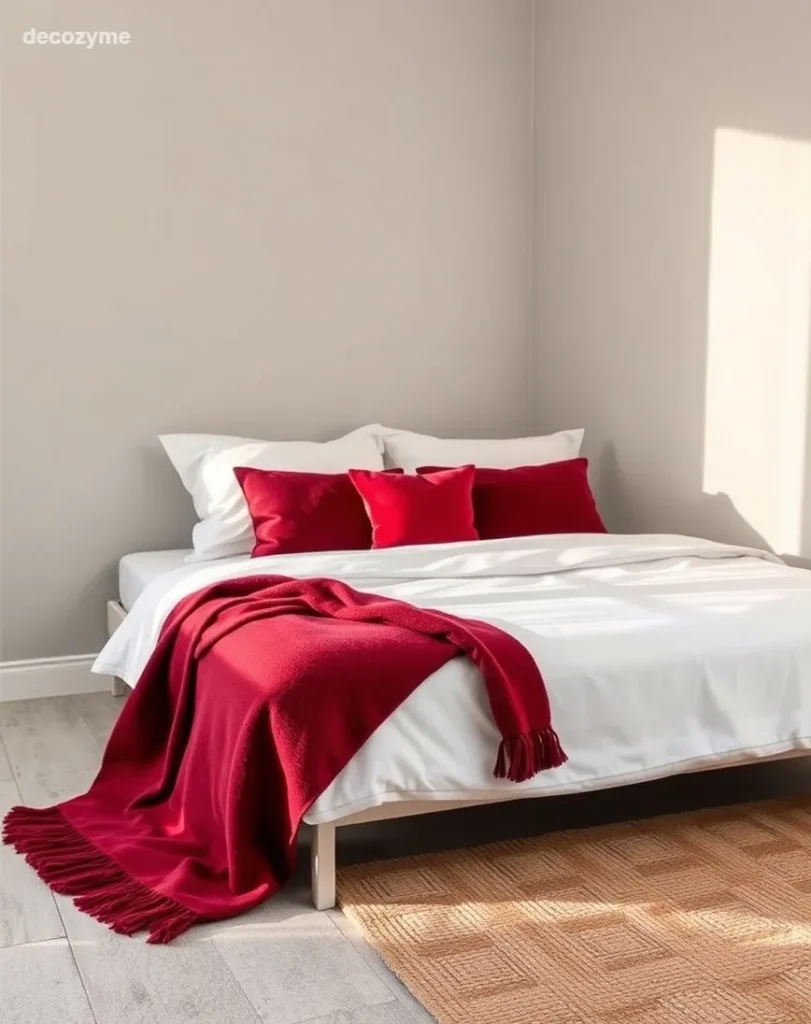
Not ready to commit to furniture or paint? Smart. Start with textiles:s, a cherry red throw blanket, two cherry-toned throw pillows, or a patterned rug with cherry as a secondary color. Textiles are the lowest-risk way to test a color in your space. You can swap them out in an afternoon if it doesn’t land. No regrets, no repainting.
This approach also works brilliantly in neutral rooms, gray, white, or oatmeal-toned spaces where a pop of cherry red acts almost like punctuation. It says: “This room has a point of view.”
Mix cherry wood with matte black hardware.
This is the contemporary take on cherry wood decor that most people aren’t doing yet, and it’s incredible. Cherry wood dresser or nightstand, but swap out the traditional brass or chrome hardware for flat matte black drawer pulls. The contrast modernizes the piece instantly. Suddenly,, ly it’s not grandma’s furniture, it’s an intentional, design-forward choice.
FYI, this works especially well in bedrooms that mix wood tones. You don’t have to match everything; you just have to connect things. Black hardware does that connecting work beautifully.

Try a cherry and sage green color pairing.
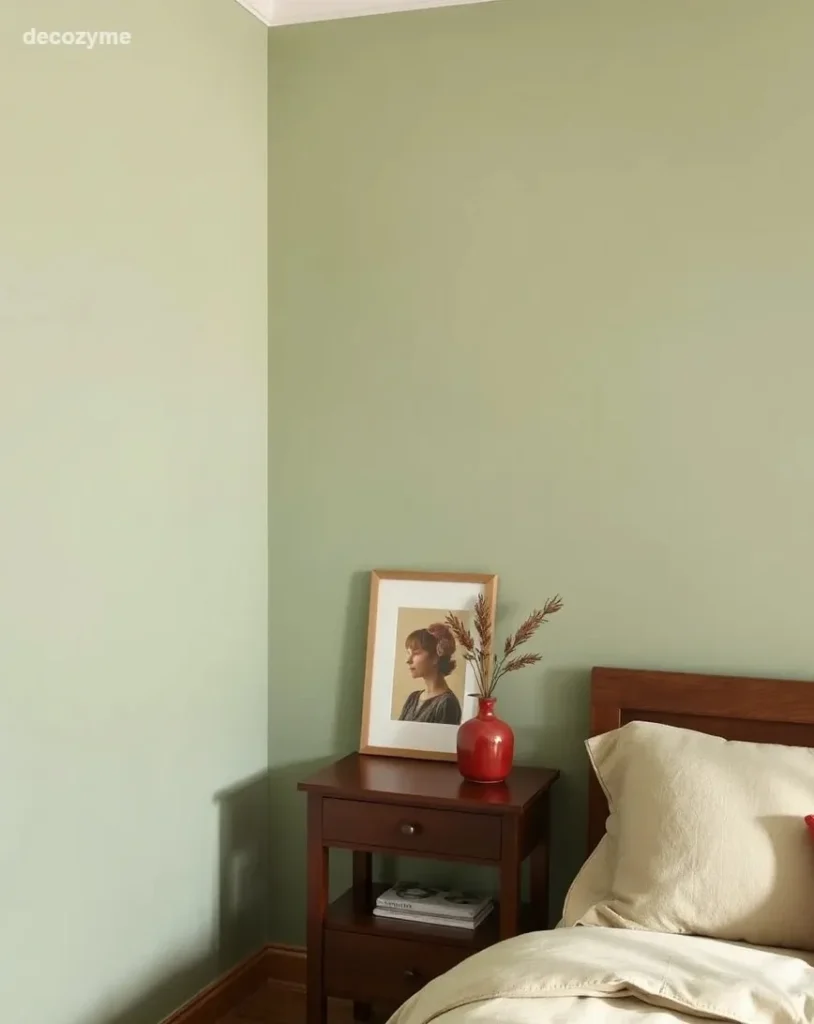
Cherry red and sage green? Sounds risky. Looks phenomenal. This pairing works because sage green is muted and earthy; it doesn’t compete with cherry, it grounds it. Think sage green walls with cherry red accents in the bedding or decor accessories. Or cherry wood furniture in a sage-painted room. Either direction works.
This combo also photographs beautifully, which is why you’re starting to see it a lot in the interior design content space. It’s warm but fresh. Romantic but not heavy.
Use a cherry-toned rug as the room’s color ancho.
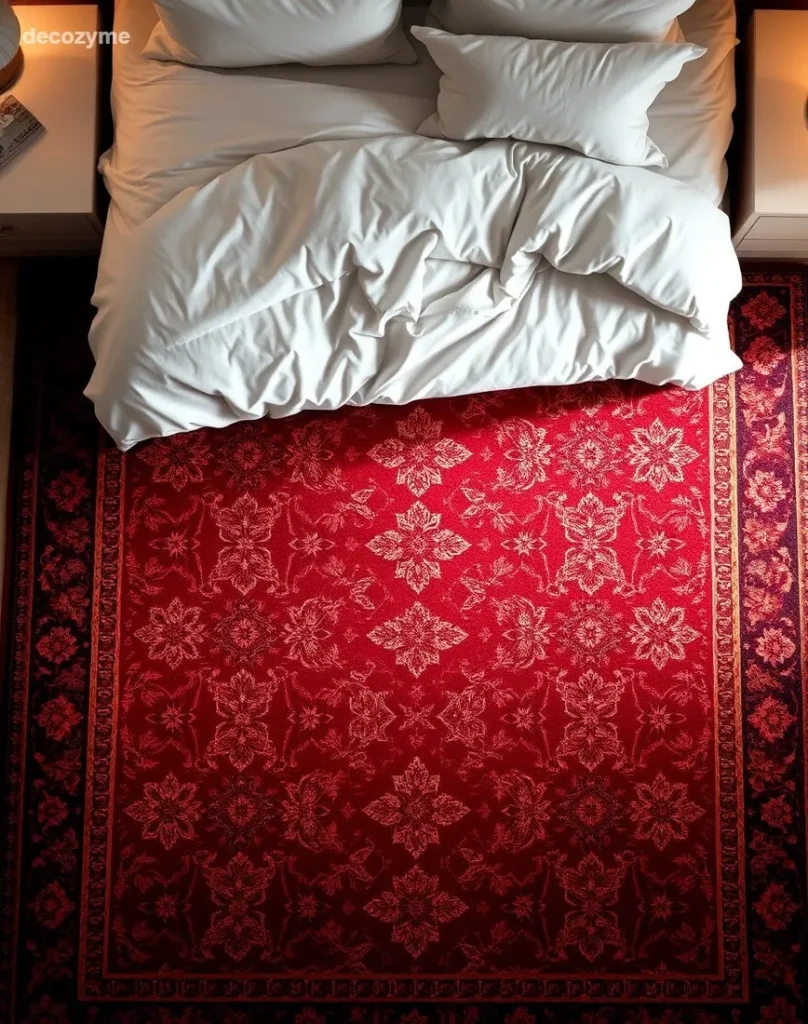
Rugs are underrated as a color-anchoring tool. A deep cherry or burgundy area rug, especially a textured or patterned one, can set the entire room’s mood without touching the walls or major furniture. Everything else in the room then responds to it. Pull accent colors from the rug’s ppatternrn and you’ve essentially got a built-in color palette.
For bedrooms specifically, a rug that extends beyond the sides of the bed by at least 18 inches feels luxurious. Don’t skimp on size;ze, a too-small rug floating in the middle of the room is one of the most common bedroom decorating mistakes.
Layer warm lighting to make cherry tones glow.
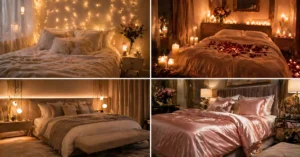
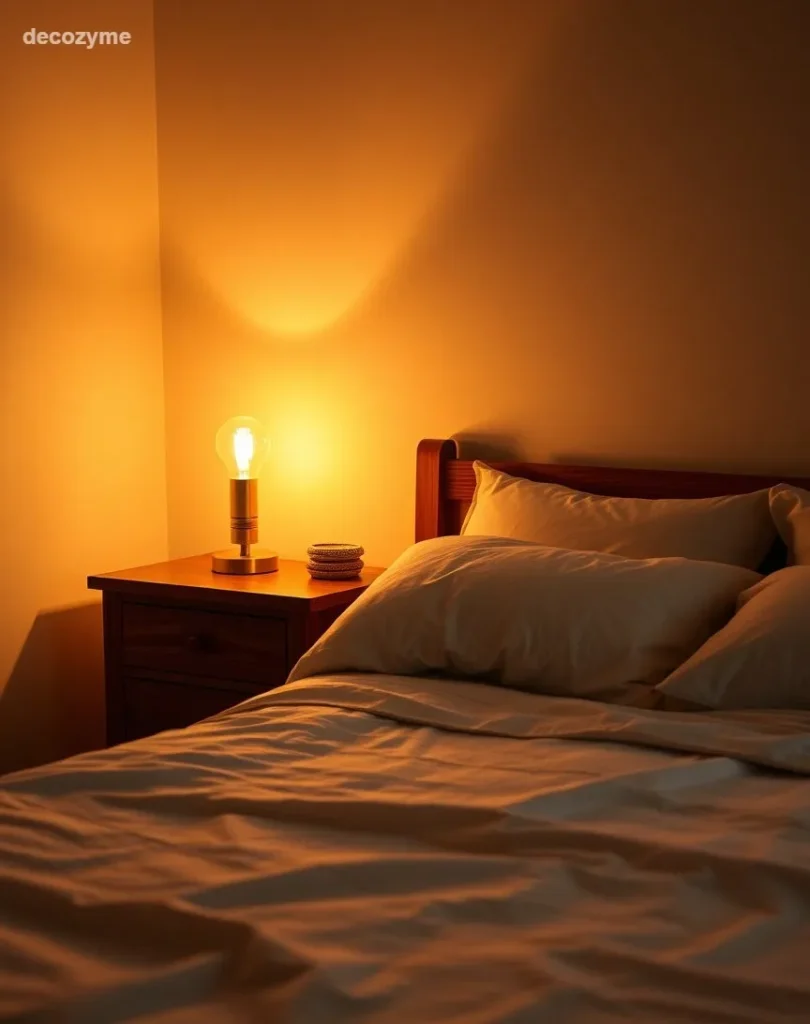
Here’s something nobody tells you: cherry red and cherry wood both look completely different depending on your lighting. Cool white light (anything above 4000K) can make cherry wood look orangee,e and cherry red look almost harsh. Warm bulbs, 2700K to 3000K, are non-negotiable in a cherry-toned bedroom.
Add a bedside lamp with a fabric shade (not glass or metal, fabric diffuses light warmly), and if you can, a small floor lamp in the corner. Layered lighting beats overhead lighting every single time in a bedroom setting.
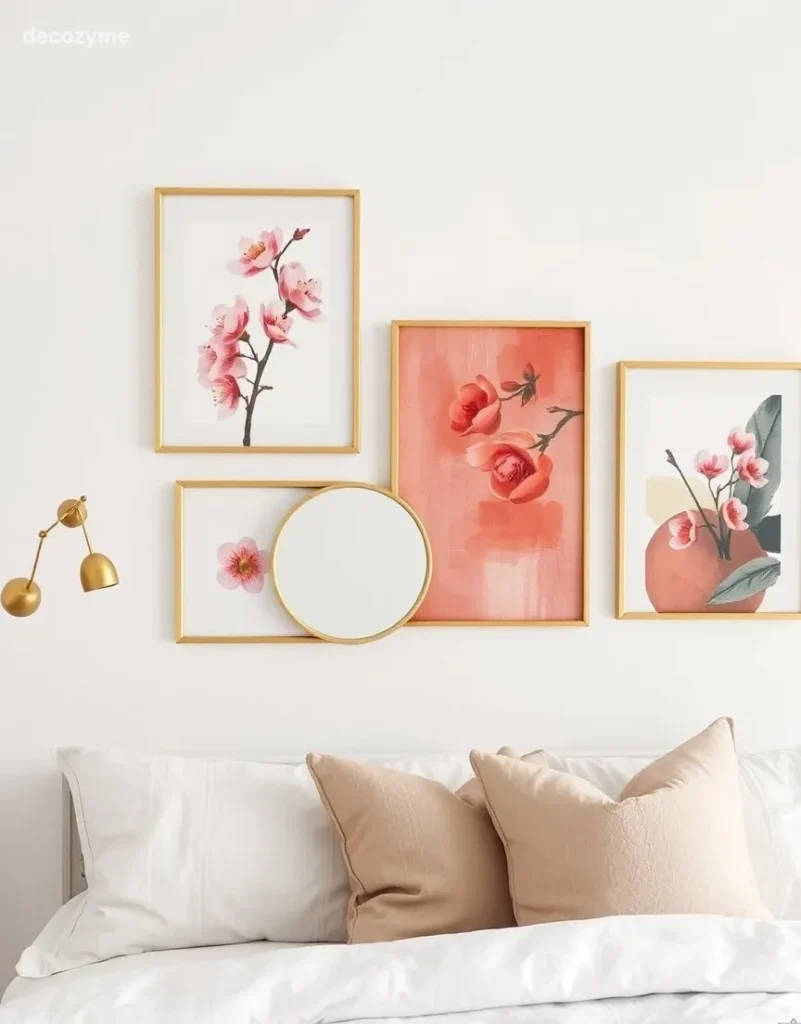
Go maximalist with a cherry-themed gallery wa..
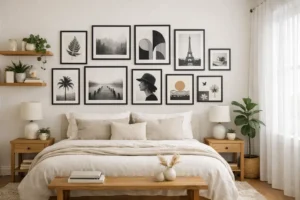
This is the bold move, a gallery wall where cherry is the consistent thread. Mix framed botanical prints of cherry blossoms, abstract art with cherry tones, a vintage-style poster, and maybe a small mirror. The frames should vary in shape but stay within one metal family, either all warm gold/brass or all dark/black. Mixed frames = visual chaos. Cohesive frames = intentional gallery.
This idea works especially well in smaller bedrooms where a large piece of furniture would overwhelm the space. A gallery wall adds richness without mass.
Incorporate dried or faux cherry blossoms as decor
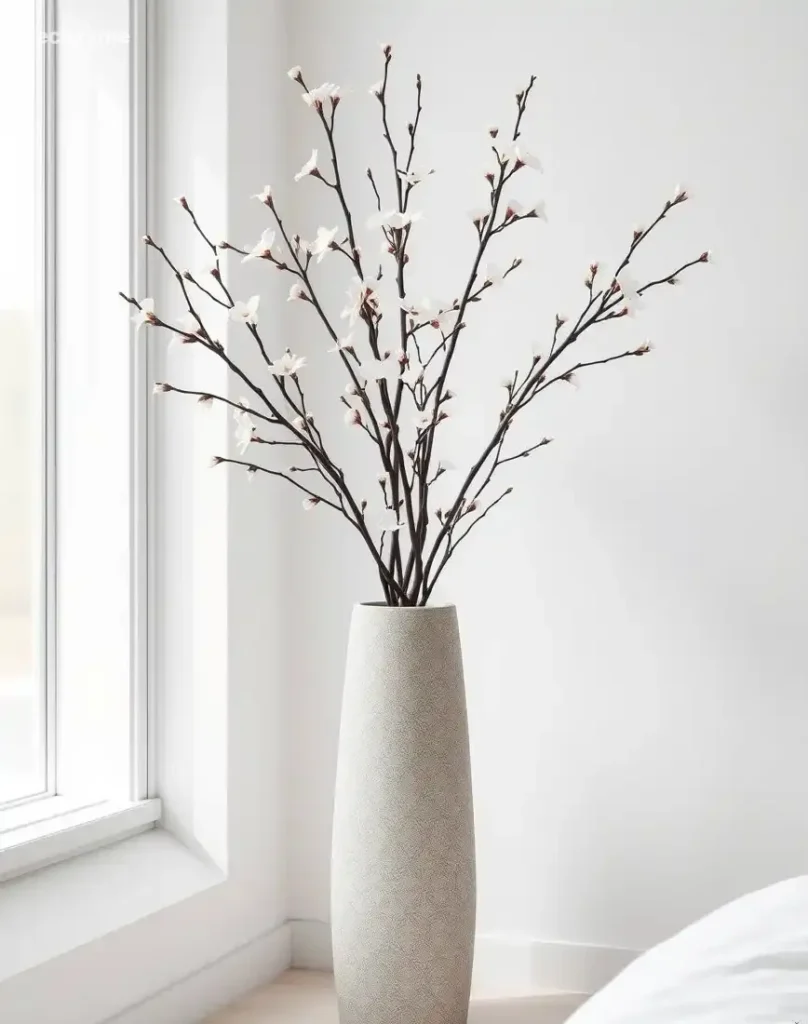
A tall vase of dried cherry blossom branches in the corner of a bedroom is one of those details that makes people stop and ask,, Waitt, where did you get that?” It’s architectural, organic, and brings a softness that no artificial decor piece can replicate. Look for dried Japanese cherry blossom stems or quality silk versions; the cheap plastic ones are obvious and sad.
Place them in a simple ceramic or stone vase, not something ornate. Let the branches do the talking.
Try cherry velvet as an accent, headboard,or chchair
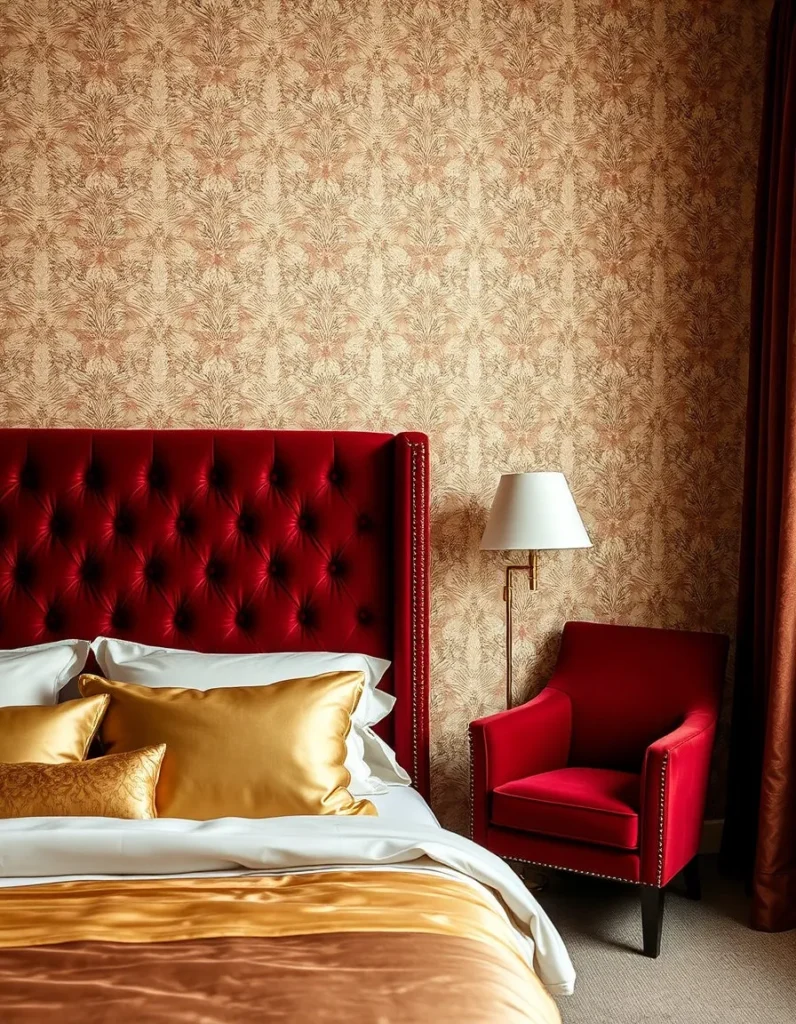
Velvet and cherry is a combination that should be illegal for how good it looks. A cherry red velvet headboard is one of the most impactful single changes you can make to a bedroom. It’s tactile, rich, and photographs in a way that makes your room look like it belongs in a design magazine, not because it’s expensive, but because the material and color together create instant depth.
If a full headboard feels like too much commitment, a small cherry velvet accent chair in the corner does similar work at a fraction of the investment.
UUsea cherry as an unexpected ceiling accent.
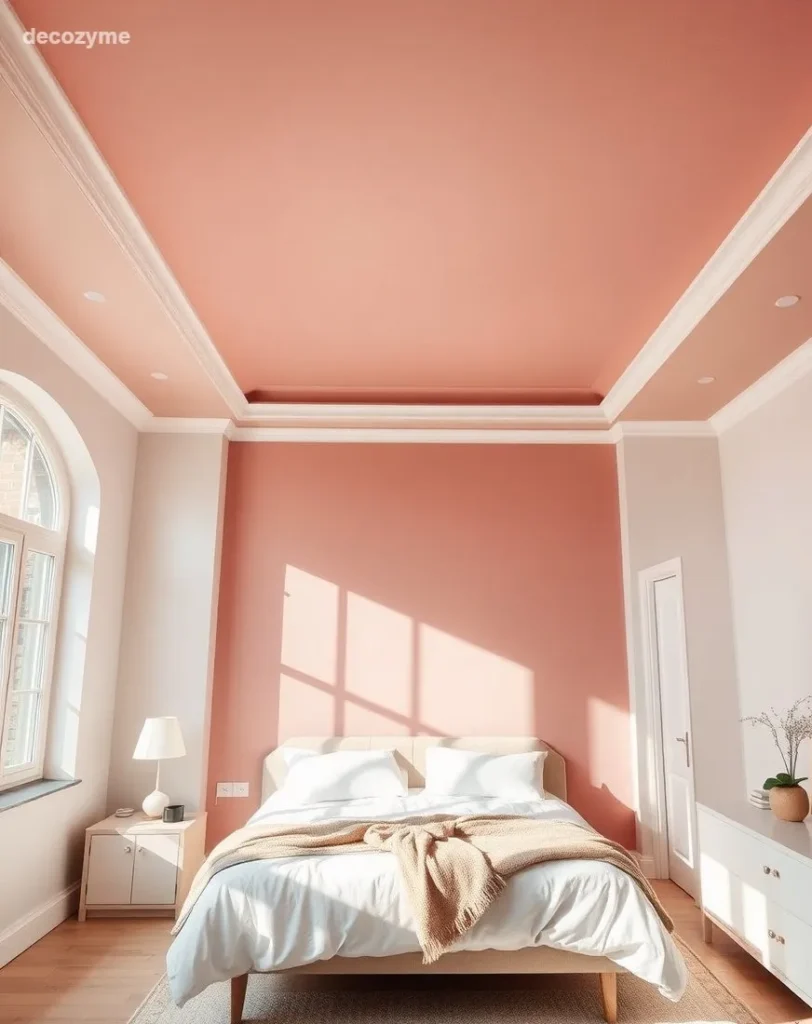
The “fifth wall”, your ceiling, is one of the most underused surfaces in bedroom design. Painting it a soft, muted cherry or dusty rose (not full cherry red, that’s a bit much) creates a cocooning effect that makes the room feel intentional and enveloping. This works best in rooms with higher ceilings, where the color adds warmth without closing in the space.
Even a soft blush-cherry on the ceiling with white walls below feels elevated and unexpected. It’s the design detail people notice but can’t immediately name, which is exactly what you want.
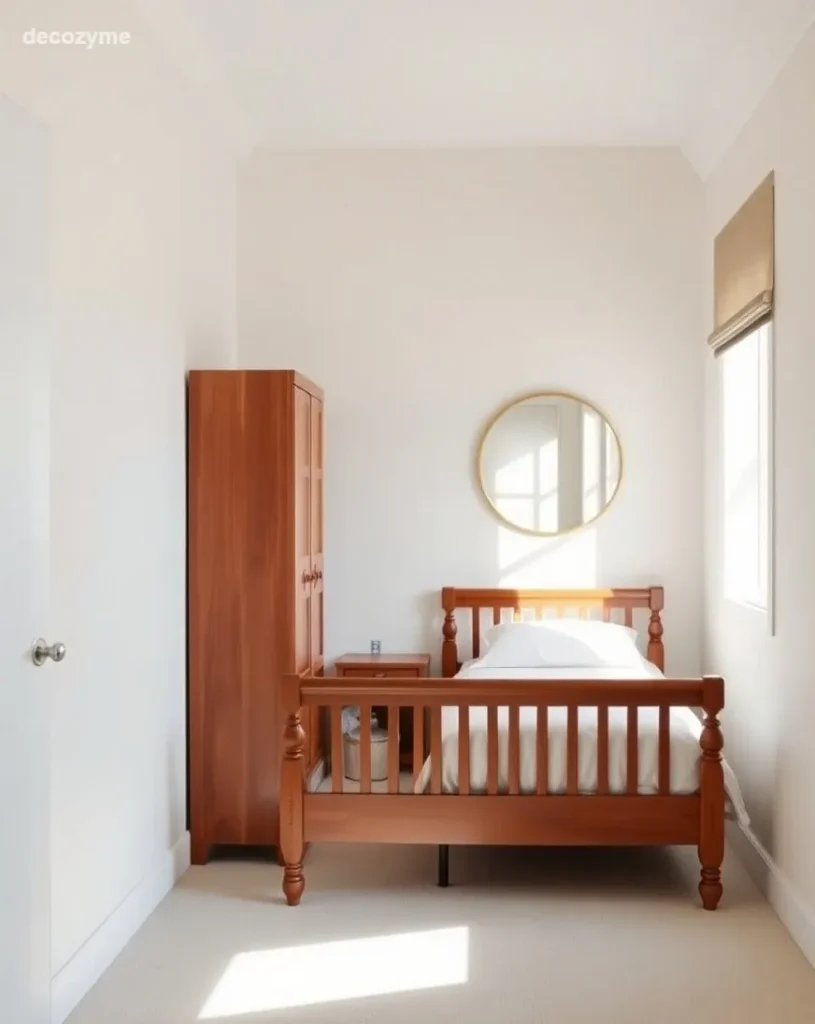
Build a small bedroom around cherry wood — strategically
Small bedrooms and dark wood can be a tricky combination, but cherry wood specifically is more forgiving than walnut or mahogany because it has natural warmth and variation that keeps it from feeling heavy. In a small room, limit cherry wood to one or two pieces — the bed frame and one nightstand, or a dresser and a mirror frame — and keep walls light.
Mirrors strategically placed to reflect natural light are your best friend in a small cherry-toned bedroom. They bounce warmth around without adding visual clutter.
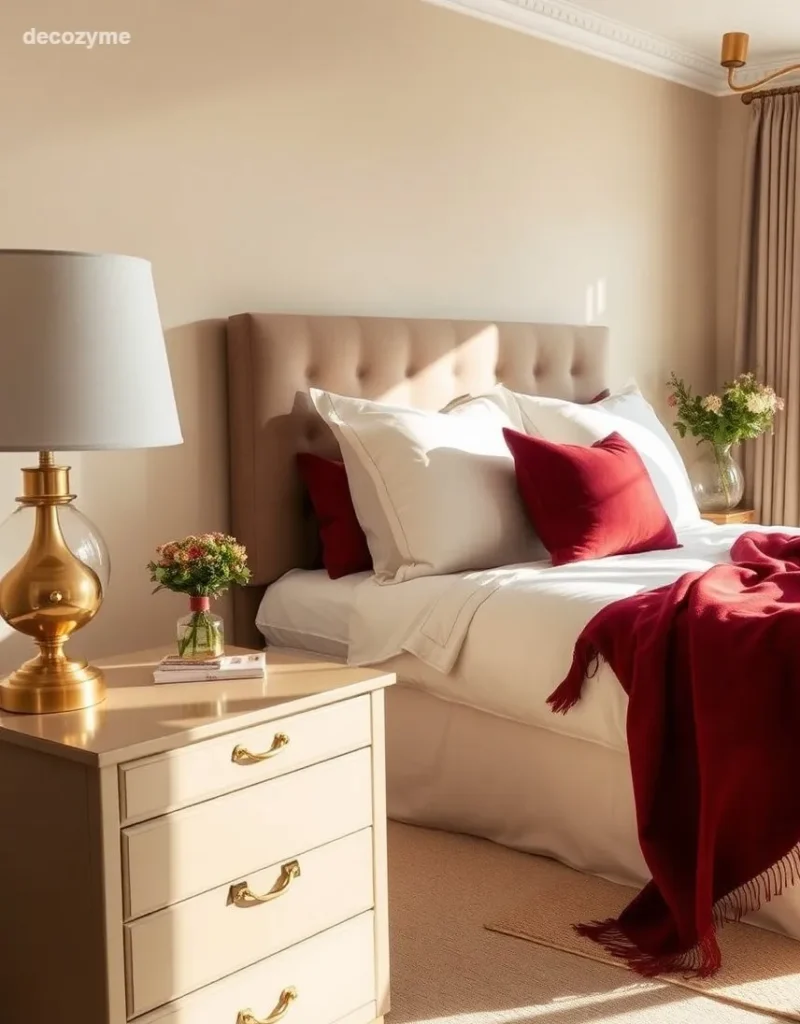
Layer cream, gold, and cherry for a luxe look
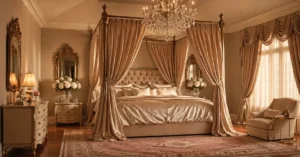
Cream bedding. Gold hardware and lamp bases. Cherry red or cherry wood as the anchor tone. This three-way combination is quietly luxurious; it doesn’t shout, it just looks expensive. The key is keeping the gold subtle: a lamp base, drawer pulls, and a small framed mirror. Too much gold and you’re in maximalist territory; just enough and you’ve got something genuinely elegant.
This palette photographs beautifully in natural morning light, which is a bonus if you ever want to share the space.
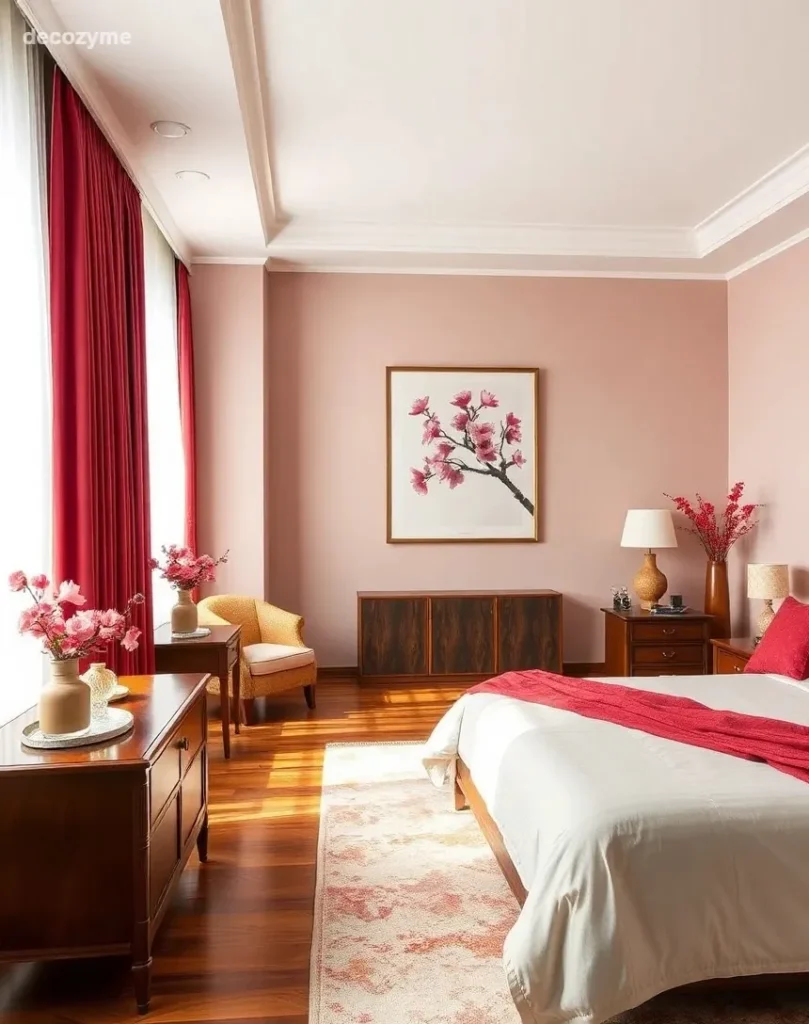
Commit to a full cherry aesthetic — the right way.
If you’re going all-in, cherry wood furniture, cherry red accents, cherry blossom prints, there’s a right way to do it that doesn’t feel like a themed hotel room. The secret is varying the intensity. Not everything should be equally saturated. Let the wood be the richest cherry tone. Let the walls be soft and neutral. Let accents be the pop of cherry red. Let the blossom prints be delicate, not bold.
Cher, ry as a full aesthe tic works when it has hierarchy, one dominant tone, two supporting tones, and plenty of breathing room in between. Get that right ,and the room feels cohesive, intentional, and genuinely beautiful. (In the best possible. That’s the face of someone trying to explain something they love deeply.)
Common questions answered
Does cherry bedroom decor work in small rooms?
Yes, with the right approach. Use cherry as an accent rather than the dominant tone. One cherry wood piece or a cherry red textile in a small room adds warmth without weight. Keep walls light and add a mirror or two to bounce that warmth around.
What colors go best with cherry decor?
Cream, ivory, sage green, navy blue, warm gold, and muted blush all pair beautifully with cherry tones. Avoid cool grays and stark whites; they fight cherry’s warmth rather than complement it.
Is cherry wood bedroom furniture still in style?
Absolutely. Cherry wood never fully went out of style; it just went through a quiet period while gray and white took over. It’s experiencing a genuine resurgence right now, especially when paired with contemporary hardware and modern bedding rather than traditional ornate accessories.
How do I add cherry decor without repainting or buying new furniture?
Textiles are your starting point: a throw blanket, two pillows, or a cherry-toned rug. Then look at smaller decor pieces: a lamp with a cherry-colored base, framed botanical prints, or a vase of dried cherry blossom branches. You can shift a room’s entire personality with these small moves.
What bedroom styles work best with cherry decor?
Cherry works across more styles than most people expect. It fits naturally into traditional, cottagecore, romantic, Japandi-influenced, and even contemporary rooms. The style outcome depends on how you deploy it; cherry wood in a minimal room reads contemporary; cherry blossom prints in a soft, layered room read romantic cottagecore.
Final thoughts
Cherry bedroom decor is one of those categories where the gap between “done well” and “done badly” is mostly about restraint and intention. The ideas above cover a hugerangee from a single cherry throw pillow to a fully committed cherry wood bedroom, and every one of them works when you apply the core principle: let cherry be the warmth, not the noise.
Start with one idea. See how it feels in your actual space with your actual light. Then build from there. Your bedroom is the one room in your house that’s entirely for you; it should feel like it.
Found an idea that fits your space? The best next step is always to pull physical swatches or wood samples before committing. What you see on a screen and what lives in your bedroom light are two very different things. Trust the swatch. Every time.